


Spare Parts Strategy and After-Sales Service Structures for DME Mobility Scooter Dealers
Most distributors obsess over unit price and container freight when they first source mobility scooters, then discover the real margin is won or lost in the second year of ownership. For DME dealers serving seniors, the scooter is not a one-time sale but the start of a multi-year service relationship. Batteries degrade, tires wear, joystick controllers drift, and chargers fail. The dealers who protect their reputation and their gross margin are the ones who planned the spare parts kit and the repair workflow before the first pallet cleared customs. This article lays out a field-tested structure for building after-sales capability around 3-wheel, 4-wheel, and heavy-duty electric mobility scooters imported from a manufacturing partner such as WMS Scooters.
Why After-Sales Infrastructure Decides DME Dealer Margins
A mobility scooter sold to a senior citizen carries a different risk profile than a consumer gadget. The user is often elderly, the device is safety-critical, and a failure in the field means a phone call, a lost day, and a frustrated caregiver. When a dealer cannot supply a replacement charger or swap a faulty controller within 48 hours, the cost is not just the part. It is the return request, the negative review, and the referral that never comes. DME channels live on trust, and trust is rebuilt one fast repair at a time.
In practical terms, after-sales is a line item that pays for itself. A well-run parts program typically recovers 6 to 14 percent of total revenue as accessory and repair income while sharply reducing warranty claim escalations. The dealers who treat parts as an afterthought end up air-freighting individual components at ten times the sea-freight cost, or worse, eating full unit replacements under a vague “goodwill” policy. Building the structure up front converts a cost center into a recurring revenue stream and a competitive moat against marketplaces that cannot offer local support.
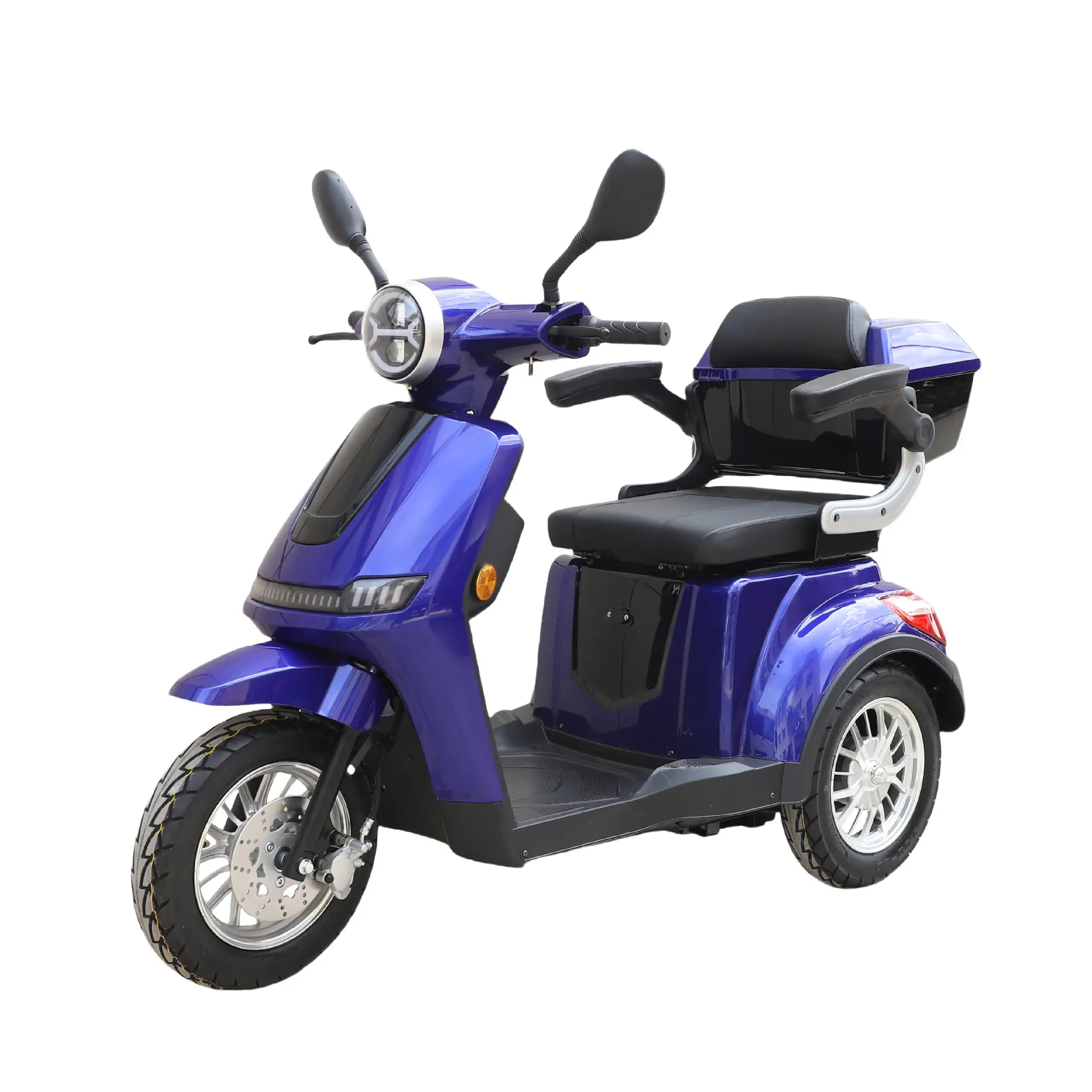
Building the Right Spare Parts Kit for Your First Container
New importers make the mistake of ordering a flat 5 percent of every component, which ties up capital in slow-moving electronics while running out of the cheap items that actually break. A better model is to tier your inventory by failure frequency and unit cost. Your opening parts order should be sized against the number of units in your first two containers and the expected first-year failure curve.
Tier-1 Consumables: High-Turnover, Low-Cost
These are the items you will touch most often and should stock deepest. Plan for roughly 8 to 12 percent coverage on these SKUs relative to your active fleet:
- Lead-acid or lithium chargers matched to your exact battery voltage and connector type
- Front and rear tires plus inner tubes for pneumatic models, and solid tire sets for maintenance-free variants
- Freewheel levers, tiller adjustment knobs, and key switches
- Fuse kits, DC cables, and Anderson or XT connectors
- Armrest pads, seat cushions, and length-adjustable mounting hardware
Tier-2 Mechanical Parts: Moderate Turnover
Stock these at 3 to 5 percent coverage. They fail less often but cause a complete stoppage when they do:
- Front fork assemblies and rear axle hubs
- Brake calipers, brake cables, and parking brake pawls
- Motor brush sets for brushed drivetrains and sealed hub motor spares
- Caster wheels and anti-tip wheels with brackets
Tier-3 Electronic Modules: Low Turnover, High Value
Keep these lean, around 1 to 2 percent, because they are expensive and model-specific. Overstocking ties up thousands of dollars per container:
- Main control modules and throttle/joystick controllers
- Battery management system (BMS) boards for lithium packs
- LED lighting looms and dashboard display units
- Wiring harnesses specific to each platform
The discipline here is SKU mapping. Every scooter model you import should have a corresponding exploded parts diagram and a bill of materials that links each component to a purchase code. Without that map, your warehouse will accumulate “mystery parts” that fit nothing and technicians will waste billable hours hunting for the right screw.
SKU Rationalization Across 3-Wheel and 4-Wheel Platforms
Dealers who carry both 3-wheel and 4-wheel lines, plus a heavy-duty variant, face parts multiplication. The instinct is to stock unique spares for every model, but smart buyers rationalize. Many platforms share a common controller, a common charger, and a common seat. Identify the overlap and stock the shared components at the combined fleet rate rather than per model.
For example, if your 3-wheel and 4-wheel travel scooters use the same 24V 2A charger and the same tiller controller, a single pooled stock line covers both. Reserve model-specific stock only for the truly divergent parts: the front single-wheel fork on a 3-wheel unit versus the dual-front-wheel arms on a 4-wheel unit, or the reinforced frame castings on a heavy-duty chassis. This SKU rationalization cuts safety stock by 20 to 35 percent without raising stockout risk, and it simplifies technician training because fewer part numbers are in play.
Warranty Reserve Planning and Field Failure Rates
Every container you import carries a hidden liability: the units that will fail inside the supplier warranty window. The professional move is to book a warranty reserve as a percentage of COGS at the moment of sale, rather than treating claims as surprise expenses. For senior mobility scooters, a realistic first-year reserve ranges from 2.5 to 5 percent of landed cost, weighted upward for new or heavily redesigned models and downward for proven SKUs with a track record.
Field data from DME service shops shows a consistent failure distribution in the first twelve months. Batteries and chargers account for the largest share, followed by tires and freewheel mechanisms, then controllers and wiring. Mechanical frame issues are rare on certified units. Use this curve to allocate your reserve: the majority funds Tier-1 consumable swaps and charger replacements, a smaller slice funds Tier-3 module exchanges. The goal is not to predict each failure but to ensure the reserve pool is never empty when a batch of controllers arrives DOA.
A related discipline is failure tagging. Every returned unit should be coded by failure mode before it is repaired or scrapped. Over two or three containers, this data tells you whether a problem is a bad batch, a shipping-handling issue, or a design weakness worth raising with your manufacturer. A supplier that responds to clean failure data with root-cause analysis and a corrective action is worth more than one that simply ships replacements blindly.
Setting Up a Repair Workflow in Your Warehouse
You do not need a full workshop to offer credible service, but you do need a defined flow. Start with a receiving bench where intake units are logged, photographed, and tagged with a ticket number. A basic test rig with a known-good battery lets a technician confirm faults in minutes instead of guessing. Keep a small “known-good” shelf of chargers, controllers, and batteries used only for diagnosis, never for resale.
The repair loop should then branch: Tier-1 fixes (charger swap, tire change, key switch) are completed same day and returned; Tier-2 jobs (brake, fork, motor) go to a scheduled bench; Tier-3 electronic faults are diagnosed, the module swapped, and the failed part returned to the manufacturer under warranty or core return. Documenting each step with a one-line note protects you in warranty disputes and builds the failure database described above. A first-call resolution target of 70 percent or higher on Tier-1 issues is the benchmark that keeps customers loyal.
Training Front-Line Staff for First-Call Resolution
Much of the “failure” cost is actually misdiagnosis. A senior user who says “it won’t move” may have simply left the freewheel lever disengaged, tripped a breaker, or plugged the charger into a dead outlet. Front-line staff who can run a two-minute phone triage script resolve a surprising share of cases without a truck roll or a part shipment. Build a simple decision tree: power light on or off, charger plugged and warm, freewheel lever position, brake released, tire pressure. Train counter staff and phone agents on it.
For in-person service, teach technicians to carry a universal kit: a known-good charger, a multimeter, spare fuses, and a freewheel lever. The technician who arrives able to confirm and fix the top five faults on the first visit is worth two who need a follow-up order. This is where your parts strategy and your labor plan meet, and where the warranty reserve earns its keep by funding the parts used in those first visits.
Reverse Logistics and Core Returns
Defective electronics and batteries cannot simply be thrown in the bin. Lithium packs in particular require certified disposal or return channels, and many regions hold the importer responsible for end-of-life handling. Negotiate a core return program with your manufacturer before launch. A practical agreement batches failed modules into each outbound container on the backhaul, or routes them through a certified recycler at agreed rates. This reverse logistics plan keeps your warehouse from becoming a graveyard of dead controllers and protects you from compliance exposure.
For DME dealers in the EU and North America, document the path of every returned battery. Auditors and insurers increasingly ask for it, and a clean paper trail is far easier to produce when the process was designed in advance rather than reconstructed after a claim.
Tip: Negotiate a 24-month rolling parts-availability guarantee with your manufacturer so you are never forced to discontinue service on a model still under warranty in the field.
FAQ
How many spare chargers should a new DME dealer stock per 100 scooters?
A practical starting point is 10 to 12 chargers per 100 active units, weighted toward the most common voltage and connector in your fleet. Chargers are the single highest-turnover failure item and the cheapest goodwill save you can make, so it is better to over-stock this one line than almost any other.
Should I stock lithium batteries as spares or only lead-acid?
Stock the battery chemistry you actually sell. If you import lithium models, keep a small reserve of complete packs or at minimum BMS boards and connector looms, because a swollen or failed lithium pack is a field stoppage that cannot wait for sea freight. For lead-acid fleets, keep a few complete batteries plus a steady supply of chargers.
What warranty reserve percentage is realistic for a first-time importer?
Book 3 to 5 percent of landed cost for the first year on proven models, and lean toward 5 percent or higher on new or redesigned SKUs until you have your own failure data. The reserve is not a tax; it is the fund that lets you fix customers fast without eroding quarterly profit.
Can a small dealer run service without a full workshop?
Yes. A defined intake bench, a known-good test rig, and a tight Tier-1 parts kit cover the majority of real-world faults. Most valuable repairs are charger swaps, tire changes, and freewheel or key-switch fixes that need no workshop at all, only a counter and a technician with a multimeter.
How do I avoid stocking the wrong spare parts?
Require an exploded parts diagram and a bill of materials for every model before you import, then map each component to a purchase code and a failure tier. Rationalize shared parts across platforms so you are not buying redundant stock, and let your own failure-tagging data, not the supplier catalog, drive reorder quantities.
What should a core return agreement with the factory cover?
At minimum it should specify which failed modules are returnable, how they are batched and shipped back, who pays freight, and how lithium batteries are handled under local recycling law. A clear agreement prevents a warehouse full of dead electronics and keeps you compliant with battery disposal rules.
Related Pages
- Mobility Scooter Wholesale: Complete Buyer’s Guide 2026
- CE Certification for Mobility Scooters: Complete Guide
- Mobility Scooter Factory Audit Guide
- How to Get the Best Price on Mobility Scooters
For buyers still shaping their import program, the Mobility Scooter Wholesale Complete Buyer’s Guide 2026 and the Mobility Scooter Factory Audit Guide are useful companions to the parts strategy outlined here, and the CE Certification for Mobility Scooters guide helps confirm that the units you service meet the compliance bar your customers expect.
Post time: Sep-16-2026