

Mobility Scooter Wholesale: Complete Buyer’s Guide 2026
Table of Contents
- Understanding Global Mobility Scooter Wholesale Landscape
- Mobility Scooter Categories & Real‑World Use Cases
- Key Technical Specs Every Wholesale Buyer Should Compare
- Mandatory Certifications & Regional Compliance Rules
- How To Evaluate & Select Qualified Manufacturers
- MOQ, Pricing Structure & Payment Terms For Bulk Orders
- Shipping, Container Loading & Landed‑Cost Calculation
- Sample Testing & Pre‑Shipment Quality Control Best Practices
- Spare‑Parts, Warranty & Long‑Term After‑Sales Planning
- Common Wholesale Sourcing Mistakes To Avoid
- FAQs
- Conclusion
Global demand for mobility scooters keeps expanding year‑over‑year, driven by aging populations, rising demand for disability assistive equipment, fast‑growing tourist‑rental fleets, and on‑site mobility requirements for security patrol and facility management. For distributors, retail chains, healthcare equipment dealers, resort operators and institutional buyers, wholesale sourcing directly shapes profit margins, inventory turnover and brand reputation with end‑users.
Many buyers jump straight to requesting price quotations without clarifying local market rules, target‑user profiles or full‑cycle procurement costs. This often leads to customs hold‑ups, unexpected high return rates, unsellable inventory and compressed profits. This 2026 complete buyer’s guide walks you through every critical step, helping you make informed sourcing decisions and lower overall business risks.
Understanding Global Mobility Scooter Wholesale Landscape
Mobility scooters cover multiple end‑user groups: senior daily commuters, people living with limited mobility, casual recreational riders, commercial rental operators and on‑site facility staff. Each segment calls for completely different product performance, build quality and price positioningWellsmove.
Before reaching out to any supplier, define your core market positioning. Are you supplying retail consumers focusing on home‑use comfort? Are you building heavy‑duty rental fleets for resorts? Or are you tendering for healthcare institutions and public‑sector contracts? Your answer will guide all later choices including model selection, certification scope, budget range and customization needs.
Wholesale buyers should look beyond simple ex‑factory unit pricing. True procurement cost includes freight, import duties, local compliance fees, spare‑parts stocking and potential after‑sales expenses. Many new importers underestimate these indirect costs and hurt their profitability even with attractive factory quotes.
Mobility Scooter Categories & Real‑World Use Cases
Not all mobility scooters serve the same purpose. Matching product lines with local market demand prevents slow‑moving stock.
表格
| Product Category | Main Features | Ideal Target Buyers & Scenarios |
|---|---|---|
| Portable Lite Mobility | Light‑weight, foldable or quick‑disassembly, compact dimensions, easy vehicle trunk storage | Retail shops, home‑end users, short‑distance city trips, travel‑oriented customers |
| Personal Daily Mobility | Comfort padded seating, balanced suspension, stable chassis, medium battery range, intuitive handlebar controls | Senior community daily travel, pharmacy & medical‑equipment retail channels |
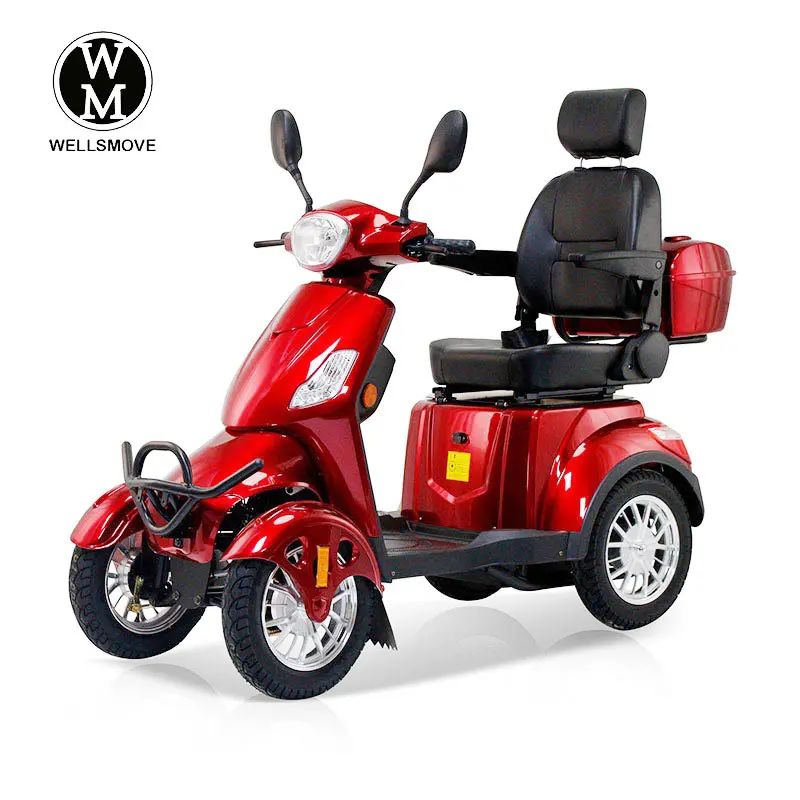
| Heavy‑Duty Tricycle / Four‑Wheel | Higher‑output motor, strong climbing performance, bigger load capacity, reinforced steel‑aluminum frames | Tourist resort rentals, campus & property security patrol, warehouse on‑site transport, rough‑terrain suburban use |
Portable lightweight models win popularity in dense urban markets where end‑users need to store scooters inside apartments or private cars. Heavy‑duty units stand out for commercial‑fleet applications where long service life and low maintenance become top priorities instead of ultra‑light weightWellsmove.
Key Technical Specs Every Wholesale Buyer Should Compare
Technical specifications determine real‑world user satisfaction and your after‑sales workload. Do not rely only on marketing descriptions; always verify hard parameters for each model you consider.
- Motor power: Ranges from 300W for basic indoor‑focused units up to 600W and above for heavy‑duty tricycles. Motor output directly decides climbing capability and load‑bearing performance. For hilly regions, confirm published climbing‑angle data rather than only reading wattage numbers.
- Battery options: Lead‑acid batteries bring lower upfront cost with heavier weight and shorter cycle life. Lithium‑ion batteries deliver lighter weight, longer service cycles yet higher unit cost. Battery choice heavily influences final wholesale price and end‑user experience.
- Maximum load capacity: Confirm real‑world payload instead of theoretical numbers, especially for heavy‑duty fleet‑use projects.
- Maximum travel range: Range figures are usually tested under ideal conditions. Remind yourself that cold weather, uneven roads and full payload will reduce actual mileage.
- Brake & safety system: Automatic electromagnetic braking is standard for quality mobility scooters; releasing throttle should trigger braking immediately. Check lighting, turn‑signal and reflector configurations to satisfy local road requirements.
- Seating & chassis suspension: Suspension quality shapes riding comfort, a major source of end‑user feedback and product reviews.
When reviewing specs, group models according to your customer profiles. A specification that works perfectly for home seniors may fall short for high‑intensity daily rental‑fleet operation.
Mandatory Certifications & Regional Compliance Rules
Certification compliance represents one highest‑risk area for bulk importers. Missing required documentation can result in container detention at customs, product recalls or full market sales bans, creating massive financial losses for wholesale buyers.
Different geographic markets enforce distinct standards:
- European Union: CE‑MDR medical‑device related documentation, battery regulation compliance, technical construction files and authorized local representative requirements.
- North America: Relevant safety standards for low‑speed electric vehicles; some states treat mobility scooters as medical assistive devices while others classify them under light electric vehicle regulations.
- Oceania: Local safety test reports and import compliance checks.
Important practical advice: Confirm that your supplier holds genuine, verifiable certificates for exactly the models you order. Avoid suppliers offering temporary certificates generated only for one‑off shipments. Request full documentation packages including declaration‑of‑conformity forms, test reports and battery safety files during quotation phase, not after production beginsAlibaba Se….
How To Evaluate & Select Qualified Manufacturers
Choosing a suitable manufacturing partner influences your business for years. Several evaluation dimensions help you filter reliable factories from trading intermediaries.
- Core technical competence: Look for in‑house capability on metal frame fabrication and electronic system assembly. Factories mastering both mechanical structure and controller‑battery integration tend to deliver more consistent product quality and faster troubleshooting support.
- Production history and focus: Prefer manufacturers concentrating on mobility‑aid vehicles over general multi‑category electric‑vehicle plants. Long‑term accumulated experience on mobility scooters translates into fewer design flaws.
- Quality‑control workflow: Ask about in‑line production testing, finished‑unit full‑function testing rate, random‑inspection protocols before goods leave the factory.
- Customization capacity: Confirm available options: private‑logo printing, color changes, packaging modification and parameter adjustment. Clarify extra fees and extended lead‑time for each custom item.
- Communication and technical support response speed: In wholesale business, timely replies for technical questions, defect handling and spare‑part ordering reduce your operational pressure greatly.
Where possible, arrange virtual factory tours or third‑party production audits before committing to large‑volume orders. For smaller buyers, sample evaluation acts as your most direct quality assessment tool.
MOQ, Pricing Structure & Payment Terms For Bulk Orders
Minimum‑order quantity varies widely across product types. Compact portable mobility scooters often have lower MOQ, while heavy‑duty tricycles and fully custom‑branded products require larger batch sizes.
Typical real‑world wholesale MOQ reference:
- Standard non‑custom portable & personal mobility models: 50–200 units
- Heavy‑duty high‑power tricycles: 80‑150 units
- Full private‑label / deep‑customized products: 100‑300+ units
Many manufacturers accept mixed‑model container loading. This option helps new‑market entrants stock multiple product lines without hitting high single‑model minimum‑order thresholds. Always confirm whether mixed loading triggers any surcharges.
When analyzing pricing, request itemized quotations listing separate costs for base unit, battery upgrade, certification document service, OEM logo setup fees and export packaging. Unit price will drop as order volumes rise. Material volatility for aluminum, lithium and plastics can shift baseline costs year‑round; long‑term framework contracts with price‑lock clauses help you stabilize budget expectations.
Common industry payment terms for wholesale mobility‑scooter orders: 30% deposit upon contract confirmation, 70% balance before shipment. For very large established buyers, letter‑of‑credit options may become negotiable. Always clarify production lead‑times: standard‑model orders commonly take 15‑35 working days; customized orders extend to 30‑50 working days.
Shipping, Container Loading & Landed‑Cost Calculation
Many buyers only compare ex‑factory prices and overlook logistics expenses. To compute your true landed cost per unit, sum ex‑factory price plus sea or air freight, port‑handling fees, destination import duties, customs‑agent charges and inland last‑mile delivery.
Sea freight remains the dominant choice for large‑volume mobility‑scooter wholesale because of cost advantages. Air freight applies only for small sample batches or urgent replacement‑part shipments.
Container planning matters: Mobility scooters have relatively large dimensions. Confirm how many units fit inside a 20GP versus a 40HQ container, taking export carton dimensions into consideration. Good suppliers provide container‑loading suggestions to maximize space usage and cut per‑unit freight expense.
Packaging requirements should be specified clearly: export‑grade cartons with foam padding and corner protection reduce damage risk in long ocean transit. Make certain outer cartons carry correct shipping marks, product codes and labelling matching destination‑country import rules.
Leave reasonable buffer time for shipping and customs clearance in your sales and inventory planning timeline, especially during peak global shipping seasons.
Sample Testing & Pre‑Shipment Quality Control Best Practices
Skipping sample evaluation stands among the costliest sourcing mistakes. Even impressive specification sheets do not guarantee real‑world performance. Always order 1‑2 sample units before approving large‑scale bulk production.
What to check on sample units:
- Overall build stability and frame welding quality
- Seat comfort, armrest adjustability and ergonomics
- Acceleration, deceleration and braking response performance
- Motor noise level during climbing and flat‑ground travel
- Battery charging behavior and real‑world driving range
- Ease of basic disassembly and future repair access
After you approve samples, lock sample standards into purchase‑contract clauses. Pre‑shipment inspection is strongly recommended before container loading. You can either deploy your own inspector or hire neutral third‑party inspection services to randomly check finished goods for appearance, function and consistency versus approved samples.
Spare‑Parts, Warranty & Long‑Term After‑Sales Planning
Mobility scooters are mechanical‑electronic products that need maintenance over their service life. Successful wholesale distributors build their competitive edge through reliable after‑sales support, not only cheap purchase prices.
Before placing bulk orders, explicitly negotiate these points with your supplier:
- Warranty scope and duration: Industry common practice offers 6‑12‑month warranty for motors, controllers and batteries; 1‑3‑year coverage for main vehicle frames. Clarify whether warranty covers only factory‑defect issues and what documentation you need for warranty claims.
- Availability of replacement spare‑parts: Tires, controllers, batteries, switches and lighting components are high‑consumption spare parts. Confirm ordering lead‑time and wholesale price list for spare‑parts.
- Technical documentation: Request circuit diagrams, service manuals and troubleshooting guides for your local repair teams.
Plan to stock a basic spare‑parts inventory alongside your scooter purchase. Without accessible spare‑parts supply, end‑user breakdowns turn into customer complaints, negative reviews and returned inventory that you cannot resell.
Common Wholesale Sourcing Mistakes To Avoid
- Chasing lowest unit price at all costs: Ultra‑low pricing usually comes with downgraded frames, poor‑quality batteries or incomplete certification documents. This creates heavy after‑sales pressure for your business.
- Ignoring local regulatory requirements: Never assume products sold in one market automatically satisfy rules for your target region.
- Large‑batch ordering without sample validation: Online photos and specification sheets cannot replace hands‑on sample testing.
- Neglecting spare‑part supply planning: Many new buyers focus entirely on finished‑unit procurement and overlook ongoing spare‑part needs.
- Miscalculating total landed‑cost: Only calculating ex‑factory price distorts your profit forecast completely.
- Unclear contract terms for customization: Confirm logo, color and packaging change costs and lead‑times in writing to prevent unexpected extra charges after production starts.
FAQs
What is the typical MOQ for mobility‑scooter wholesale? Standard non‑custom models commonly sit at 50‑200 units. Heavy‑duty tricycles and full private‑label products demand higher minimum quantities. Mixed‑container orders allow combining multiple models to meet MOQ without large single‑model stock.
Lead‑time difference between standard and customized orders? Standard existing‑design orders usually take 15‑35 working days. Custom‑logo, color or modified‑configuration orders require 30‑50 working days depending on modification depth.
Which battery option should I select for my market? Lead‑acid batteries reduce upfront purchase cost but carry greater weight and shorter cycle life. Lithium‑ion batteries bring lighter weight and longer service life with higher unit price. Your decision should reflect local end‑user spending power and usage habits.
How do I handle certification compliance for import? Tell your supplier your exact target countries at quotation stage. Request complete test‑report files, declarations of conformity and required agent‑related documentation. Verify certificate authenticity rather than just receiving PDF copies.
What warranty terms can I expect for bulk mobility‑scooter orders? Major electronic components like motor and controller generally carry 6‑12‑month factory warranty; vehicle frames commonly enjoy 1‑3‑year coverage. Read warranty clauses carefully for defect‑claim conditions.
Conclusion
Mobility‑scooter wholesale combines market research, product positioning, compliance management, supplier assessment, cost calculation, quality validation and long‑term after‑sales preparation. Successful buyers do not simply search for the cheapest unit price. They build stable supply‑chain workflows balancing product performance, regulatory safety, total landed‑cost and spare‑part support.
Start by defining your target customer groups and core application scenarios. Screen manufacturers based on technical capability and compliance background. Validate samples before committing to large‑volume production. Calculate full landed‑cost including logistics and future after‑sales expenses. These systematic steps will help you reduce sourcing risks, improve inventory turnover and build sustainable profit in the global mobility‑scooter wholesale market.
Post time: Aug-21-2026