


Optimizing Container Loads: Foldability, Disassembly and Freight Efficiency for Mobility Scooter Importers
When a distributor evaluates a mobility scooter, the specification sheet usually dominates the conversation: motor wattage, battery chemistry, top speed, payload rating. Those numbers matter, but they are not what quietly decides whether your landed cost lands inside margin or outside it. The factor that does that work is physical geometry — how the scooter packs, folds, breaks down, and stacks inside a 40-foot high-cube container. For overseas B2B buyers purchasing hundreds or thousands of units per cycle, a 6% improvement in cube utilization is not a rounding error. On a shipment of 3-wheel and 4-wheel senior scooters, that single improvement can recover thousands of dollars per container and produce a measurable reduction in per-unit freight, handling, and warehouse footprint.
This guide takes a logistics-first view of sourcing. We look at how foldable frames and tool-free disassembly change your container math, how to measure cube utilization in a way that survives contact with a real loading dock, where carton engineering silently adds or removes volume, and how to match a packing profile to the channel you actually sell into — senior-care distribution, DME dealerships, or retail mobility showrooms.
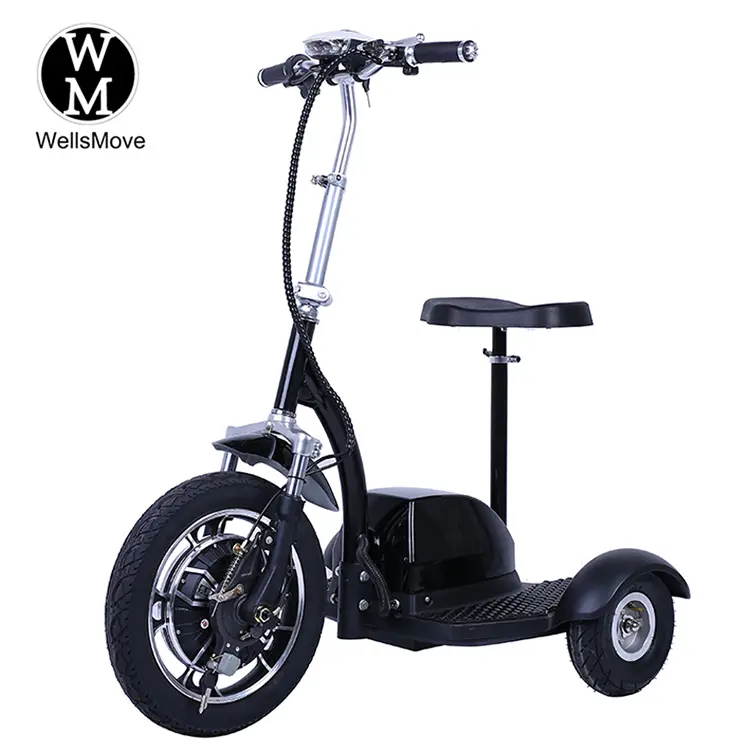
Why Packaging Geometry Drives Your Landed Cost
Most buyers calculate freight as a rate per kilogram or per cubic meter. That is correct as far as it goes, but it hides the variable you control: how much product you fit into the space you already paid for. A carrier does not charge you for the scooter’s value or its ride quality. It charges for the box it occupies. Two seemingly similar 4-wheel scooters can differ by 30% in packed volume depending on whether the tiller folds, whether the seat removes, and whether the wheels are fixed or quick-release. The cheaper ex-works unit is sometimes the more expensive unit once freight, destination handling, and storage are added back in.
We recommend every buyer request a packing configuration sheet from the factory before quoting, not after. This one document — units per carton, carton dimensions, gross weight, stack-height limit, and pallet pattern — lets you run the real numbers instead of guessing from a photo.
Foldable vs. Disassembling: Two Distinct Logistics Profiles
The market uses “foldable” loosely. In practice there are two logistics categories, and they behave very differently through your supply chain.
Folding-frame scooters
A folding-frame scooter collapses the tiller and sometimes the chassis into a more compact footprint without removing parts. These are common in lightweight travel models aimed at seniors who transport the unit in a car trunk. From a container perspective, folding helps, but the unit is still one carton with a fixed minimum volume defined by the largest non-folding component — usually the wheelbase or the seat. Foldable models typically ship 80–140 units per 40HC depending on class, which is better than rigid units but not the densest option available.
Quick-disassembly (tool-free) scooters
A true disassembly scooter breaks into three to five modules — front section with wheel, rear section with drive wheel and battery, seat, and tiller. Each module packs into its own position within a single carton or across a tight carton set. Because the cartons are smaller and more shape-flexible, loaders can interlock them and fill voids that a single large carton would leave. Disassembly models routinely achieve 160–260 units per 40HC for compact 3-wheel classes. The trade-off is reassembly labor at the destination: a dealer or technician must spend 10–20 minutes per unit. For a DME dealer with a service bench, that is acceptable. For a drop-ship e-commerce model, it is a cost center you must price in.
Tip: Always request the factory’s recommended carton nesting diagram before committing to a container mix, because the published units-per-container number almost always assumes a specific, non-obvious loading pattern that your freight forwarder will not know.
Measuring Cube Utilization: CBM, Stack Height and Pallet Patterns
Container loading is arithmetic dressed up as logistics. The 40-foot high-cube container offers roughly 68–76 cubic meters of usable internal volume depending on insulation and door framing, with a typical floor load limit around 26–28 metric tons. Your job is to maximize cubic fill without exceeding the weight ceiling or the carton stack-height rating.
Calculating effective CBM per unit
Take the carton volume in cubic meters and divide by units per carton. A scooter packing at 0.28 CBM per unit in a 72 CBM container theoretically yields 257 units. In practice, irregular carton shapes and the need for load stability reduce real-world yield to 85–92% of theoretical. Budget for that shrinkage. A buyer who plans to 100% of theoretical capacity will overload weight or produce an unsafe, shifting load that risks damage claims.
Pallet vs. floor-loaded containers
Palletizing improves handling safety and speeds destination unloading, but it costs 8–12% of cube to the pallet footprint and air gaps. Floor loading — stacking cartons directly on the container floor in column stacks — maximizes density for uniform cartons but demands disciplined weight distribution and bracing. Many senior-care distributors use a hybrid: palletize the fast-moving retail-ready SKUs and floor-load the bulk disassembled units.
We treat floor-loaded density as the benchmark for cost comparison between suppliers, then add the palletizing premium only where channel handling requires it.
Carton Engineering: The Small Decisions That Move Volume
The carton is the unit of freight. Small engineering choices compound across a thousand units.
Batteries and the UN38.3 shipping box
Lithium battery packs must ship under UN38.3 provisions, and many factories pack the battery in a separate inner box with specific marking. This can mean a second, smaller carton riding alongside the main scooter carton, or a divided master carton. Plan your cube around the combined footprint, not the scooter alone. Lead-acid packs avoid the lithium air-freight restrictions but are heavier, which can push you against the weight ceiling long before you fill the cube — a classic cube-versus-weight conflict that changes which battery chemistry is actually cheaper to ship.
Color-coded carton marks for warehouse receiving
For buyers importing multiple SKUs, carton face marks save real money at receiving. A simple color band per model class lets your 3PL separate 3-wheel, 4-wheel, and heavy-duty units without opening boxes. This is low-tech, but it cuts mis-picks and speeds put-away during peak mobility season when receiving docks are congested.
Buyers preparing a larger program should also review the Mobility Scooter Factory Audit Guide to confirm the pack-out line is consistent across production runs, because carton dimensions drift when a factory switches material suppliers mid-contract without telling the buyer.
Selecting the Right Mix for Your Market
The optimal packing profile depends on who receives the scooter at the end of the chain.
Senior-care distributors
These buyers value a ready-to-use unit with minimal reassembly. Folding-frame and lightly disassembled models dominate because the distributor’s staff can complete setup quickly during white-glove delivery. Density is secondary to speed of deployment. Plan a container mix weighted toward foldable 4-wheel comfort models with the seat pre-attached.
DME dealers and medical supply chains
DME dealers often have service benches and reimbursement paperwork to manage. Disassembly models are acceptable because the dealer already budgets technician time. Here, maximum cube density and landed cost per unit are the priority, so disassembled 3-wheel travel scooters earn their place in the mix. Understanding Medicare coding and documentation requirements separately affects which SKUs you stock, but it does not change the packing math or the freight calculation.
Mobility retailers
Showroom retailers need display-ready units and demo fleet stock. They benefit from a small floor-loaded bulk portion plus palletized retail cartons for fast replenishment. Heavy-duty scooters, with higher payload and larger frames, pack fewer per container and should be forecast separately so they do not crowd out the higher-turn lightweight SKUs that drive showroom foot traffic.
Pre-Shipment Checklist for Logistics Buyers
Before you release a deposit, run this checklist with your supplier:
- Request the packing configuration sheet: carton dimensions, units per carton, gross weight, stack-height limit.
- Confirm the published units-per-40HC and ask which loading pattern produces that number.
- Verify battery packaging: separate UN38.3 box or divided master carton, and the combined footprint.
- Decide palletized vs. floor-loaded and price both, including destination unloading.
- Check carton-mark consistency against your SKU color-coding plan.
- Calculate effective CBM per unit and model 85–92% real yield, not theoretical 100%.
- Confirm the factory can hold carton dimensions across the full production run, not just the pre-production sample.
These seven points convert a vague “good shipping” promise into a number you can defend in a margin review. Pair this discipline with the pricing strategy in How to Get the Best Price on Mobility Scooters and the compliance steps in the CE Certification for Mobility Scooters: Complete Guide to build a complete sourcing picture that survives both the loading dock and the audit.
FAQ
How many mobility scooters fit in a 40-foot high-cube container?
It depends entirely on the packing profile. Compact 3-wheel disassembly scooters can reach 200–260 units per 40HC, while rigid 4-wheel comfort models may fit only 70–120. Always use the factory’s packing configuration sheet and apply an 85–92% real-yield factor rather than the theoretical maximum printed in a sales deck.
Is a foldable scooter always cheaper to ship than a disassembling one?
Not necessarily. Foldable models ship as one larger carton with a fixed minimum volume, while disassembly models ship as smaller, interlockable cartons that often achieve higher cube density. The foldable unit wins on reassembly speed, not always on freight cost per unit, so choose by channel rather than by the label on the box.
Do lithium batteries change how the scooter must be packed?
Yes. Lithium packs require UN38.3 compliant packaging, often a separate inner box or divided master carton with specific marks. You must plan cube around the combined battery-plus-scooter footprint, and lead-acid alternatives shift the constraint from air rules to weight ceilings that can cap your unit count before the cube is full.
Should I palletize or floor-load my container?
Palletizing improves handling safety and speeds unloading but costs 8–12% of cube. Floor loading maximizes density for uniform cartons but needs disciplined bracing. Many distributors use a hybrid: palletize retail-ready SKUs and floor-load bulk disassembled units to balance cost and handling.
How do I prevent carton dimension drift between orders?
Specify carton dimensions in the purchase contract, audit the pack-out line during production, and request carton measurements on the pre-shipment inspection report. Dimension drift usually traces to a silent material or supplier change at the factory that no one flagged to the buyer.
Which packing profile suits a DME dealer with a service bench?
Disassembly models are usually the best fit because the dealer already budgets technician time for setup and benefits most from maximum cube density and the lowest landed cost per unit. Foldable models suit distributors who need near-ready units for fast white-glove delivery to end users.
Related Pages
- Mobility Scooter Wholesale: Complete Buyer’s Guide 2026
- CE Certification for Mobility Scooters: Complete Guide
- How to Get the Best Price on Mobility Scooters
- Mobility Scooter Factory Audit Guide
Post time: Sep-14-2026