

Two mobility scooters can share the same motor rating, the same battery pack and the same declared maximum speed, and still belong in completely different sales channels. One is returned within a month by a rehab clinic because the seat is too narrow and the client cannot rotate to transfer. The other is reordered by the same clinic twelve times because the armrest flips up, the swivel catches at ninety degrees, and the user with rheumatoid hands can actually hold the lever. Nothing on the specification sheet for either unit explains that difference except the ergonomics data, and ergonomics data is exactly what most importer spec sheets leave out.
This article is written for distributors and importers buying for senior care, rehabilitation and durable medical equipment channels, where the person paying is not the person riding. It covers the seating and control interface end to end: dimensions, cushion construction, backrest and armrest geometry, transfer mechanics, controller form and force, footwell access, vibration, the commercial question of what should be standard versus optional, the paperwork rehab buyers ask for, and the evaluation routine that catches a bad seat before a container of them lands.
Stability, anti-tip geometry and braking are treated elsewhere in this series and are referenced here only where they interact with seating position, because raising a seat or moving it rearward changes the centre of gravity that the stability work already validated.
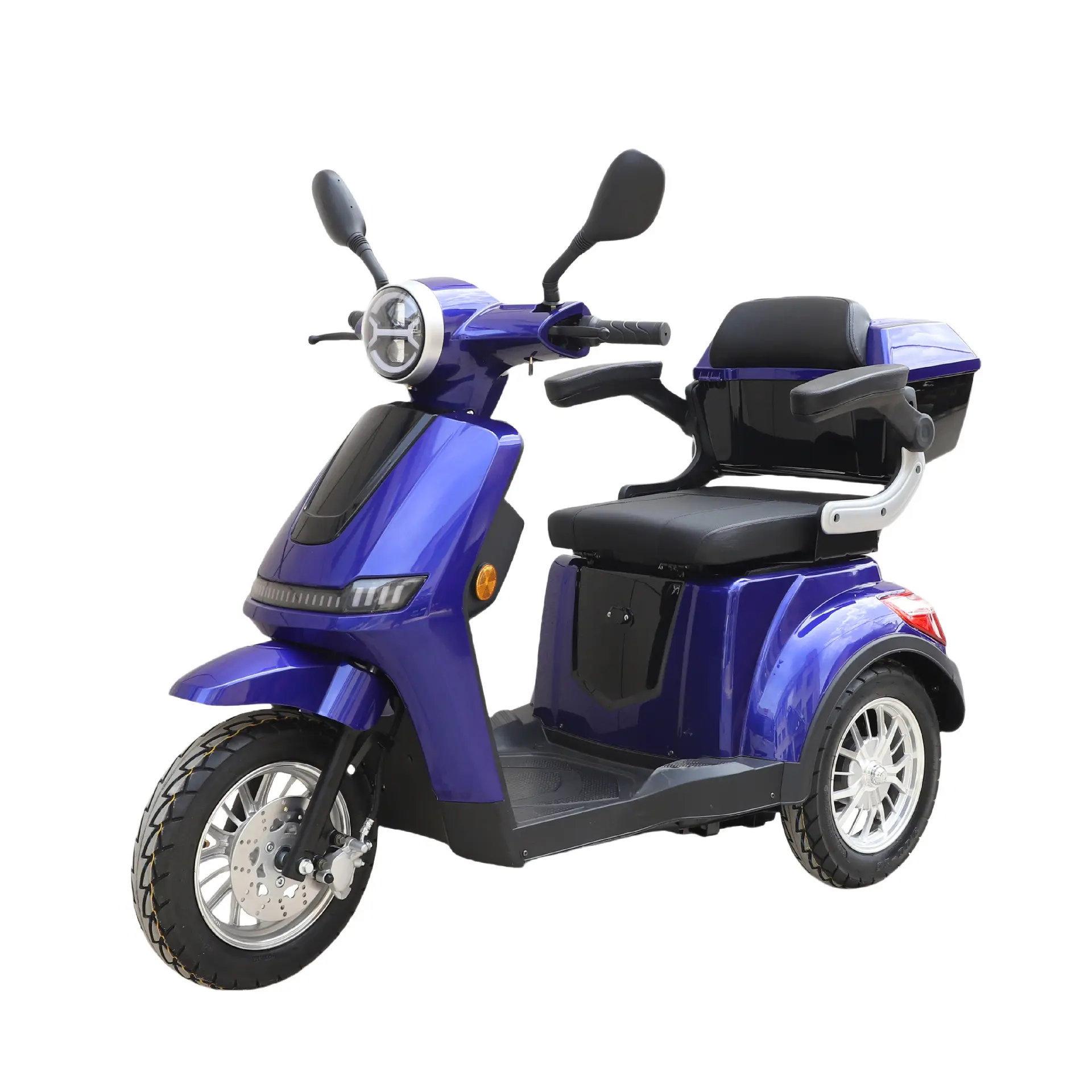
Mobility Scooter Seating, Controls and Ergonomics: Comfort Specs for Distributors Serving Senior and Rehab Users
Ergonomics on a scooter is not a comfort upgrade. It is the set of dimensions and forces that decide whether a specific user can mount the unit, stay on it for two hours without tissue damage, reach and hold the control with the hand function they actually have, and get off again without a fall. For a distributor this maps directly onto three commercial outcomes: return rate, warranty claim rate, and whether a clinic will put the model on its approved list at all. A scooter that fails an occupational therapist’s fitting assessment does not get a second order regardless of how good the drivetrain is.
Seat Dimensions: Width, Depth and Floor-to-Seat Height
Three seat numbers drive the majority of fitting decisions, and every one of them should appear on your spec sheet as a measured value with a tolerance, not as a category label. A seat width and depth specification is the first thing a rehab buyer looks for, because seat size is the single most common reason a unit is rejected during a fitting.
Seat width and the population it covers
Standard scooter seats fall broadly between 430 mm and 510 mm of usable width, with compact and travel models narrower and heavy-duty or bariatric models reaching 560 mm and beyond. Width must be quoted as the usable cushion surface between the armrests, not the overall moulding width, since a wide plastic shell with narrow internal clearance fits nobody better. For a general senior retail assortment, stocking one width is commercially unworkable: a single 460 mm seat leaves the larger end of the male population sitting on the edge of the cushion with their thighs supported by the armrest brackets rather than the foam, which produces complaints that get logged as “uncomfortable seat” rather than “wrong size”.
A practical import plan carries at least two seat widths per platform, because the seat assembly is usually a bolt-on subassembly and the incremental tooling cost is small compared with the cost of returns.
Seat depth and popliteal clearance
Seat depth is measured from the front edge of the cushion to the backrest face. Too deep and the front edge presses into the area just behind the knee, restricting venous return and causing the user to slide forward to escape it, which then destroys the back support you paid for. Too shallow and the thighs lose support and the user perches on the ischial area with no load sharing. Adjustable depth, achieved either by a sliding backrest bracket or by a cushion that moves on the seat pan, is the single most valuable dimensional adjustment you can buy because it handles both a 155 cm and a 185 cm user on one chassis. Ask your supplier to state depth at both ends of its adjustment range, not just at nominal.
Floor-to-seat height and transfer height
Seat height controls two things at once: whether the user’s feet reach the footplate with the knee at a sensible angle, and how far they have to rise or drop during a transfer to and from a bed, chair or wheelchair. Higher seats ease standing transfers and reduce the effort of rising, but they raise the centre of gravity and interact with the stability envelope already validated for the chassis. Lower seats improve that stability margin and suit shorter users, but make standing up harder for anyone with limited knee extension. If your range includes a height-adjustable seat post, require the supplier to confirm that stability testing covers the top of the adjustment range and that the published stability figures correspond to the highest seat position, not the lowest.
- Width: usable cushion width between armrests, quoted in millimetres with tolerance.
- Depth: front edge to backrest face, quoted across the full adjustment range.
- Height: floor to top of compressed cushion, not to the top of an unloaded cushion.
- Cross-check: seat height plus cushion compression under a rated load, because a soft cushion can drop 20 mm under a heavy user.
Cushion Foam Density, Rebound and Pressure-Relieving Covers
Foam is where cost engineering hides. A seat can look identical across two quotations and differ by several dollars of material cost purely in foam density, and the difference shows up after three months of daily use rather than on the inspection bench.
Density, ILD and what to specify
Polyurethane foam density is quoted in kilograms per cubic metre. Low-density foam in the 20 to 25 kg/m3 range is common in entry-level seating and loses thickness noticeably within a season of daily use. Seats intended for long-duration daily riding should specify higher density, commonly 30 to 45 kg/m3 depending on the construction, and should quote indentation load deflection so you know how firm the foam feels at a defined compression rather than only how much it weighs. Density and firmness are not the same thing: a high-density foam can be soft, and a low-density foam can be made to feel firm initially while having almost no fatigue life. Specify both.
Rebound, bottoming out and long rides
Rebound describes how quickly the foam recovers after compression. Slow-recovery viscoelastic foam distributes pressure well but can feel unstable to a user with poor trunk control, and it reacts slowly when the rider shifts weight during a turn. High-resilience foam recovers fast and feels supportive but transmits more of the load to the ischial region. The failure mode to design against is bottoming out: when the compressed thickness falls below the point at which the foam still supports load, the user is effectively sitting on the seat pan. Test for this by measuring compressed thickness under a test load corresponding to the rated user weight, and require that a defined residual thickness remains.
Cover materials, seams and moisture
A pressure-relieving cushion cover must do three incompatible things: stretch enough to let the foam deflect locally, resist moisture ingress, and survive cleaning with the disinfectants a care facility actually uses. Vinyl is easy to wipe but does not stretch, so it creates its own pressure points over the foam and feels hot on long rides. Stretch knit fabrics over a breathable membrane handle pressure better and are standard in rehab seating, but they need a documented cleaning protocol and a laundering cycle. Seam placement matters as much as fabric: a seam running directly under the ischial area is a pressure riser. Seams should sit outside the primary load zone.
Pressure injury risk and the practical countermeasures
Users who ride for extended periods, who have reduced sensation, or who cannot shift weight independently are at genuine risk of pressure injury, and this is a clinical concern, not a comfort complaint. No scooter cushion eliminates that risk, but a sourcing specification can reduce it: adequate foam thickness with proven residual thickness under load, a cover that permits local deflection, a seat surface free of seams and hard edges in the load zone, a backrest that lets the user change posture, and written guidance on repositioning intervals that the dealer passes to the end user. Distributors who supply clinical channels should also avoid marketing language that implies a standard comfort cushion is a medical pressure-relief device, since that claim pulls the product into a different regulatory category.
Tip: specify foam by density and indentation load deflection, and require a compressed-thickness measurement at rated load with a minimum residual thickness. Two seats that look identical on a quotation can differ by more than a centimetre of working foam after compression.
Backrest Angle, Armrest Adjustment and Swivel Seat Transfer Safety
Backrest angle and trunk support
A fixed upright backrest is cheaper and adequate for short trips. For users who ride for hours, a backrest with some recline, or at least a curved shell with lumbar support, reduces fatigue and allows postural change, which is itself a pressure management measure. If the backrest reclines, the mounting structure must still carry the rearward load case, and the supplier should confirm the seat frame and its pivot have been tested at the extreme recline position rather than only upright. Note that reclining the backrest moves the rider’s mass rearward and slightly changes the loading on the rear wheels, which is a second reason to keep stability testing in the loop when a recline option is added.
Armrest height and width adjustment
Armrests do more than rest arms. They are the surface a user pushes against during a transfer, the reference point for trunk support, and the reason a user can or cannot sit close to a table. Height adjustment of roughly 50 to 80 mm covers most of the population, and width adjustment matters where the seat width is adjustable. Flip-up armrests are close to mandatory for rehab and senior channels: without them, a lateral transfer from a wheelchair becomes a climb over the armrest. An adjustable armrest assembly with a positive lock at each setting is worth more to a clinic buyer than a cosmetic upgrade anywhere else on the unit, because a loose armrest is both a fall risk and a warranty claim.
Swivel seat and transfer safety
A swivel seat transfer mechanism lets the seat rotate, typically in ninety degree increments or continuously, so the user can align the seat with a bed, chair or wheelchair and transfer laterally instead of twisting. The mechanism has to hold position under an off-centre load without drifting, because a seat that rotates while the user is halfway through a standing transfer is a serious fall hazard. Require a defined locking position, a detent or latch that can be operated by a user with limited grip, and a cycle test on the latch itself. Check also that the seat cannot be rotated while the scooter is in gear, or that the control system inhibits drive when the seat is off its locked position, since some markets treat that interlock as part of the safety case.
Controller Formats: Delta Versus Wraparound for Limited Hand Function
The delta control
A delta tiller control is the triangular handlebar arrangement with a thumb or finger paddle on each side, one for forward and one for reverse. It allows operation with either hand, requires relatively little grip strength because the hand rests on the bar while a thumb works the paddle, and is generally the preferred starting point for users with arthritis or reduced grip. The weaknesses are that it needs reasonable thumb range and coordination, and that the paddles can be knocked by a bag or a door frame.
The wraparound lever
A wraparound or loop lever encircles the hand and is worked by squeezing the whole hand against the bar rather than by isolating a thumb. It suits users who can close a fist but cannot isolate or control a thumb, and users whose hands tremble, because the whole-hand grip damps some of the unintended input. It is less convenient for one-handed operation and is generally a fit option rather than a default.
Fitting users with limited hand function
- Users with arthritis or reduced grip: delta control with low operating force, plus a wrist rest so the hand does not have to hold itself up.
- Users with tremor or reduced coordination: wraparound lever, plus a damping or acceleration ramp setting that filters short inputs.
- Users with one functional hand: delta with a reversible left or right mount, or a mirrored paddle layout.
- Users with limited reach: tiller adjustability that brings the control closer, and a check that the control is reachable at the maximum steering lock.
- Users who cannot work any hand control: refer to specialist assessment rather than forcing a standard unit; this is outside the standard catalogue.
Left and right mounting is a real commercial variable. Standard builds are usually right-hand biased, and a left-hand configuration is often a separate part number with a minimum quantity. If you sell into markets where left-hand fitting requests are common, plan the SKU from the start rather than discovering it as a special order.
Control Force, Lever Travel, Inadvertent Input Protection and Speed Limiting
Operating force
Request the operating force in newtons at the point of actuation, measured on production parts, and treat any figure quoted without a measurement point as marketing. For senior users, lower is better, but there is a floor: too light and the control becomes susceptible to accidental input, and the user loses the tactile feedback that tells them where the lever is in its travel. The target is a light but progressive force with a clear detent or return.
Travel, return and the neutral position
Lever travel should be short enough that a user with limited range can reach full demand, and the return to neutral must be positive and repeatable. A control that creeps back toward demand after release, or that returns slowly, is dangerous in a pedestrian environment and is a defect you should catch at sample stage rather than in the field.
Inadvertent input protection
Protection against unintended movement is a set of independent behaviours, and you should specify them as a list: the control must return to neutral when released, the drive must not engage from a standstill unless the control is deliberately moved through a defined initial travel, a short bump or knock must not produce sustained drive, and the parking brake must hold on a slope with the control released. Some controllers also offer a programmable acceleration ramp, which is the most useful single setting for users with tremor or with involuntary movement, because it filters brief inputs while leaving sustained demand intact.
Maximum speed limiting
A settable maximum speed is both a safety feature and a compliance requirement that varies by market class. For senior and rehab channels a speed cap that the dealer can set and lock, commonly in the range of 6 to 10 km/h depending on the class and jurisdiction, is a fitting tool rather than a restriction. Confirm with your supplier how the cap is set, whether it is a dealer-level function or a factory setting, and whether it survives a battery disconnect, because a cap that resets to maximum after every power cycle is a liability rather than a feature.
Footwell Space, Leg Support and Mount and Dismount Access
Footwell geometry decides whether a user with a knee replacement, an ankle fusion, or simply a stiff hip can sit on the unit at all. The relevant measurements are the clear length from the seat front edge to the footplate at its rearmost setting, the width between any footwell obstructions, and the height difference between the seat surface and the footplate. Users with limited knee flexion need the footplate forward and lower; users with limited knee extension need it rearward and higher. A footplate with both height and angle adjustment, or at minimum two bolt-on positions, covers most cases.
Leg rests and elevating leg rests are usually optional and are most often requested by users with oedema or with a fixed knee position. Check that an optional leg rest does not foul the steering at full lock, which is a common and entirely avoidable geometry error.
Mount and dismount access is a whole-unit property, not a seat property: the swivel seat, the flip-up armrest, the tiller position when parked, and the gap between the seat and the front structure all contribute. Stand beside a sample unit and walk through a lateral transfer from a chair at the same height, with the armrest up and the seat rotated. If that sequence is awkward in a showroom, it will be a fall risk in a hallway.
Vibration and Ride Comfort: Tyres, Suspension and the Seat Stack
Ride comfort is the sum of what the tyre does not absorb, what the suspension does not absorb, and what the seat does not absorb. Distributors tend to evaluate tyres and suspension and forget the third term, which is the one the user actually feels at the point of contact.
Tyres
Pneumatic tyres give the best vibration absorption on rough surfaces and are the default for outdoor and all-terrain use, at the cost of puncture risk and maintenance that many senior users cannot perform. Solid tyres eliminate punctures and are the correct choice for indoor fleet and institutional use, but they transmit far more high-frequency vibration, which then has to be handled by the suspension and the seat. Foam-filled tyres sit between the two. Tyre pressure on pneumatic units is a genuine comfort variable and should be stated on the specification, because a dealer delivering a unit with under-inflated tyres will get a comfort complaint that has nothing to do with the seat.
Suspension and the seat contribution
Front and rear suspension units vary widely in real effectiveness, and the presence of a spring does not mean the spring does anything useful. Ask for travel in millimetres and for a statement of what the suspension is tuned for, since a system tuned for a heavy user will feel harsh under a light one. The seat then handles what remains: foam thickness, cover compliance, and the seat post or seat suspension if fitted. A ride comfort stack combining pneumatic tyres, a working suspension element and a higher-density thicker cushion is what separates a unit suitable for daily outdoor use from one suitable only for shopping-centre floors.
Adjustability Versus Cost: What Belongs in the Base Build
Every adjustment adds parts, assembly time, failure points and cost. The commercial question is which adjustments convert into orders and which convert into margin that nobody asked for. The following split reflects how rehab and senior channels actually buy.
Worth specifying as standard
- Flip-up armrests, because without them lateral transfer is impossible for many users.
- Swivel seat with a positive lock, for the same reason.
- Tiller angle adjustment, because it is cheap and it is the first thing a fitter reaches for.
- Seat height adjustment with at least two positions on mid-range and above.
- Delta control with low operating force and programmable acceleration ramp.
- Dealer-settable and lockable maximum speed.
Better placed as optional SKUs
- Second seat width, offered as an alternate assembly rather than fitted to every unit.
- Elevating or swing-away leg rests, which are user-specific and add cost to every buyer if made standard.
- Premium pressure-relieving cushions, which should be a separate line item with its own documentation.
- Wraparound lever, which is a fitting option for a defined minority of users.
- Reclining backrest and headrest, which suit long-duration and outdoor users rather than the whole population.
- Seat suspension posts, which are justified on heavy-duty and all-terrain platforms only.
The pattern is simple: make standard anything that affects whether a user can get on and off the unit or operate it at all, and make optional anything that serves a narrower clinical need. A base unit that cannot be transferred onto is unsellable in this channel; a base unit without a premium cushion is merely upgradeable.
Documentation the Rehab and DME Channel Will Ask For
Rehab distributors, clinics and reimbursement-driven dealers buy paperwork as much as hardware. The following documents should exist before you present a model to a clinical buyer, and you should ask your supplier for them at quotation stage, not after the first order.
- Dimensional sheet: seat width, depth range, seat height range, backrest height, armrest height range, footwell dimensions, overall width and length, turning radius, all in millimetres with tolerances.
- Weight capacity declaration: maximum user weight stated with the test method and the load configuration, plus the effect of optional accessories on usable capacity.
- Fitting and adjustment statement: which dimensions are adjustable, the range of each, and the tools required, written for a dealer technician rather than an engineer.
- Material and cleaning data: cover material, foam specification, cleaning agents compatible with the cover, and laundering instructions.
- Controller configuration guide: how to set force response, acceleration ramp and maximum speed, and whether settings persist after power loss.
- Options and compatibility list: which options can be combined and which are mutually exclusive, which matters because a leg rest and a seat suspension post frequently conflict.
- Service and spare parts list for seating components, since cushions and armrest pads are the parts that wear and the parts a clinic expects to replace.
Where a market requires device registration or a specific labelling set, the seat and controller configuration that was documented is the configuration that must ship. Changing a cushion supplier or a controller part number after documentation is a re-filing, not a revision, and this is the most common source of delay for importers entering a regulated channel.
Sample Evaluation Checklist and the Returns That Actually Happen
Bench evaluation before the unit is ridden
- Measure every dimension on the physical sample rather than trusting the drawing, and record it against the published spec sheet.
- Sit on the unit and measure remaining foam thickness under load with a tape or a gauge, not by feel.
- Cycle the swivel latch, the armrest locks, the seat height adjuster and the tiller adjuster fifty times each and check for loosening or drift.
- Push and pull the control at full steering lock to confirm the hands do not contact the bodywork or the leg rest.
- Check that every lock can be released by someone with reduced grip, and that none of them release unintentionally.
- Run the unit over a defined rough surface with a rider at the top of the weight rating and record where the vibration is felt.
- Confirm the speed cap setting survives a full power cycle and a battery disconnect.
Field evaluation
Put two samples into a dealer or clinic for two weeks with a short feedback form rather than an open question. Ask specifically whether the user could transfer independently, whether the armrests were used, whether the control was comfortable after thirty minutes, and whether any part of the seat became uncomfortable. Open questions produce opinions; specific questions produce usable specification changes.
The common return reasons
- Wrong seat size: the most frequent cause, and entirely preventable by publishing dimensions and stocking two widths.
- Seat discomfort after long rides: usually foam density or residual thickness, sometimes a seam in the load zone.
- Cannot transfer: missing flip-up armrests or a swivel that does not lock where the user needs it.
- Control too stiff or too sensitive: an operating force or acceleration ramp problem, not a user problem.
- Footwell too tight: a geometry issue that a leg rest option cannot fix and that should have been caught by the dimensional sheet.
- Cover damage after cleaning: a material incompatibility with the disinfectant used by the facility, and a documentation gap as much as a product gap.
Almost every one of these is visible at sample stage. The distributors with the lowest return rates in this channel are not the ones with the most expensive units; they are the ones who measure the sample, put it in front of a real user for two weeks, and write the result back into the specification before the container ships.
Related Pages
- Mobility Scooter Wholesale: Complete Buyer’s Guide 2026
- CE Certification for Mobility Scooters: Complete Guide
- How to Get the Best Price on Mobility Scooters
- Mobility Scooter Factory Audit Guide
Ready to source mobility scooters with seating and controls that pass a clinical fitting? Send us your target markets, user profiles and channel mix, and we will quote seat dimensions, foam specification, controller options and documentation packages together, with samples built to the configuration you intend to import.
Post time: Oct-19-2026