

How Motor Architecture Shapes Your Wholesale Catalog
Most importers lose margin not on the frame or the battery, but on the motor they spec for the wrong use case. A 350W hub unit that ships fine on flat city streets will fail a dealer in hilly Naples or Chongqing within one season. When you buy electric scooter motor volumes for resale, the integration position of that motor decides torque delivery, heat buildup, wheel compatibility, and the single largest line item in your returns budget: labor.
Three architectures dominate the B2B market in 2026. Hub motors sit inside the wheel. Mid-drive motors sit at the crank or deck center. Brushless DC (BLDC) is a control and construction standard that wraps around both of the above. Understanding where each lives inside the scooter is the first filter before you ever request a quote.
Hub Motor: The Workhorse of Budget and Commuter Lines
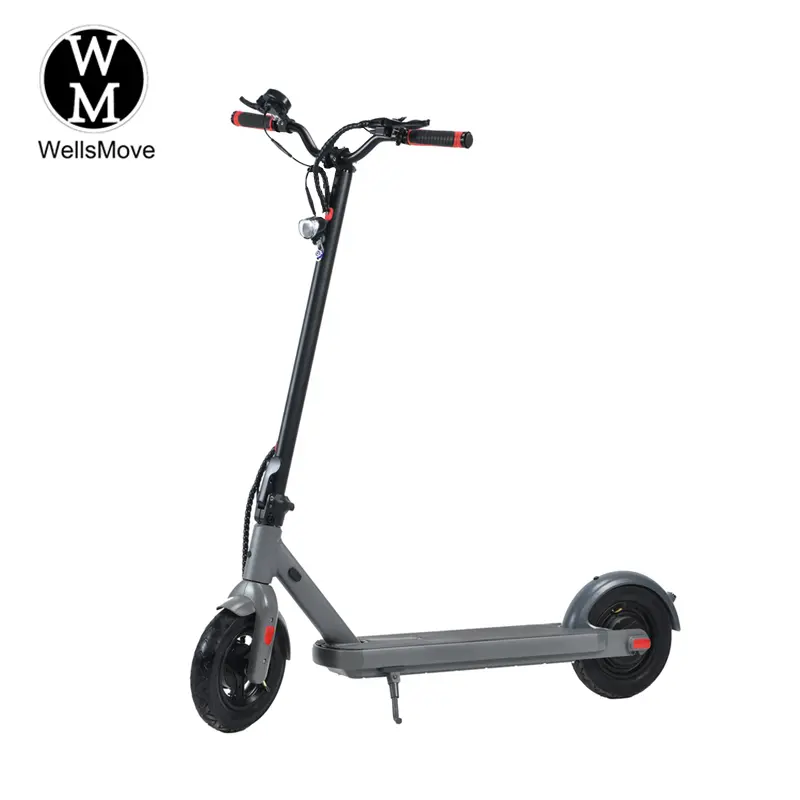
The hub motor supplier model is the default for 70% of imported commuter scooters because assembly is cheap and故障 surface is small. The stator and rotor are sealed inside the wheel rim, so there is no drive belt, no chain, and no exposed gear to mistime. A single 350W rear hub covers flat-city commuting at 25 km/h with minimal warranty calls.
Distributors usually pick single-drive (one hub) for the entry tier and dual-drive (front plus rear hub) for the performance tier. Dual hubs roughly double torque and split braking load, but they also double the failure points and the controller complexity. For Amazon FBA sellers, single rear-hub units keep the carton weight down and the return rate manageable. For city mobility brands building a premium commuter, dual hub at 500W per wheel is the safer pitch than a single oversized motor.
Hub motors trade climb ability for simplicity. The wheel is the rotating mass, so acceleration feels laggy and the unsprung weight hurts suspension response. On smooth pavement that is irrelevant. On cobblestone or broken bike lanes it shows.
Mid-Drive Motor: Torque and Climb for Premium Builds
A mid-drive scooter puts the motor at the deck or crank center, driving the wheel through a reduction gear. Because the motor uses the wheel as a lever rather than spinning the wheel directly, it multiplies torque and keeps the scooter’s center of gravity low. That is why mid-drive units dominate the heavy-rider, delivery, and steep-hill segments.
The downside is price and service. A mid-drive gearbox needs lubrication, alignment, and a controller that understands cadence. Wholesale cost runs 30% to 60% above an equivalent hub unit. For urban commuter lines this is hard to justify. For mobility dealers serving hilly regions, aged riders, or courier fleets, the mid-drive is the unit that actually survives the duty cycle.
Spec mid-drive when climb angle exceeds 15% and when payload exceeds 100 kg. Below that threshold, the extra cost stays on your shelf.
Brushless DC (BLDC): The Efficiency Standard
Technically, both hub and mid-drive units in 2026 are almost always BLDC motor designs. Brushless DC describes the commutation, not the location. A BLDC motor replaces physical brushes with electronic switching, which removes the single biggest wear part in older brushed motors. The result is longer life, wider speed control, and far less heat at partial load.
For distributors this matters in two places. First, BLDC units hold 80% to 90% efficiency across most of their range, so the same battery delivers more real-world kilometers. Second, the absence of brush dust means the motor tolerates sealed, low-maintenance builds that survive long ocean shipping and rough handling. When a factory offers you a brushed motor at a lower price, the saving is false: brush wear turns into warranty claims inside six months.
Matching Power Ratings to Use Cases (35W to 2000W)
Power rating is the number every buyer asks for and almost no one interprets correctly. Peak watts and sustained watts are different figures, and only sustained watts predict field performance.
A 35W to 120W unit serves kids’ ride-on and closed-campus shuttles. A 250W unit is the legal EU commuter ceiling and the safest SKU for city mobility brands importing to Germany or France. A 500W unit covers most adult commuters with headwind and light hills. A 1000W unit enters the performance and light-cargo space. A 2000W unit is a courier or off-road tool with corresponding brake, tire, and frame demands.
Match the rating to the rider, not to the marketing number. A 1000W scooter sold to a 60 kg student on flat roads wastes battery and invites speed-governance trouble at customs. A 250W scooter sold to a 95 kg rider in a hilly town guarantees a refund.
Range and Energy Use: Square Wave vs Sine Wave Control
The motor is only half the story; the controller’s waveform decides how much of the battery reaches the wheel. Square wave controllers are cheap and rugged but deliver jerky low-speed torque and audible buzz. Sine wave controllers cost more and run smoother, quieter, and roughly 8% to 12% more efficient at cruise.
For scooter motor wholesale programs aimed at premium city brands, spec sine wave by default. The smoother takeoff reduces rider complaints and lowers the perceived vibration that drives negative reviews. For the lowest-cost entry tier, square wave keeps the bill of materials tight and the failure mode simple.
Climb Angle, Terrain, and Duty Cycle
Climb angle is the cleanest way to separate motor types for your catalog. An 8% grade covers most European and North American riverfront and suburban routes; a hub motor at 350W to 500W handles it. A 15% grade covers older hillside cities and parking ramps; this is the mid-drive entry point or a dual 500W hub. A 25% grade is delivery ramps, mountain towns, and cargo loads; only a mid-drive or a 1000W-plus dual system should be quoted.
Duty cycle matters as much as angle. A scooter that climbs 15% once per trip is different from a courier unit that climbs 15% forty times per shift. Continuous load is where hub motors overheat and mid-drives earn their cost.
Cooling, Noise, and Vibration
Hub motors rely on natural convection through the rim, which is adequate until sustained climbs trap heat inside a sealed wheel. Mid-drives use the frame as a heatsink and often add a small fan, so they shed heat faster. A few industrial BLDC hubs now use liquid-cooled jackets, but those belong in the 2000W off-road niche, not your commuter line.
Noise follows the same order. Brushed and square-wave units buzz. Sine-wave BLDC hubs are near silent at cruise. Mid-drives add a faint gear whine that premium riders actually read as “powerful.” For the Amazon FBA seller, silent takeoff is a review-driver; spec sine wave and confirm the hub bearing class before container load.
After-Sales Cost: What Actually Breaks
The motor itself rarely dies first. The parts that fail are the Hall sensors, the controller, and the phase wires where they enter a spinning hub. A Hall sensor swap is a 20-minute bench job if your techs stock the chips. A controller swap is a full rewire. A burned hub winding means a returned wheel.
Build your brushless DC motor SKUs around spare-part parity: insist the factory ship 2% spare controllers and Hall harnesses per container, not just the scooters. That single clause cuts your effective warranty cost more than any motor discount.
Waterproofing and Controller Pairing
IP rating is where cheap quotes hide. IPX4 resists splashes and is fine for indoor or dry-climate commuters. IPX5 survives rain riding and deck wash-down, the realistic minimum for European city fleets. IPX7 means temporary immersion and is worth it only for coastal or heavy-rain markets.
Pair the motor with a controller that matches its current draw. A 500W motor at 48V pulls about 10.4A sustained and far more on launch; size the controller with 30% headroom and confirm over-current, over-temperature, and low-voltage cutoffs are set, not just present in the firmware. A mismatched controller is the most common cause of “random power cut” returns.
FAQ
Which motor type has the lowest wholesale failure rate?
Sealed rear hub BLDC units in the 250W to 350W range show the lowest field failure rate because they have the fewest moving interfaces. Keep them on flat-terrain SKUs and pair every container with spare controllers.
Is a mid-drive worth the extra cost for city commuters?
Usually no. Below 15% grade and 100 kg payload, a mid-drive’s torque advantage is unused while its price and service complexity stay. Reserve mid-drive for hilly markets, heavy riders, and cargo use.
Does a higher watt rating mean longer range?
No. Range follows efficiency and battery capacity, not peak watts. A sine-wave 350W BLDC often out-ranges a square-wave 500W unit on the same pack because less energy is lost as heat and buzz.
Can I mix hub motors with any controller?
Only within the same voltage and phase standard. A 36V hub needs a 36V sine or square controller rated above its sustained current. Mismatched pairings cause cutouts and burned windings.
What IP rating should I specify for rainy markets?
IPX5 is the practical floor for year-round European or Pacific Northwest city riding. IPX7 is justified only for coastal, flood-prone, or heavy-rain fleets where deck immersion is plausible.
How many spare controllers should a container include?
Two percent of unit count is the standard buffer that keeps a distributor from stocking out during a warranty spike. Negotiate this into the PO before production, not after the first claim.
Are brushed motors ever the right B2B choice?
Rarely. The small upfront saving is erased by brush wear, dust, and six-month warranty spikes. BLDC is the 2026 baseline for any serious wholesale program.
Related Pages
- Mobility Scooter Wholesale: Complete Buyer’s Guide 2026
- CE Certification for Mobility Scooters: Complete Guide
- How to Get the Best Price on Mobility Scooters
- Mobility Scooter Factory Audit Guide
Tip: Always negotiate 2% spare controllers and Hall harnesses into the PO before production, because a mismatched or missing spare part costs more in warranty labor than any motor discount you negotiated.
Ready to source hub, mid-drive, or BLDC electric scooter motors at wholesale volume?
Post time: Sep-09-2026