

What is the MOQ for Mobility Scooters? Full Guide for Buyers
When sourcing mobility scooters for retail, rental fleets, healthcare institutions, or wholesale distribution, one of the first questions you’ll ask is: What is the minimum order quantity (MOQ) for mobility scooters? Understanding MOQ helps you plan inventory, budget effectively, negotiate better terms, and avoid unexpected barriers when working with manufacturers and suppliers.
This complete guide breaks down everything buyers need to know about mobility scooter MOQs—including typical MOQ ranges, key factors that affect minimum orders, how to negotiate lower MOQs, and how to balance MOQ with cost, quality, and delivery.
Table of Contents
- What Is MOQ for Mobility Scooters?
- Typical MOQ Ranges for Mobility Scooters
- Key Factors That Determine Mobility Scooter MOQ
- How MOQ Affects Pricing, Lead Time, and Customization
- How to Negotiate a Lower MOQ for Mobility Scooters
- MOQ vs. Sample Orders: What’s the Difference?
- Tips to Manage MOQ for Smaller Buyers & Startups
- Final Checklist for MOQ Planning Before Ordering
What Is MOQ for Mobility Scooters?
MOQ stands for Minimum Order Quantity. It refers to the smallest number of units a manufacturer or supplier is willing to produce or sell in a single order.
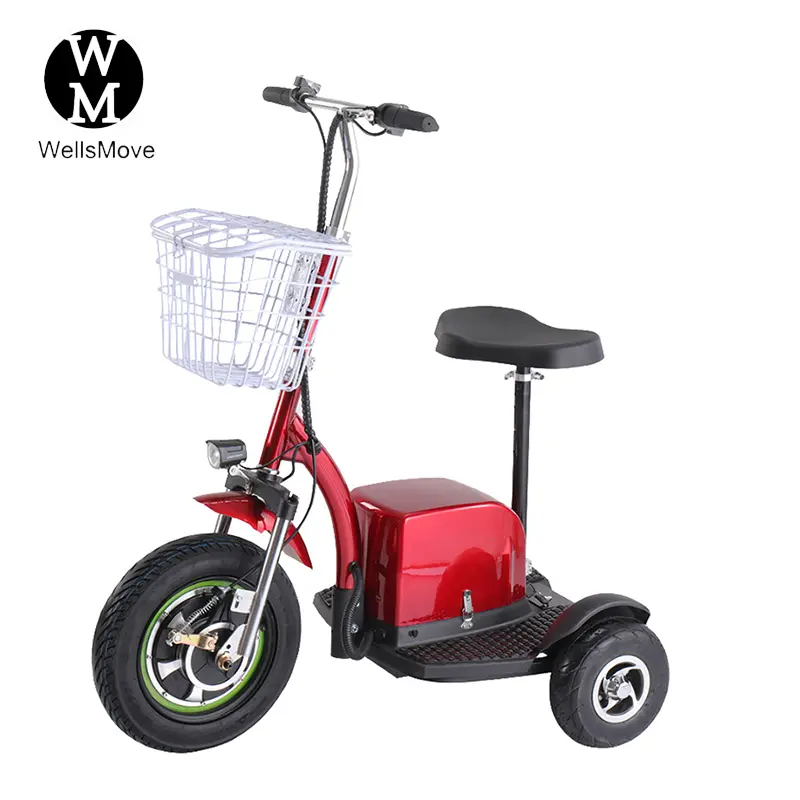
For mobility scooters—large, assembled electric mobility products with metal frames, motors, batteries, and electronic systems—MOQs exist because production involves fixed costs like mold setup, labor scheduling, material purchasing, assembly line preparation, and quality control. Suppliers set MOQs to cover these costs and ensure production efficiency.
MOQ applies to:
- Standard mobility scooters
- 3-wheel & 4-wheel mobility scooters
- Heavy-duty mobility scooters
- Portable & folding mobility scooters
- Mobility scooters for rental, healthcare, or security use
Typical MOQ Ranges for Mobility Scooters
MOQ for mobility scooters varies widely based on manufacturer size, product type, customization, and market. Below are realistic, industry-standard ranges for global buyers.
| Scooter Type | Typical MOQ | Notes |
|---|---|---|
| Standard 3/4-Wheel Mobility Scooter | 50–100 units | Most common for wholesale buyers |
| Folding / Portable Mobility Scooter | 30–80 units | Smaller production runs allowed |
| Heavy-Duty / High-Capacity Scooter | 80–150 units | Larger components & stricter testing |
| Customized / Private Label Scooters | 100–300+ units | Branding, color, packaging changes |
| Factory Direct Bulk Orders | 200–500+ units | Best per-unit cost for large buyers |
Most mid-sized manufacturers set a base MOQ of 50–100 units for standard models. Smaller or specialized factories may offer MOQs as low as 20–30 units for limited batches, while large-scale factories often require higher MOQs for mass production.
Key Factors That Determine Mobility Scooter MOQ
Many elements influence why suppliers set specific MOQs. Understanding these helps you set realistic expectations.
1. Production Line & Setup Costs
Mobility scooters require frame welding, motor installation, wiring, battery mounting, testing, and packaging. Each production run carries fixed setup costs. Lower MOQs mean these costs are spread across fewer units, raising per-unit cost.
2. Material & Component Purchasing
Suppliers buy motors, batteries, controllers, tires, and frames in bulk. Small orders may not meet material supplier MOQs, forcing the factory to pay higher component prices.
3. Product Type & Complexity
- Basic, standard models = lower MOQ
- Heavy-duty, long-range, or medical-grade scooters = higher MOQ
- Folding & lightweight designs often allow smaller batches
4. Customization Level
- Standard colors & logos = lower MOQ
- Custom colors, private labeling, packaging, or accessories = higher MOQ
- Electrical or structural modifications = highest MOQ
5. Manufacturer Size & Capacity
- Small factories: MOQ 20–100 units, flexible terms
- Medium factories: MOQ 50–200 units, balanced cost & quality
- Large factories: MOQ 200+ units, lowest per-unit cost
6. Seasonal & Market Demand
During peak seasons, factories may raise MOQs to prioritize large orders. Off‑peak periods often bring more flexible MOQ terms.
How MOQ Affects Pricing, Lead Time, and Customization
MOQ does not stand alone—it directly impacts three critical parts of your order.
Pricing
- Higher MOQ = lower unit cost
- Lower MOQ = higher unit cost
- Many suppliers offer tiered pricing: 50 units, 100 units, 200 units, 500+ units
Lead Time
- Standard MOQ orders: 25–40 days production
- Below-standard MOQ: may take longer due to schedule adjustments
- Large bulk orders: often faster production with dedicated lines
Customization
Low MOQ orders usually limit:
- Custom colors
- Branding and logo printing
- Manual or box design
- Accessory packages
High MOQ orders unlock full customization.
How to Negotiate a Lower MOQ for Mobility Scooters
Even if a supplier lists a high MOQ, you can often negotiate. Use these practical strategies.
1. Start with a Trial Order
Express interest in a long-term partnership and ask for a pilot order with reduced MOQ to test market demand, quality, and logistics.
2. Combine Multiple Models
Ask to split your MOQ across 2–3 similar models. Many factories accept total MOQ rather than per-model MOQ.
3. Offer Flexible Lead Time
If you can wait longer for production, factories are more likely to accept lower MOQs.
4. Commit to Repeat Orders
A written intent to reorder can convince suppliers to accept smaller initial quantities.
5. Avoid Over-Customization
Keep colors, logos, and packaging standard to lower MOQ requirements.
6. Compare Multiple Suppliers
MOQ varies greatly. Get quotes from 3–5 factories to leverage better terms.
MOQ vs. Sample Orders: What’s the Difference?
Many buyers confuse MOQ with sample orders.
- Sample Order: 1–5 units to test quality, function, and design. Almost always available, but at a higher unit price.
- MOQ Order: The minimum batch for mass production, wholesale pricing, and formal delivery.
Always order samples before confirming your MOQ production.
Tips to Manage MOQ for Smaller Buyers & Startups
If you’re a small retailer, new importer, or local rental business, you can still succeed with mobility scooter sourcing.
- Start with sample orders to validate quality
- Test market demand with a small batch before full MOQ
- Partner with local distributors to split container orders
- Focus on fast-selling standard models to keep inventory moving
- Build long-term relationships for better future MOQ terms
Final Checklist for MOQ Planning Before Ordering
Before you confirm an order, run through this checklist:
- Confirm official MOQ in writing
- Verify tiered pricing for different quantities
- Check if MOQ is per model or per total order
- Confirm lead time for your target MOQ
- Clarify what customization is included at your MOQ
- Confirm shipping, packaging, and warranty terms
- Order samples to match mass production quality
Conclusion
MOQ for mobility scooters is not fixed—it depends on product type, factory capacity, customization, and negotiation. For most buyers, a standard MOQ of 50–100 units offers the best balance of cost, flexibility, and efficiency.
By understanding how MOQ works and using the negotiation strategies in this guide, you can secure favorable terms, reduce risk, and build a reliable supply chain for your mobility scooter business.
Post time: May-11-2026