

Travel Mobility Scooter Buying Guide for Distributors
For distributors, retail operators, rental fleet owners and healthcare institution buyers, selecting the right travel mobility scooter is the core of stable profit and long-term market competitiveness. Travel mobility scooters serve diverse user groups including the elderly, people with disabilities, travel tourists and property patrol staff. Each group has distinct demands for performance, portability and safety.
Choosing unsuitable models will lead to inventory backlog, low sales conversion and poor user reputation. Mastering professional purchasing logic, parameter screening standards and market matching rules can help distributors accurately lock high-quality hot-selling models, reduce procurement costs and expand market share efficiently.
Table of Contents
1 Core Classification of Travel Mobility Scooters
2 Key Performance Parameters Distributors Must Evaluate
3 How to Match Scooter Models with Target Market Scenarios
4 Certification & Quality Standards for Global Market Sales
5 MOQ, Pricing and Supply Chain Cooperation Tips
6 Shipping & Inventory Arrangement for Bulk Procurement
7 Common Pitfalls to Avoid in Mobility Scooter Purchasing
8 Long-term Cooperation Strategies with Scooter Manufacturers
Core Classification of Travel Mobility Scooters
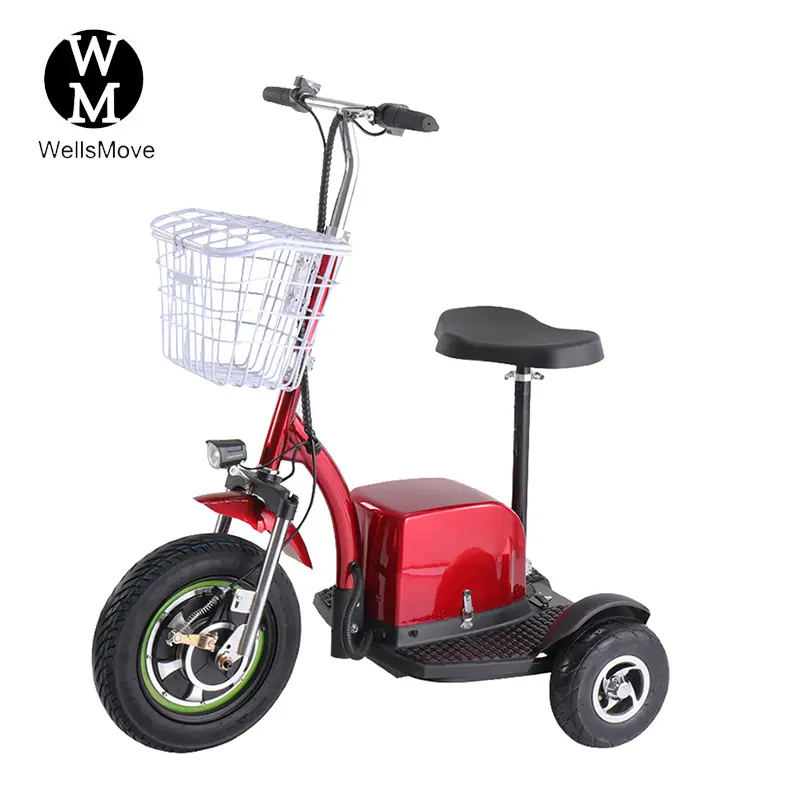
Understanding product classification is the first step for distributors to carry out targeted purchasing. Travel mobility scooters are mainly divided into four categories, each with fixed target customer groups and sales scenarios.
| Scooter Type | Core Features | Target Market | Selling Advantage |
|---|---|---|---|
| Portable Lite Mobility Scooter | Lightweight, foldable, easy to carry, small size | Tourism rental, family daily use, airport and scenic spot service | Convenient storage, low shipping cost, wide audience |
| Personal Daily Mobility Scooter | Simple operation, stable driving, moderate battery life | Elderly daily outgoing, disabled individual travel | Cost-effective, easy maintenance, high repurchase rate |
| Heavy Duty Trike Scooter | High power, strong climbing capacity, large load-bearing | Community patrol, warehouse handling, suburban travel | Durable structure, adaptable to complex road conditions |
| High-end Travel Scooter | Comfortable seat, intelligent control, long endurance | High-end pension institutions, luxury scenic spot rental | High profit margin, premium brand positioning |
Portable foldable models are always the best-selling choice for cross-border distributors, as they adapt to air travel, car trunk storage and short-distance travel needs. Heavy-duty three-wheel models are more suitable for regional offline retail and institutional bulk procurement, with stable market demand and low replacement frequency.
Key Performance Parameters Distributors Must Evaluate
Parameters determine the actual experience and market adaptability of travel mobility scooters. Distributors should focus on core configurations rather than superficial appearance to avoid customer complaints and after-sales problems.
Motor Power
Motor power directly affects driving speed and climbing performance. 500W motor is the mainstream standard for daily travel, meeting flat road and small slope driving needs; 600W high-power motor supports 30-degree climbing, suitable for hilly areas and suburban complex road conditions. For tourist attractions and mountainous market areas, high-power models should be prioritized.
Battery Configuration
48V 12A battery is the basic version, meeting 25-30km daily travel; 48V 20A high-capacity battery achieves 40-50km endurance, ideal for long-distance travel and rental fleet use. Distributors need to match battery capacity according to local user travel habits: urban flat roads can choose standard batteries, while suburban and scenic spot scenarios prefer high-capacity batteries.
Driving Speed
The mainstream speed of travel mobility scooters is 25-35km/h. Elderly and disabled user groups are suitable for 25km/h low-speed stable models; young tourists and patrol scenarios can choose 35km/h high-speed versions. Reasonable speed configuration can not only meet user needs but also comply with global road traffic safety regulations.
Frame & Structure Material
Steel and aluminum alloy are the two mainstream frame materials. Steel frames are low-cost and high-strength, suitable for cost-effective entry-level models; aluminum alloy frames are light, corrosion-resistant and easy to fold, which is the preferred material for portable travel models. The quality of the frame directly determines the service life of the scooter and is a key indicator of quality inspection.
How to Match Scooter Models with Target Market Scenarios
Different regional markets and application scenarios have completely different purchasing demands. Distributors must take market demand as the core to select models and realize precise inventory layout.
Elderly & Disabled Community Market
This group prioritizes safety, simple operation and riding stability. It is recommended to select low-speed, non-foldable classic three-wheel models with comfortable widened seats, one-button start and anti-slip tires. Complicated intelligent functions can be appropriately reduced to lower procurement costs and failure rates.
Tourism & Scenic Spot Rental Market
Tourism scenarios focus on portability, appearance and endurance. Portable foldable lite models and fashionable high-end travel scooters are the best choices. The models need to be easy to store, beautiful in appearance and long in battery life, supporting all-day rental use. Meanwhile, unified appearance design is convenient for brand operation of rental fleets.
Institutional & Commercial Procurement Market
Pension institutions, property security, warehouse logistics and other institutions favor heavy-duty durable models. High-power trike scooters with strong load-bearing capacity and rugged structure should be selected, with emphasis on overall durability and easy after-sales maintenance, focusing on long-term use cost performance.
Cross-border Retail E-commerce Market
Online retail is suitable for lightweight foldable models with small volume and low shipping cost. Such models are easy for container transportation, with low logistics damage rate and wide audience, which can quickly open the global consumer market.
Certification & Quality Standards for Global Market Sales
For distributors engaged in global wholesale and cross-border business, product certification is a necessary threshold to smoothly enter regional markets and avoid policy risks.
All travel mobility scooters sold in European and American markets need to pass CE, FCC and ISO9001 quality system certification, which is the basic qualification for market access. In addition, regional traffic safety certification and environmental protection battery certification also need to be confirmed in advance.
Regular manufacturers with more than 20 years of production experience have mature metal structure production technology and complete electronic system matching, and their products have passed multiple certification tests. Cooperating with such manufacturers can save the cost of independent certification and quickly meet the sales standards of various countries.
MOQ, Pricing and Supply Chain Cooperation Tips
Minimum Order Quantity and pricing are the key concerns of distributors. Different manufacturers have different MOQ settings for different models. Portable lite models usually support small batch trial orders, while heavy-duty trike models have relatively higher MOQ.
Distributors can adopt the strategy of mixed batch procurement for the first cooperation, mixing multiple models to reduce inventory pressure and test local market sales feedback. Long-term stable cooperation can negotiate tiered pricing to obtain more favorable wholesale prices and expand profit space.
In terms of supply chain, priority should be given to manufacturers with independent frame production and electronic system R&D capabilities. Such manufacturers have stable product quality, short production cycles and strong customized support, which can meet the personalized needs of regional markets and follow-up model iteration.
Shipping & Inventory Arrangement for Bulk Procurement
Shipping cost and inventory turnover directly affect the comprehensive profit of distributors. Sea freight is suitable for large-batch bulk procurement with low unit logistics cost and long transportation cycle; air freight is suitable for small-batch urgent orders and new model trial sales, with fast delivery and high cost.
Portable foldable mobility scooters have small packaging volume and high container loading quantity, which can effectively reduce sea freight unit cost and is very suitable for long-distance cross-border transportation. Heavy-duty trike models have large volume and single container loading quantity, so distributors need to reasonably plan procurement quantity according to inventory sales cycle to avoid overstocking.
It is recommended that distributors establish a hierarchical inventory system: regular hot-selling models maintain conventional inventory, high-end customized models adopt order-based production and delivery, balancing capital occupation and market supply capacity.
Common Pitfalls to Avoid in Mobility Scooter Purchasing
Many distributors easily fall into purchasing misunderstandings, resulting in inventory backlog and profit loss. First, do not blindly pursue low prices and ignore frame material and battery quality. Low-cost inferior models are prone to failure, triggering a large number of after-sales problems and damaging market reputation.
Second, do not ignore regional road conditions and user habits to select models. For hilly areas, low-power models with weak climbing ability will be unsalable; for elderly concentrated areas, overly complex intelligent models cannot be accepted by users.
Third, do not neglect after-sales service support. When cooperating with manufacturers, it is necessary to confirm the supply of spare parts, warranty period and after-sales maintenance technical support. Perfect after-sales system can improve customer loyalty and repeat order rate.
Long-term Cooperation Strategies with Scooter Manufacturers
To achieve stable long-term development, distributors need to establish in-depth cooperative relations with professional mobility scooter manufacturers. First, take model iteration as the linkage point, follow the manufacturer’s new product launch rhythm, and timely launch new style and new configuration models to seize market share.
Second, explore customized cooperation, carry out personalized design in appearance color, logo marking and functional configuration according to local market characteristics, create differentiated competitive products and avoid homogeneous price competition.
Third, make full use of the manufacturer’s market support resources, including product publicity materials, market sales guidance and industry trend sharing, to quickly expand local sales channels and form a stable sales network covering retail, rental and institutional procurement.
FAQS
What is the most cost-effective travel mobility scooter for distributor wholesale?
48V 12A 500W portable lite folding scooter is the most cost-effective mainstream model, suitable for most global markets.
48V 12A 500W portable lite folding scooter is the most cost-effective mainstream model, suitable for most global markets.
Which scooter type is best for tourist scenic spot rental?
Lightweight foldable mobility scooters with long battery life and fashionable appearance are the first choice for scenic spot rental fleets.
Lightweight foldable mobility scooters with long battery life and fashionable appearance are the first choice for scenic spot rental fleets.
What certifications are required for selling mobility scooters in Europe and America?
CE, FCC and ISO9001 certifications are mandatory, meeting local market access and safety standards.
CE, FCC and ISO9001 certifications are mandatory, meeting local market access and safety standards.
How to reduce shipping cost for bulk scooter procurement?
Choose foldable portable models to increase container loading quantity and prioritize sea freight for large batch orders.
Choose foldable portable models to increase container loading quantity and prioritize sea freight for large batch orders.
What is the key parameter to check when purchasing heavy-duty trike scooters?
Focus on motor power, climbing angle, frame material and load-bearing capacity to adapt to complex road conditions.
Focus on motor power, climbing angle, frame material and load-bearing capacity to adapt to complex road conditions.
Conclusion
This Travel Mobility Scooter Buying Guide for Distributors covers product classification, parameter screening, market matching, certification standards, procurement cooperation, shipping layout and risk avoidance, covering all links of distributor wholesale procurement.
Distributors should always take market demand as the core, reasonably match model types and performance parameters, prioritize certified high-quality manufacturers for cooperation, and balance MOQ, pricing and logistics costs. Avoid blind low-price competition and inappropriate model selection, rely on differentiated product layout and perfect after-sales support to stabilize market position, continuously expand customer groups, and realize sustainable profit growth in the travel mobility scooter industry.
Post time: May-29-2026