

The Ultimate Mobility Scooter Comparison Chart for 2026
Table of Contents
- Understanding Mobility Scooter Buying Fundamentals
- Main Mobility Scooter Categories Explained
- Critical Specs That Shape Real‑World Performance
- 2026 Mobility Scooter Comparison Chart
- How Terrain & Operating Environment Change Your Selection
- Key B2B Sourcing Considerations for Distributors & Retailers
- Advanced Features to Watch in 2026 Mobility Equipment
- Frequently Asked Questions
- Conclusion
- Related Posts
Mobility equipment buyers often search for reliable mobility scooters that fit diverse end‑user requirements. Whether you serve senior end‑users, people living with disabilities, tourism rental fleets, healthcare institutions or security patrol operations, selecting the right model makes a huge difference to your landed cost, inventory turnover and customer satisfactionWellsmove. Some buyers prioritize lightweight portability for car‑trunk transport. Others need heavy‑duty power for steep hills and frequent commercial use. Many wholesale buyers overlook small but vital details such as climbing angle, real‑world battery range and regional compliance certifications, only to face costly setbacks later.
Learning the core fundamentals of mobility scooter specifications is essential for distributors, retailers and fleet operators. Motor output, battery chemistry, frame build quality, brake systems and weight capacity all play major roles in long‑term product reliability. Even minor differences in chassis design can change how well a unit performs on uneven pavement, slopes or gravel surfaces. Exploring these specifications will help you narrow your product lineup and match inventory to your local market demand. In the end, success comes down to balancing performance, durability, compliance and target‑user requirements.
Understanding Mobility Scooter Buying Fundamentals
Understanding mobility scooter buying fundamentals is essential for making smart purchasing decisions. Motor power, battery capacity, frame material, brake type and maximum load capacity all influence day‑to‑day usability and product lifespan. Under‑powered units will struggle with inclines and consume battery quickly under heavy load. Over‑spec’ed heavy models may become difficult to transport and raise shipping and warehousing costs. Aim to match technical parameters to your typical end‑user profiles and operating environments.
Tips for spec review: Always cross‑reference datasheet claims against real‑world operating conditions. Advertised maximum range is almost always measured under ideal lab conditions; expect 60‑75 % of listed range in regular daily use, especially in cold weather or hilly locations. Pay close attention to climbing angle ratings. A scooter rated for 15‑degree inclines works well for gentle neighborhood slopes, while hilly regions or scenic rental sites require 25‑30‑degree climbing capabilityWellsmove. Remember that payload directly impacts climbing performance and effective driving range. Every wholesale buyer should test these assumptions before committing to large‑volume orders.
When you evaluate product brochures and specification sheets, keep in mind that printed figures do not always reflect field performance. Test different categories of scooters whenever sample units are available. Don’t hesitate to ask manufacturers for third‑party test reports and certification documentation. Every market carries unique compliance expectations, and ignoring them can result in customs holds or product‑liability risk.
Main Mobility Scooter Categories Explained
When exploring mobility scooter categories, it is critical to understand how each design serves distinct end‑user and business scenarios. Portable lite mobility scooters are popular for family end‑users and retail resale. Their foldable construction allows storage inside vehicle trunks. However, compact lightweight frames naturally limit maximum load and climbing performance, making them best suited for flat urban environments and short errands.
Personal mobility scooters strike a solid middle ground. These models feature upgraded seating, improved suspension and stable four‑wheel layouts. They handle regular community outings, shopping trips and moderate outdoor pavement. For retail channels targeting senior daily riders, this category represents high‑volume mainstream inventory.
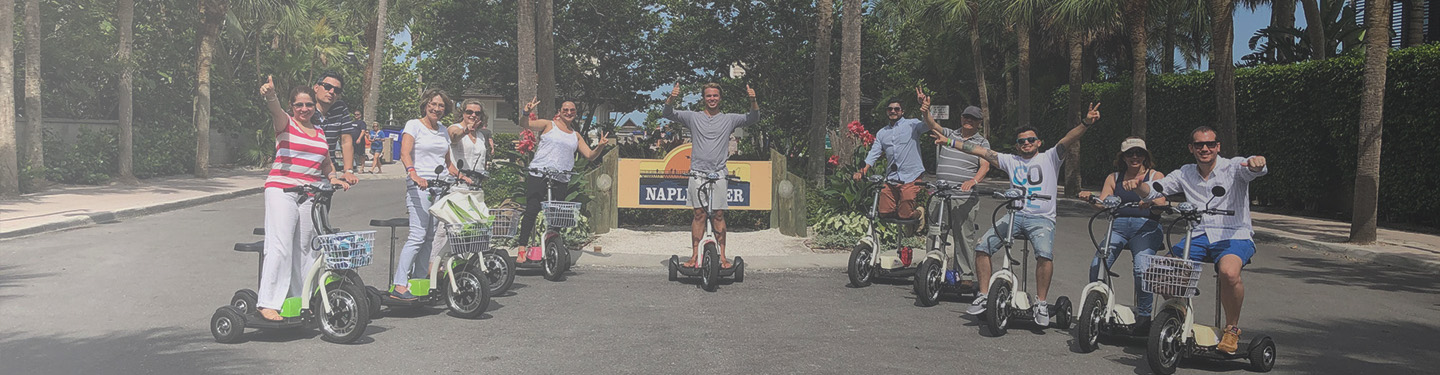
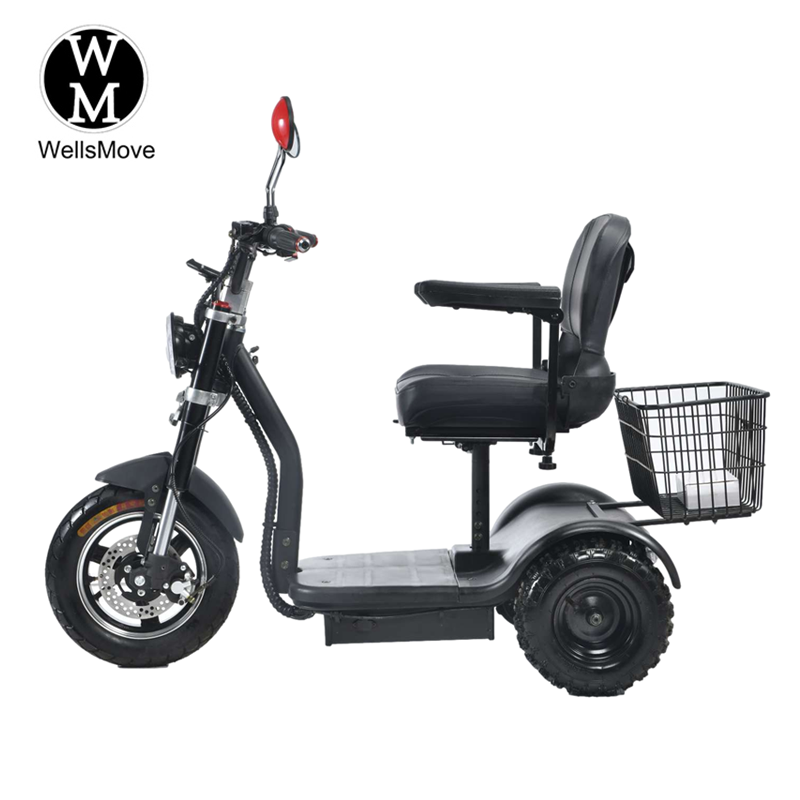
Heavy‑duty tricycle and four‑wheel mobility scooters deliver higher motor wattage, reinforced steel frames and large‑capacity batteries. They support higher user weight, steep hill climbing and extended daily operating hours. These are widely deployed for tourist rentals, campus patrol and warehouse site movement. Yet they come with higher unit weight and larger physical footprint, which increases ocean or air freight expenses and storage requirementsWellsmove.
表格
| Scooter Category | Primary End‑User Groups | Typical Business Application |
|---|---|---|
| Portable Lite Mobility | Seniors, car‑traveling users, apartment dwellers | Retail consumer sales, small‑volume retail stock |
| Personal Mobility | Daily senior commuters, disabled community users | Mainstream retail, healthcare resale |
| Heavy‑Duty Mobility | Larger‑weight users, rental fleets, patrol operators | Tourism rentals, institutional bids, commercial projects |
Critical Specs That Shape Real‑World Performance
Motor power directly defines climbing torque and available payload. Brushless DC motors are preferred for low noise, reduced maintenance and extended service cycles. Common ratings span 250 W dual‑motor setups for compact portables, up to 600‑1000 W differential motors on heavy‑duty units built for 30‑degree slope work. A 500 W motor can satisfy flat‑terrain neighborhood travel, but hilly locations demand higher wattage to avoid battery drain and premature component wear.
Battery selection creates major trade‑offs. Lead‑acid battery configurations keep unit purchase cost low, but add substantial weight and deliver fewer total charge cycles. Lithium‑ion batteries reduce overall scooter weight and offer more charge‑discharge cycles, yet carry higher unit cost and strict compliance documentation requirements for shipping and customs clearance. Voltage options include 36 V and 48 V set‑ups; higher voltage supports longer driving distance per full charge.
Frame and chassis quality often separate budget‑level units from durable commercial‑grade inventory. Steel frames deliver robust impact resistance, while aluminum alloy reduces total shipping weight. Welding workmanship and anti‑corrosion surface treatment deserve close inspection, especially for coastal or humid operating climates. Ground clearance, wheel size and suspension determine ride comfort over cracked pavement, curbs and uneven ground.
Safety components deserve thorough evaluation. Electromagnetic brakes offer reliable automatic stopping; drum and disc brake variations appear across different product tiers. Anti‑tip wheels, turn signals, front‑rear LED lighting and warning horns should be checked for completeness, as many regional markets mandate these features for legal road‑path operation.
2026 Mobility Scooter Comparison Chart
表格
| Scooter Class | Motor Power | Battery Options | Max Load | Climbing Angle | Typical Range | Best Business Fit | Ease of Transport |
|---|---|---|---|---|---|---|---|
| Portable Lite Mobility | 250‑300 W Dual Motor | 36V 10‑15Ah | 120 kg | 15° | 25‑40 km | Retail consumer sales, travel‑oriented end‑users | Excellent (foldable for car trunk) |
| Personal Mobility | 500‑600 W | 48V 12‑20Ah | 130‑150 kg | 20° | 30‑45 km | General retail, senior daily‑use inventory | Moderate; non‑fold fixed frame |
| Heavy‑Duty 4‑Wheel | 800‑1000 W Differential | 48V‑60V 20Ah+ | 150 kg | 25‑30° | 30‑50 km | Tourism rental, patrol, hilly‑terrain resale | Poor; large heavy chassis |
| Dual‑Seat Heavy‑Duty Trike | 600‑800 W | 48V 12‑20Ah | 150 kg | 30° | 25‑35 km | Scenic‑spot two‑person rental | Poor; large footprint |
Note: All range figures reflect manufacturer laboratory testing. Real‑world distance will decrease under heavy payload, cold temperatures, steep inclines and frequent stop‑start riding conditions.
How Terrain & Operating Environment Change Your Selection
Flat urban residential neighborhoods place relatively light demands on mobility scooters. Most portable‑lite and personal‑mobility categories perform adequately on smooth pavement. The main concerns become turning radius for tight doorways and sidewalk maneuvering, plus ease of user ingress‑egress.
Hilly suburban or countryside locations completely shift priorities. In these markets, climbing angle and motor torque become non‑negotiable purchasing criteria. Distributors serving hilly regions should avoid stocking low‑wattage lightweight models, as end‑users will report poor real‑world performance and high product‑return rates. Heavy‑duty platforms with reinforced suspension handle uneven rural surfaces far betterwellsmove…..
Commercial rental and fleet environments create high‑cycle operating stress. Tourism sites, security patrol and warehouse mobility see daily repeated start‑stop operation, variable‑weight riders and exposure to dust, rain and temperature swings. For these use‑cases, prioritize heavy‑duty frames, high‑cycle‑rating batteries and readily‑available spare‑part support, even if upfront unit costs are higher. Light‑weight consumer‑focused scooters tend to suffer accelerated wear in fleet‑rental service.
Indoor‑focused applications, such as senior‑care facility circulation, reward compact turning radius and moderate speed limits. Wide heavy‑duty units may struggle navigating narrow hallways and door openings, making mid‑size personal mobility machines the more practical inventory choice.
Key B2B Sourcing Considerations for Distributors & Retailers
Compliance and certification top the list of wholesale buying risks. Mobility scooters are treated as medical aids or special electric vehicles in most global territories. European markets require CE‑related standards such as EN 17128. North American sales demand battery‑safety certifications such as UL 2271. Many new importers accept printed decal logos without valid test‑report verification, risking full‑shipment detention at customs and product‑liability exposure. Always request verifiable copies of certification documentation before finalizing purchase contracts.
Minimum order quantity (MOQ) planning directly shapes your cash flow and inventory strategy. Some factories support small mixed‑model trial orders for new distributors, while large‑volume OEM branding requests demand significantly higher MOQ thresholds. Understand whether your supplier offers mixed‑container loading for multi‑model inventory builds, and clarify lead‑times for restocking popular SKUs.
Shipping cost differences between sea freight and air freight heavily influence landed unit cost. Lightweight portable‑style scooters have lower per‑unit ocean‑shipping expense, while heavy‑duty units drive up freight charges due to higher gross weight. Calculate total landed cost including freight, import duties and local inland delivery, rather than evaluating factory price alone.
OEM‑ODM customization options can help retailers build market differentiation. Many manufacturers support custom body colours, logo printing, accessory pre‑fitting and multi‑language user manuals. Confirm whether customizations alter MOQ requirements and production lead‑times, so you can align expectations with your sales‑launch timelineWellsmove.
Spare‑part availability is frequently overlooked during sourcing. For long‑term retail success, confirm lead‑times and pricing for consumable items: tires, brake components, battery packs, control‑tiller assemblies and lighting parts. Suppliers with robust spare‑part support reduce your after‑sales service burden.
Advanced Features to Watch in 2026 Mobility Equipment
Adjustable ergonomic seating continues improving across product tiers. 2026‑generation mobility scooters increasingly include height‑adjustable armrests, padded high‑back headrests and seat‑swivel mechanisms to simplify user transfers. For retail‑facing inventory, upgraded seating comfort translates directly to higher end‑user satisfaction and positive word‑of‑mouth feedback.
Improved lighting and visibility packages are becoming standard on mid‑to‑high‑end platforms. Integrated bright LED front lamps, rear brake‑activated lights and indicator blinkers improve safety for dusk‑and‑evening operation, and also satisfy many regional legal requirements for path‑travel electric vehicles.
Modular accessory compatibility adds sales value. Many new‑release scooters accept quick‑fit add‑ons: front shopping baskets, rear storage boxes, walking‑stick holders and cup‑holder attachments. Offering these accessories as upsell items increases average order value for retail‑oriented businesses.
Enhanced battery management systems deliver better cell‑protection logic, helping extend total service life and reduce premature warranty returns. Smart BMS modules offer over‑charge, over‑discharge and short‑circuit protection. When comparing competing product lines, ask suppliers to explain their battery‑management‑system implementation.
Frequently Asked Questions
Q: What real‑world range should I quote to retail customers? A: Always advise end‑users that lab‑stated maximum range reflects ideal testing circumstances. Expect roughly 60‑75 % of the datasheet range under everyday conditions. Rider weight, hills, cold ambient temperature and frequent acceleration all reduce practical driving distance.
Q: How important is climbing‑angle specification for bulk buying decisions? A: Very important. Markets with rolling or hilly terrain require higher‑angle ratings. A scooter that performs adequately on flat ground may struggle and drain batteries rapidly when faced with repeated inclines. Match your stocked‑model climbing capability to your local geography.
Q: Which certification documents must I verify before importing mobility scooters? A: This depends entirely on your target sales territory. For European sales check EN 17128 and associated CE documentation. North‑American buyers should review UL 2271 battery‑safety paperwork. Always obtain full test‑report files, not just sticker‑logo images on product brochures.
Q: Are lithium‑ion mobility scooters more complex for shipping and import? A: Yes. Lithium‑ion batteries are classified as hazardous goods under international transport regulations. You must confirm your supplier properly prepares UN‑compliant packaging and documentation for sea or air shipment. Non‑compliant battery paperwork can halt shipments.
Q: What is the difference between personal mobility and heavy‑duty tricycle scooters for rental‑fleet deployment? A: Personal mobility models work for low‑intensity consumer retail. Heavy‑duty tricycle or four‑wheel scooters use reinforced frames, higher‑power motors and larger‑capacity batteries built for repeated high‑cycle commercial use. For tourist‑rental fleets, heavy‑duty configurations deliver much longer service life.
Q: Can I mix multiple different‑model scooters in one shipping container for trial inventory? A: Many manufacturers support mixed‑container loading for importer trial orders, but MOQ and surcharge terms vary widely from factory to factory. Confirm container‑mixing policies and associated lead‑times during early supplier‑negotiation conversations.
Conclusion
The article “The Ultimate Mobility Scooter Comparison Chart for 2026” walks through the core elements that distributors, retailers and fleet operators need to evaluate when sourcing mobility‑scooter inventory. It opens with buying fundamentals, emphasizing motor performance, battery selection and frame build‑quality as foundational decision‑points. Next, it breaks down major mobility‑scooter categories: portable lite mobility, personal mobility and heavy‑duty tricycle/four‑wheel units, explaining which business applications each category best serves.
Additionally, the guide provides a consolidated comparison chart for quick spec review, explains how terrain shapes product selection, and lays out critical B2B sourcing considerations covering compliance certification, MOQ planning, landed shipping‑cost calculation and spare‑part support. It also highlights notable advanced‑feature trends for 2026 mobility equipment.
For procurement professionals, successful mobility‑scooter sourcing is never about selecting a single universally‑perfect model. It is about matching technical specifications to local market geography, end‑user profiles and business‑model priorities. Understanding these variables helps you build resilient, profitable inventory assortments that satisfy your retail customers and commercial‑fleet partners.
Post time: Aug-31-2026