


Selling Mobility Scooters Through the US DME Channel: Insurance Reimbursement, Documentation and Dealer Requirements
The United States does not buy mobility scooters as one market. It buys them as two, and the two behave almost nothing alike. On one side sits the cash-pay world of online listings, pharmacy shelves and mass retail, where a model wins on price, colour range and a carton that survives parcel handling. On the other sits the reimbursement world of durable medical equipment dealers, HME chains and billing departments, where a model wins on paperwork, serviceability and whether the file behind it can survive an audit. A scooter that sells 3,000 units a month on a marketplace can sit untouched in a DME warehouse for two years, and a model nobody has heard of can win a national contract because its technical documents and spare parts list were ready before the first sales email went out.
This guide is written for importers, brand owners and factories approaching the durable medical equipment (DME) channel in the United States. It covers how the channel is structured, what changes between reimbursement and cash-pay procurement, which documents and processes dealers actually ask about, which product features decide whether a model is stocked, how pricing layers stack from factory to end user, and where first-time entrants usually go wrong. Pre-market regulatory filing and generic spare parts strategy are separate subjects and are not repeated here.
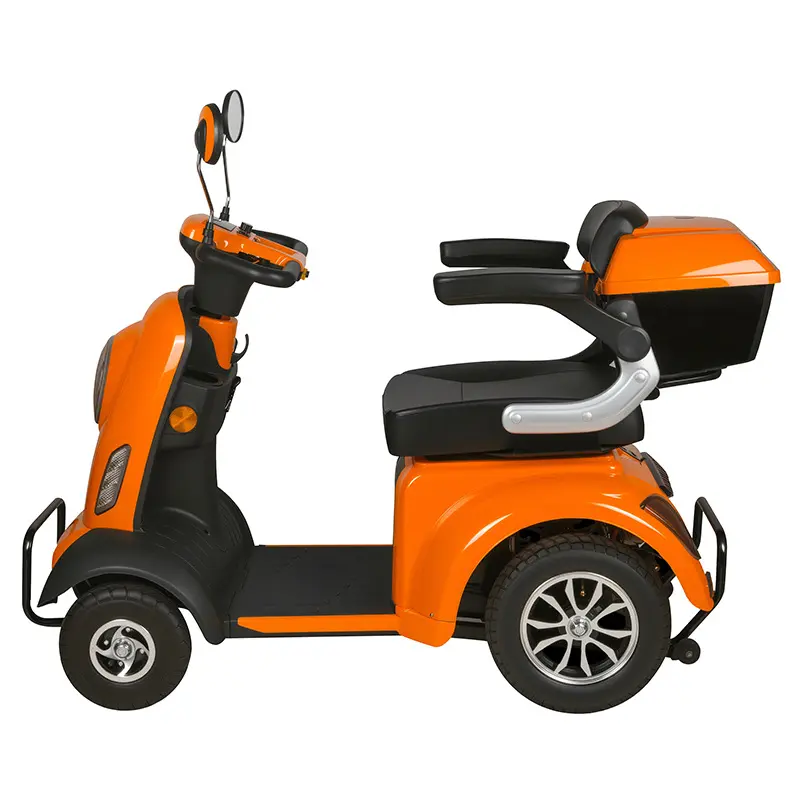
How the US DME Channel Is Actually Structured
Dealers rarely describe themselves as “DME”. They describe themselves by how they get paid, and how they get paid determines how they buy, how much they order and what they demand from a supplier. Five sub-channels matter to an overseas factory.
Independent DME Dealers
These are the traditional storefront and delivery operators. They bill Medicare, state Medicaid programmes and private insurers, and they also take cash customers. They deliver, set up, adjust and repair. Because they are paid after the fact, their purchasing behaviour is driven by three things: whether a scooter fits a class of equipment that their payer will cover, whether the required documentation can realistically be produced for each patient, and whether the unit can be serviced locally rather than replaced. Their order pattern is repeated small quantities, not one large container. They need a spare parts channel, a technical manual they can hand to a technician, and a phone number that answers.
Pharmacies and Chain Drugstores
Pharmacy chains are mostly cash-pay on mobility products, with a small amount of billing in some states. What they buy is light, compact, low-cost equipment that fits a defined shelf or back-of-store footprint. Retail packaging matters here as much as the product: a scooter that arrives with plain brown cartons and no barcode will not pass a category buyer. Returns handling and rapid replenishment of a small number of SKUs matter more than a broad model range.
HME Chains and National Providers
The large national home medical equipment operators run formal vendor qualification processes. Expect a supplier questionnaire, financial documents, insurance certificates, product liability coverage limits, EDI or a portal for orders and invoices, and clean structured product data. Approval is slow and the paperwork is heavy, but a single approved listing can move volume that no independent dealer can match. These buyers also audit suppliers periodically and will ask for corrective action plans when a batch fails inspection.
Online DME Retailers and Marketplaces
Online DME sellers occupy the middle ground: they are cash-pay businesses but they think in terms of catalogue data, drop-ship readiness and returns rate. They care about carton strength, assembly time out of the box, part availability for warranty replacement, and a supplier who will not sell the identical model to a competing seller at a lower price under a different brand name. Channel conflict is a real objection and it is usually the first question asked.
Retail Cash-Pay and Mass Retail
Mass retail is the least documented and the most price-driven channel. Appearance, colour choice, immediate in-store usability and a low retail price point decide the order. It is a volume business with thin margins and heavy promotional pressure, and it rarely converts into the DME relationships that make a supplier durable in the US market.
Reimbursement Versus Cash-Pay: Two Different Purchase Briefs
Once you understand that reimbursement and cash-pay procurement are governed by different economics, the specification differences stop being surprising.
Reimbursement-funded equipment is bought by a professional buyer who is spending a payer’s money against a set of coverage conditions. Specification discipline is high and brand loyalty is low, because the decision is tied to what the payer will accept and what the patient clinically needs, not to what looks good. Dealer cost is compared against a reimbursement allowance rather than against a retail competitor, so there is a ceiling on what the dealer can pay. Durability and serviceability dominate: a scooter that returns for repair twice inside the warranty period destroys the margin on the original sale. Weight and frame rigidity are judged against real users who are elderly and often frail, and against delivery staff who load and unload the unit from a van every day.
Cash-pay equipment is bought by a consumer who pays out of pocket. Here the consumer compares your scooter with a picture on a screen and a price tag. Colour options, seat styles, basket and mirror accessories, LED lighting, and a modern-looking tiller sell units. Weight reduction is also a selling point, but for a different reason: the buyer wants to load it into a car boot without help. Documentation is largely invisible to this buyer, which is exactly why factories that grew up in cash-pay struggle when they enter the DME channel. The documents that this buyer never reads are the documents that decide a DME order.
In practice, most successful suppliers run two product lines and keep them deliberately apart. A high-visibility, feature-rich model for retail and online, and a plain, over-built, parts-common model for the DME channel. Sharing one platform across both channels usually produces a scooter that is too expensive for cash-pay and too fragile for reimbursement.
Documents and Process: What the Reimbursement Path Typically Requires
An overseas factory does not bill American payers and does not decide coverage. The dealer and its billing staff do. What the factory controls is whether the product is documented well enough for the dealer to bill with confidence. The following is a conceptual overview of the categories involved; specific criteria, code sets and fee schedules change over time and must always be confirmed against the current published guidance from the relevant payer or programme.
The Clinical Order and Evaluation
Reimbursed mobility equipment normally starts with an order from a qualified practitioner, supported in many cases by a face-to-face examination and a functional mobility assessment of the patient. The medical record has to establish that the equipment is medically necessary and appropriate for the patient’s condition. This is a clinical and billing function, but it has a product implication: the equipment must match the clinical description. If the record describes a specific capability, a specific weight capacity or a specific seating configuration, the delivered unit must conform, or the claim is exposed.
Product Classification Coding
US payers work with classification code systems, and mobility equipment is categorised within the HCPCS code structure used for medical equipment and supplies. Which code applies to a given scooter depends on its construction, performance and intended use rather than on its marketing name, and the classification is assigned by the billing party under the current rules. From a factory standpoint the practical point is that technical parameters feed directly into classification. Weight capacity, turning radius, speed, range, motor type, seat and frame configuration and the presence or absence of certain features all move a product across category boundaries. Suppliers who can hand a dealer accurate, consistent and verifiable specifications make the dealer’s coding decision easier; suppliers who publish vague or contradictory specs shift that risk onto the dealer, and dealers remember.
Dealer Qualification and Enrolment
On the dealer side, participation in Medicare and in many insurance networks generally involves supplier enrolment, accreditation through an approved accrediting organisation, and compliance with programme standards, with a surety bond requirement applying in many cases. These obligations sit with the dealer, not with the exporter, but they explain dealer behaviour. An accredited dealer operates under written policies for intake, delivery, setup, patient instruction, repair records and complaint handling, and it will expect supplier documentation that supports those policies. Confirm the details with the current programme guidance, as requirements and thresholds are updated periodically.
Two honest limits should be stated plainly. A factory cannot promise a dealer that a given model will be reimbursed. And a supplier cannot guarantee coverage for a specific patient. What a supplier can legitimately claim is that a model was designed and documented to sit inside a recognised equipment category, and that all supporting technical information is accurate and available on request.
Product Requirements That Decide Whether a Model Sells in DME
DME specification lists are shorter than consumer ones but far less forgiving.
Accessibility comes first. Adjustable armrests that flip up or swing away, a footrest or footboard that can be positioned or removed, and a seat that swivels and slides to let a user transfer safely from a bed, chair or vehicle are not accessories in this channel, they are entry conditions. Transfer-friendly seating and tool-free tiller adjustment are qualifying features, not upsells. Delta tillers that adjust without tools and controls that can be operated with limited hand strength are expected.
Weight and breakdown determine delivery economics. A dealer’s delivery technician is usually working alone, often at a second-floor apartment or a narrow doorway. A unit that separates into components where the heaviest piece can be lifted by one person, with clear quick-release points and no fragile connectors, is far easier to sell into reimbursement than a heavier integrated frame, even if the heavier frame is stronger. Frame design should assume repeated assembly and disassembly over years, not once out of the box.
Battery type drives both product positioning and logistics. Sealed lead-acid packs are lower cost, heavier and generally less problematic for ground transport, while lithium packs cut weight and extend range but attract transport regulation. Lithium cells must be shipped and documented as dangerous goods, and lithium batteries carried on aircraft are subject to strict capacity and handling limits. Any claim a dealer hears about a scooter being flight-friendly needs to be verified against the current airline and regulatory rules rather than repeated from a brochure, and any lithium model aimed at the reimbursement channel should come with complete transport documentation and a compliant pack design.
Finally, build consistency. A payer does not care about cosmetic variation, but a dealer services dozens of units from the same order and expects them to be identical. Batch-to-batch variation in the frame, controller settings or wiring harness turns a warranty programme into a repair backlog.
What Dealers Ask Before They Will Stock You
The first conversation is rarely about price. It is about what happens after the sale.
- Warranty terms — duration by component, what is covered and what is excluded, who pays for return freight, and how a claim is filed and settled. A warranty that requires the dealer to ship a whole scooter back across an ocean is not usable.
- Spare parts supply — availability of controllers, motors, transaxles, chargers, tyres, batteries, seat posts and harnesses, with stated lead times, a published parts list with part numbers, and the ability to ship small quantities rather than full cartons.
- Field service ability — service manuals with wiring diagrams and fault codes, controller programming guidance, and a technician who can be reached during US business hours or answered within one working day.
- Returns and claims process — an agreed procedure for dead-on-arrival units, freight damage, repeat failures and credit or replacement handling, documented rather than agreed verbally with one salesperson.
- Training support — short, practical materials that let a dealer’s technician service a new model without a factory visit: assembly instructions, adjustment procedures, diagnostic chart and preventive maintenance schedule.
Tip: Before quoting a DME dealer, assemble a service and warranty package that answers freight, parts lead time and claim settlement in writing, because those three points decide more orders than the unit price does.
None of this is exotic, and all of it is cheaper to build before the first order than to retrofit after it. Parts lead time and claim settlement decide repeat orders; unit price decides only the first quotation.
Pricing and Margin Structure: How the Layers Relate
Mobility scooter pricing in the US channel stacks in a predictable order, and the relationships matter more than any single number, which will always depend on the model, the volume, the container mix and the channel.
At the bottom is the factory or FOB price paid by the importer, made up of bill of materials, labour, packaging and margin. Freight, duty, insurance and inland transport are then added to give the landed cost. The importer or brand owner builds its own overhead and target margin on top of landed cost to arrive at the dealer price, which is the figure a DME dealer sees on a quotation. The dealer then applies its own margin and its own cost of delivery, setup, billing and service to arrive at the retail or billed price to the end user. In the cash-pay channel that final figure is set by competition. In the reimbursement channel it is effectively capped by the applicable allowance or fee schedule, so the whole chain works backwards from that ceiling: the allowance must cover the dealer’s acquisition cost, its service cost and its margin. If it does not, the dealer will simply stock a different model.
Two consequences follow. First, the lowest FOB price does not automatically win the DME order, because a cheaper unit with weaker parts availability costs the dealer more in service than it saves in purchase price. Second, a supplier that cannot explain where its model sits relative to the payment ceiling will be treated as unfamiliar with the channel. Describe the structure and the drivers of cost; do not assert specific allowance figures, because those are published and updated by the payers and should be checked in the current schedules.
Documentation Checklist for Importers and Factories
Everything below should exist before a DME dealer is approached, in English, as clean digital files rather than photographed pages.
- Model-specific user manual — clear English, correct terminology, covering assembly, operation, charging, transport, safety limits and troubleshooting.
- Technical specification sheet — consistent across every document, covering dimensions, weight of the unit and of the heaviest component, weight capacity, speed, range, turning radius, climbing ability, motor and controller ratings, battery chemistry and capacity, wheel and tyre sizes, and braking type.
- Warranty statement — component-level coverage periods, exclusions, claim procedure and freight responsibility.
- Spare parts list with part numbers — exploded diagrams where possible, with ordering units and typical lead times.
- Service and repair manual — wiring diagram, controller programming notes, fault code table and preventive maintenance schedule.
- Conformity and test documentation — test reports and declarations relevant to the product and the destination market, together with battery transport documentation for lithium models.
- Packaging and shipping data — carton dimensions, gross weights, container load plan and any handling restrictions.
- Commercial documents — quotation sheet with volume breaks, payment terms, lead times and MOQ per model and colour.
Where a test or conformity document has an expiry or a revision date, keep the current version on file and replace superseded copies promptly. Dealers who are audited will be asked for the document that was valid on the delivery date, not the newest one.
Channel Development: How to Reach DME Dealers
Direct cold outreach works, but slowly, and it works far better when it follows the channel’s own rhythm.
Industry trade shows remain the single most efficient entry point. Events serving home medical equipment, rehabilitation and mobility bring independent dealers, buying groups and chain category managers into the same hall, and a supplier with a working unit, a parts list and a warranty sheet on the table can hold a real conversation. Regional and state associations also run meetings and buyer events that are cheaper and less crowded than the national shows.
Catalogs and buying groups matter more than most exporters expect. Many independents purchase through group purchasing organisations or distributor catalogues, so getting a model listed with the right distributor can reach hundreds of dealers at once. That route usually requires the same documentation set plus clean product data and images.
Online platforms are useful for cash-pay and for lead generation but they do not substitute for dealer relationships, and some channels restrict how medical equipment may be listed or advertised. Approach online marketplaces as a complementary cash-pay channel with its own pricing and packaging discipline, and keep that commercial policy separate from DME terms so that dealers do not find their model online undercutting them.
Common Mistakes When Entering the US DME Channel
The same errors appear repeatedly, and each one wastes a selling season.
Pushing a retail bestseller straight at DME buyers. Bright colours, aggressive graphics, minimal documentation and an integrated heavy frame make a poor fit for a dealer that needs to bill, deliver and service the unit. The product may be excellent; it is simply built for a different purchase brief.
Treating documentation as an afterthought. Factories often assume specifications can be completed after an order is placed. DME buyers evaluate the file, not the sample, and an incomplete file ends the discussion before a quotation is requested.
Underestimating after-sales capability. A DME dealer is not a consumer. It will return failed units, file claims in writing, demand parts within days and expect a trained technician on the other end of the correspondence. A supplier with no English-language service documentation, no parts inventory and no defined claim process will be dropped after the first batch, regardless of price.
Quoting a single price to every channel. The same model sold to a mass retailer, an online seller and an independent DME dealer needs distinct commercial terms, and preferably distinct configurations, or the channels will collide with each other.
Promising reimbursement outcomes. No supplier can commit to coverage. Claims must be evaluated case by case by the dealer and the payer, and any supplier that suggests otherwise is creating a liability for its dealer and a reputational problem for itself.
Decision Checklist Before Approaching US DME Buyers
- Which sub-channel is the target, and does the model genuinely fit that sub-channel’s purchase brief?
- Is there a DME-oriented configuration, or only a retail model with a different label?
- Are the English user manual, specification sheet, warranty statement and service manual complete and mutually consistent?
- Is there a spare parts list with part numbers and stated lead times for the top twenty fast-moving components?
- Is the heaviest component liftable by one person, and can the unit be assembled and disassembled repeatedly without special tools?
- Are battery type, transport documentation and any air-travel claims accurate and verifiable?
- Is the warranty structured so that a US dealer can settle a claim without returning a whole unit overseas?
- Is the claim and returns procedure written down, with named responsibilities and timeframes?
- Is the pricing ladder from landed cost to dealer price and target end-user price explainable in the dealer’s own terms?
- Is the commercial policy consistent across channels, with no online undercutting of dealer partners?
- Which trade show, distributor catalogue or buying group is the realistic first route to market?
FAQ
Can a factory sell directly to US DME dealers?
Yes, and many do, but the practical model is usually a US-based importer, distributor or brand owner holding inventory and providing local service, with the factory supplying product, documentation and parts. Dealers buy service capability as much as hardware, and local stock and local support are part of that capability.
Does a scooter need a specific classification code before it can be sold?
Classification is part of the billing process rather than a product approval. Dealers and billing specialists determine the applicable category under the current code structure based on the equipment’s construction, performance and intended use. Manufacturers support this by providing accurate, consistent technical specifications.
What is the single most common reason a DME dealer rejects a new supplier?
Inadequate after-sales support: no parts availability, no service documentation and no workable warranty claim process. Price is rarely the deciding factor when those three are missing.
Do lithium batteries create problems in this channel?
They create obligations rather than barriers. Lithium packs reduce weight and extend range, which helps delivery and user handling, but they require correct transport documentation and compliant pack design, and air travel with lithium batteries is restricted. Verify current rules rather than relying on older guidance.
Is cash-pay or reimbursement a better first target?
Cash-pay is faster to enter and easier to learn; reimbursement is slower, more demanding and more durable once established. A common sequence is to build cash-pay volume first, use that revenue to fund documentation, parts inventory and service staffing, then approach DME with a purpose-built model.
How long does it take to establish a DME relationship?
Timelines vary widely, but expect a documentation and qualification phase measured in months before a first purchase order, and a further period before repeat ordering becomes routine. Suppliers who plan for that horizon build the file and the parts programme early rather than waiting for the first enquiry.
Related Pages
- Mobility Scooter Wholesale: Complete Buyer’s Guide 2026
- CE Certification for Mobility Scooters: Complete Guide
- How to Get the Best Price on Mobility Scooters
- Mobility Scooter Factory Audit Guide
Post time: Oct-14-2026