


Mobility Scooter Wheels and Tires: Sizes, Tread and Puncture Care
Wheels and tires are the highest-wear consumables on any mobility scooter, yet they are often the last item importers check when qualifying a supplier. The wrong rim size, an unsuitable tread compound, or a tire that cannot be sourced locally will generate warranty claims long after the container lands. This guide covers the specification points B2B buyers should verify before ordering.
Common Wheel and Tire Sizes by Scooter Class
Most scooters in the portable and travel class run 8 inch front and rear tires, usually solid or foam-filled, because small wheels keep the folded footprint compact. Mid-size pavement scooters typically use 9 inch or 10 inch fronts with 10 inch to 12 inch rears, while heavy-duty and all-terrain models move to 12 inch to 14 inch wheels with pneumatic tires. When comparing quotes, always confirm the full marking, for example 3.00-10, which means a 3 inch section width on a 10 inch rim diameter. Two suppliers can both claim “10 inch tires” while offering different section widths and load indexes.
- Check whether the quoted wheel is steel or aluminum: aluminum rims cost more but resist corrosion in coastal and winter-salt markets.
- Confirm the axle bore diameter and hub keyway match the motor, since a mismatched hub means new tooling or a returned batch.
- Ask for the tire load index and verify it exceeds the per-wheel load of a fully loaded, bariatric-rated unit, not just nominal user weight.
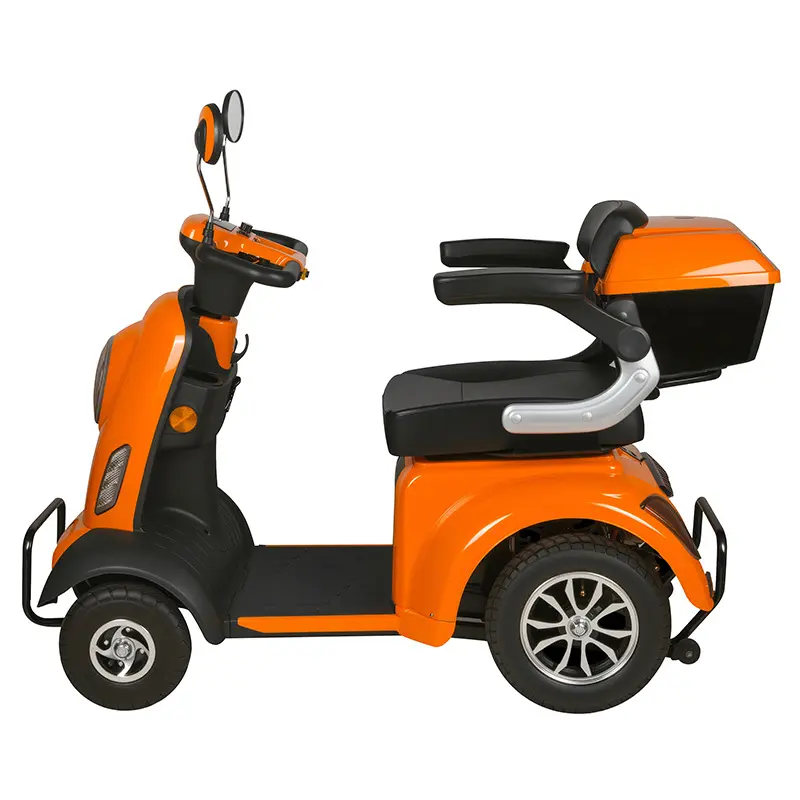
Tread Patterns and Compound Selection
Tread choice should follow the sales market, not the supplier’s default. Smooth or shallow-ribbed treads suit indoor and shopping-mall use, where aggressive lugs only add noise and scuff flooring. A ribbed or lug tread pattern with deeper grooves suits pavements, gravel paths and light grass, which covers most rural and recreational programs. For Nordic or North American markets that see packed snow, request a compound rated for low-temperature flexibility; a standard compound hardens near freezing and loses grip even when the tread pattern looks suitable.
Rubber hardness is a useful acceptance metric. Ask the supplier for the Shore A value on the tread cap and sidewall. Tread in the 60 to 70 Shore A range is a reasonable target for pavement scooters: harder compounds last longer but slip on wet tile, softer compounds grip better but wear fast on rental fleets running high daily mileage. Request samples and measure wear over a fixed-distance test rather than trusting catalog claims.
Puncture Risk and Tire Construction Options
Puncture strategy is a cost trade-off decided at the sourcing stage, because it changes rim design, spare-part inventory and dealer labor. The three main constructions behave differently in the field:
- Pneumatic: best ride quality and grip, but dealers must stock tubes, patch kits and a pump; pressure checks become part of routine PDI and service. Typical pressures are printed on the sidewall, commonly in the 30 to 50 PSI range depending on size.
- Foam-filled: a pneumatic carcass injected with foam, so it cannot go flat while keeping most of the cushioning. Heavier than air-filled tires, and poor filling quality causes wobble, so inspect runout on incoming samples.
- Solid rubber: zero maintenance and longest life, but heavier and harsher over cracks and kerbs; acceptable for indoor and short-range models where comfort demands are lower.
A practical approach for mixed product lines is pneumatic on heavy-duty outdoor models and foam-filled or solid on travel scooters. Whatever you choose, lock the tire specification into the QC annex of your purchase contract, including brand or equivalent, tread depth at delivery and markings, so a factory cannot quietly substitute a cheaper carcass between orders. This is also where spare tire and tube planning matters: order 2 to 4 percent extra tires and tubes with the container, sized to the exact rim, because a dealer waiting three months for a matching 3.00-10 tube will stop recommending your brand.
Puncture Care and Dealer Service Guidance
Even solid-tire programs need a puncture-care policy for the pneumatic models in the range. Give dealers simple rules: check pressure weekly on pneumatic tires, keep inflation at the sidewall value, and treat any tire that loses pressure overnight as a rim or valve problem rather than repeatedly topping it up. For slow leaks in the tread area, a quality patch kit is acceptable; for sidewall damage or cracks from ozone aging, replace the tire, since a blowout at speed is a safety incident, not a service call.
Importers should also add tire checks to the PDI checklist: verify tread depth, confirm the tire date code is recent, spin each wheel to check runout, and inspect for storage flat spots, which appear when scooters sit stacked in a container for months. Most flat spots recover after a period of running, but severe ones indicate long warehouse storage and should be flagged at receiving inspection.
Tip: Never accept tires whose sidewall markings or load index do not match your signed specification sheet, because silent substitution between production batches is one of the most common causes of premature tire failures and dealer complaints.
Cost, Warranty and Replacement Market
Tires are cheap relative to the scooter but expensive relative to the claim. Build the replacement economics into your program: negotiate tire-only pricing per size at the time of the main order, publish a wear-replacement interval in the manual (a common practice is inspecting tread at every service and replacing below the molded wear indicator), and decide in advance whether warranty covers manufacturing defects only or also normal wear. Distributors who define this in writing resolve dealer disputes quickly. Keep the wheel-tire SKUs consistent across model generations wherever possible; a shared 3.00-10 or 260 x 85 tire across three models cuts your spare-parts inventory dramatically.
Related Pages
- Mobility Scooter Wholesale: Complete Buyer’s Guide 2026
- Mobility Scooter Factory Audit Guide
- CE Certification for Mobility Scooters: Complete Guide
- How to Get the Best Price on Mobility Scooters
Post time: Nov-23-2026