

Mobility Scooter vs Power Wheelchair: Pros, Cons, and Use Cases
Table of Contents
- Understanding Mobility Device Core Differences
- Core Pros and Cons of Mobility Scooters
- Core Pros and Cons of Power Wheelchairs
- Side‑by‑Side Comparison: Mobility Scooter vs Power Wheelchair
- Real‑World Use Cases for Each Mobility Device
- Key Buying & Sourcing Considerations for Distributors
- Frequently Asked Questions
- Conclusion
- Related Posts
Anyone sourcing mobility assistive equipment will regularly face a fundamental decision: should the end‑user select a mobility scooter or a power wheelchair. Both deliver powered independent movement, yet they serve distinct physical requirements, operating environments, and daily routines. Many retailers, rental operators, healthcare procurement teams make costly mis‑matches by only comparing appearance and price, without analyzing user capability and intended operating scenarios. Getting this selection right improves end‑user safety, satisfaction, reduces product return rates and long‑term service overhead for distributors and resellers alike.
Learning these practical distinctions is critical whether you are advising retail customers, building rental fleets, or tendering for aged‑care and institutional projects. Factors including control mechanism, maneuverability, seating support, transport feasibility and terrain performance can completely change real‑world usability. At the end, there is no universal “better” product, only the most appropriate match for specific end‑user conditions.
Understanding Mobility Device Core Differences
The most fundamental separation starts with control interfaces and physical prerequisites for safe operation.
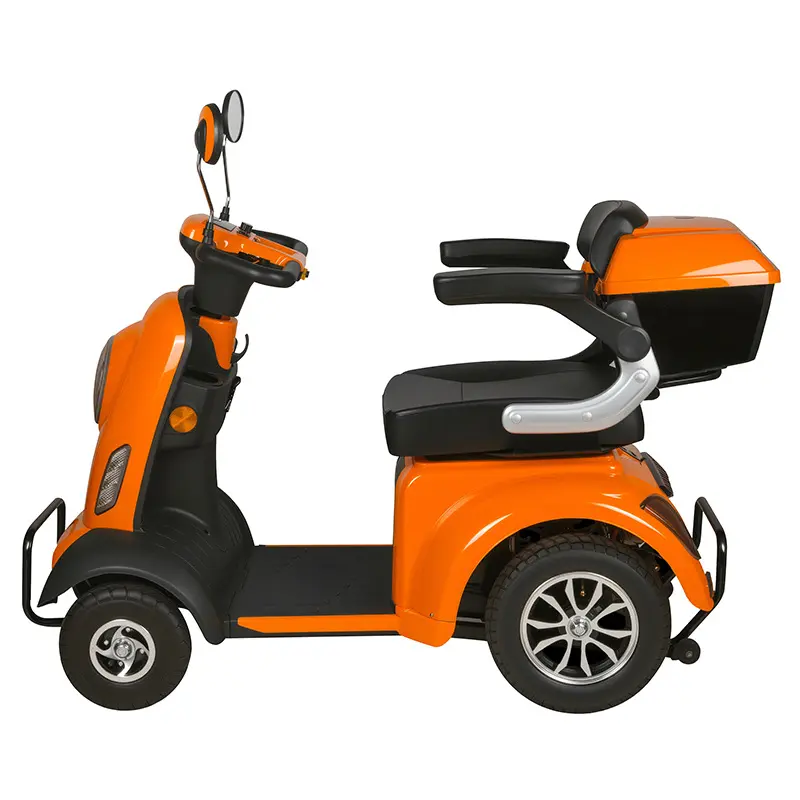
Mobility scooters adopt a tiller‑handlebar steering setup similar to small motorcycles. This requires the operator to maintain stable upright trunk posture and use both hands for steering and throttle input. Most models feature swiveling seats for easier transfers on and off the unit. They are optimized primarily for outdoor journeys, errands and recreational trips.
Power wheelchairs utilize joystick controls mounted to armrests. Joysticks can be manipulated with a single hand, and many platforms support alternative input accessories for users with very limited limb dexterity. Built‑in high‑support seating systems are designed for users spending multiple continuous hours seated, with options for tilt‑in‑space, recline and pressure relief functions. Their strong suit is tight‑space indoor navigation combined with capable outdoor performance.
Beyond controls, there are meaningful divergences in turning radius, weight profile, battery range, maintenance demand and regulatory classification across different global markets. For wholesale buyers, grasping these baseline differences helps filter customer enquiries faster and provide actionable recommendations.
Core Pros and Cons of Mobility Scooters
Pros of Mobility Scooters
- Strong outdoor performance: Higher top speed and extended battery range make them ideal for covering longer distances on pavements, park paths, shopping district tours. Four‑wheel variants deliver solid stability on gentle slopes and uneven paved surfaces.
- Superior transport flexibility: Large numbers of consumer‑grade and lightweight heavy‑duty scooters disassemble into multiple compact sections. Components can fit inside standard automobile trunks without vehicle‑specific ramps or lifts, a huge advantage for travel, holiday rentals and family outings.
- Cost‑effective entry point: Compared to full‑feature power wheelchairs, mobility scooters generally carry lower unit acquisition costs. Spare‑part inventories are simpler to maintain for distributors, and routine maintenance can often be completed without certified technical staff.
- User‑friendly transfers: Swivel seats allow users with partial leg mobility to independently get on and off without full‑assistance support. Baskets and storage compartments support grocery runs and daily shopping tasks.
Cons of Mobility Scooters
- Poor performance in confined indoor spaces: Most mobility scooters come with a wide turning radius. Maneuvering inside narrow hallways, small bathrooms or compact retail aisles becomes cumbersome or impossible in many situations.
- Physical prerequisites for safe use: Operators need adequate bilateral hand grip strength, arm endurance and stable core trunk support. Individuals suffering tremors, unilateral weakness or poor upper‑body stamina will struggle to steer tiller‑style controls safely over time.
- Limited clinical seating support: Standard scooter seats offer minimal pressure distribution or postural correction. They are not suitable for end‑users requiring clinical positioning for long‑duration sitting.
- Variable regulatory status: In many regions mobility scooters are classified as personal leisure mobility devices rather than certified medical equipment. This can create barriers for insurance reimbursement or institutional healthcare tender qualification.
Core Pros and Cons of Power Wheelchairs
Pros of Power Wheelchairs
- Excellent indoor maneuverability: Mid‑wheel‑drive power wheelchairs deliver extremely tight turning radii. They navigate narrow doorways, apartment layouts and crowded care facility corridors with high precision, perfect for full‑time indoor‑outdoor daily use.
- Low physical operating demand: Joystick operation only requires minimal fine motor movement from one hand. Adaptive control options accommodate users with significant limb impairment, stroke‑related weakness or neuromuscular conditions. Minimal core strength is required when paired with supportive seating accessories.
- Advanced clinical seating solutions: Customizable tilt, recline, seat elevation and pressure‑relief cushion systems address postural management and pressure‑sore prevention for people who occupy the chair for most of each day. This is irreplaceable for many healthcare clients.
- Consistent mixed‑environment performance: Premium power wheelchair models work reliably both inside buildings and out on public pavements.
Cons of Power Wheelchairs
- Higher total cost of ownership: Base unit pricing sits higher than mobility scooters, and specialized seating modules further increase costs. Complex electronic systems mean service and repair work frequently demand trained technicians, raising fleet operating expenses for rental businesses.
- Transport challenges: The majority of full‑size power wheelchairs are heavy. Transport often mandates modified vehicles with ramps or power lifts. Folding lightweight power wheelchairs exist, yet they still weigh substantially more than disassemblable mobility scooters.
- Battery range limitations on budget units: Entry‑level power wheelchair configurations frequently have shorter maximum travel range compared to heavy‑duty mobility scooters.
- Complex product selection matrix: Multiple drive configurations, seating modules and control accessories generate a large number of SKU permutations, increasing inventory planning complexity for wholesale buyers.
Side‑by‑Side Comparison: Mobility Scooter vs Power Wheelchair
| Evaluation Item | Mobility Scooter | Power Wheelchair |
|---|---|---|
| Primary Control | Tiller / handlebar, two‑hand operation | Joystick (single‑hand), supports adaptive controls |
| Turning Radius | Wide, suited for open areas | Very tight, excels in narrow indoor spaces |
| Ideal Operating Setting | Outdoor errands, travel, open public zones | Mixed indoor + outdoor full‑time daily use |
| Physical Requirement | Good bilateral hand strength and trunk stability | Minimal upper‑body strength needed |
| Seating Functionality | Basic seat, swivel option, limited clinical adjustment | Comprehensive tilt, recline, pressure‑relief seating |
| Transport Method | Many models disassemble for car trunk storage | Most require ramp/lift; few lightweight foldable versions |
| Typical Top Speed | 6‑10 km/h | 4‑8 km/h |
| Battery Range | 12‑30 km | 10‑22 km |
| Maintenance Complexity | Low‑to‑moderate; user‑serviceable basic checks | High; professional technical servicing recommended |
| Best‑fit End‑User | Can walk short distances, limited stamina for long trips | Limited or no safe walking capability, long‑duration seated use |
Real‑World Use Cases for Each Mobility Device
When Mobility Scooters Are the Right Fit
- Senior daily outings: Elderly people capable of short‑distance walking but who fatigue quickly during shopping trips, neighbourhood walks or community visits.
- Tourism and resort rental fleets: Holiday parks, cruise‑ship terminals and scenic locations where guests need temporary outdoor mobility support for several hours at a time. Easy disassembly simplifies logistics across rental locations.
- Campus & site patrol: Security or facility staff covering large outdoor grounds who frequently get on‑and‑off the mobility unit.
- Temporary rehabilitation: Post‑surgery users with partial mobility who require powered transport for several months during physical recovery.
When Power Wheelchairs Are the Right Fit
- Full‑time daily mobility for disabled users: Individuals who cannot safely walk even short distances due to neurological, spinal or muscular conditions.
- Aged‑care and nursing‑home residents: Users who occupy the mobility device for most waking hours and require clinical postural support and pressure injury prevention.
- Apartment and compact‑home living: End‑users who navigate narrow hallways, small lifts and standard‑width interior doorways every single day.
- Users with unilateral limb weakness: Stroke survivors or people living with one‑sided physical impairment who cannot safely operate two‑hand tiller steering.
Key Buying & Sourcing Considerations for Distributors
Distributors, retailers and fleet operators need to look past raw specifications and evaluate four practical dimensions before placing large‑volume orders:
End‑user physical assessment checklist Always confirm if the target user group can maintain upright sitting posture; has adequate hand grip; whether they spend most time indoors or outdoors; and whether clinical pressure‑relief seating functions are mandatory. Selling mobility scooters to customers with insufficient upper‑body control creates safety hazards and high product‑return volumes.
Regional compliance and certification Different territories enforce distinct standards for mobility assistive devices. Some markets classify power wheelchairs as medical devices requiring specific certification, while mobility scooters may fall under general consumer product regulations. Confirm CE, FDA or local equivalent compliance for each target sales territory before import.
Fleet and after‑sales planning Evaluate spare‑part availability and supplier lead‑times for consumables: tyres, batteries, joystick modules, seating components. For rental businesses, prioritize models with shared spare‑part families to reduce warehouse SKU counts.
Logistics and end‑user transport reality If your customer base is private households with ordinary passenger cars, disassemblable mobility scooters deliver stronger market appeal. Institutional buyers operating modified vans will lean more heavily toward full‑size power wheelchairs.
Frequently Asked Questions
Q: Can mobility scooters be used inside houses? A: Only extra‑compact lightweight scooter models work in larger homes. Most standard‑size mobility scooters feature a large turning radius and struggle in narrow corridors and small rooms. For regular indoor use, power wheelchairs remain the preferred option.
Q: Which option has lower long‑term running costs? A: Mobility scooters generally have lower maintenance costs. That said, if the end‑user medically requires advanced seating functions, selecting a mobility scooter to save initial money will result in discomfort and secondary health complications, creating higher downstream costs for care providers.
Q: Are there hybrid products that combine scooter and power‑wheelchair advantages? A: There are crossover models on the market. Nevertheless, most hybrid designs compromise on either indoor turning performance or outdoor ruggedness. It is wise to evaluate real‑world demonstration data instead of relying solely on marketing descriptions.
Q: What is the most common mistake buyers make when choosing between these two categories? A: Selecting based purely on outward appearance and price without assessing end‑user physical capability and primary operating environment. A device that looks great in product photos can become unsafe and frustrating if mismatched to actual daily living conditions.
Q: For rental‑fleet business, which category delivers better return on investment? A: It depends on your rental scenario. Tourist‑destination fleets often achieve good returns with mobility scooters. Aged‑care facility rental projects will have higher demand for power wheelchairs with clinical seating configurations.
Conclusion
Mobility scooters and power wheelchairs each fill irreplaceable niches within powered mobility. Mobility scooters excel for outdoor journeys, travel‑friendly transport and users who retain partial walking ability and solid upper‑body function. Power wheelchairs shine for full‑time mixed indoor‑and‑outdoor usage, users with limited hand‑arm strength, and cases requiring clinical postural support.
For distributors and procurement professionals, the core takeaway is simple: do not rank one product above the other universally. Every purchasing decision should trace back to three inputs: the physical capacity of the end‑user, the environments where the device will operate, and real‑world transport logistics. Mastering these differentiations will help you serve your customers better, reduce product returns, and build more resilient mobility‑equipment business operations.
Post time: Sep-02-2026