


Mobility Scooter Tyres, Suspension and Ride Comfort: Solid vs Pneumatic, Wheel Size and Vibration Control for Distributors
For distributors serving senior care, rehabilitation and mobility-impaired users, the difference between a five-star review and a returned unit often comes down to what happens between the road and the rider. Tyres and the suspension system are the first line of defence against harsh vibration, and they are also the part of a mobility scooter that dealers most frequently underestimate during specification. This article focuses strictly on the tyre and suspension subsystem itself: how solid, pneumatic and foam-filled constructions behave, how wheel size changes the ride, how different suspension designs attenuate energy, and what parameters a distributor should lock down before placing a container order. We reference our earlier pieces on stability and anti-tip testing, seating and ergonomics, and all-terrain models only where they intersect, without rewriting them.
Why Tyres and Suspension Directly Decide Your Return Rate
Older adults and rehab users are not average riders. Their bodies are far more sensitive to sustained low-frequency vibration and to sudden jolts than a healthy commuter on an e-scooter. Reduced tissue padding, osteoporosis, post-surgical joints, neuropathy and balance disorders all magnify the perception of roughness. When a scooter transmits every seam in a pavement or every threshold at a doorway straight into the seat, the user experiences fatigue, discomfort and sometimes pain within minutes of use.
That perception translates directly into commercial risk. A unit that feels harsh is returned more often, generates more negative reviews, and triggers more warranty claims that are difficult to diagnose. Because the cause is rarely a single broken part, dealers tend to mislabel it as a general quality problem. In reality, the root is frequently the tyre-suspension combination chosen for the wrong environment. Controlling return rate starts with treating ride comfort as a measurable specification, not a vague promise.
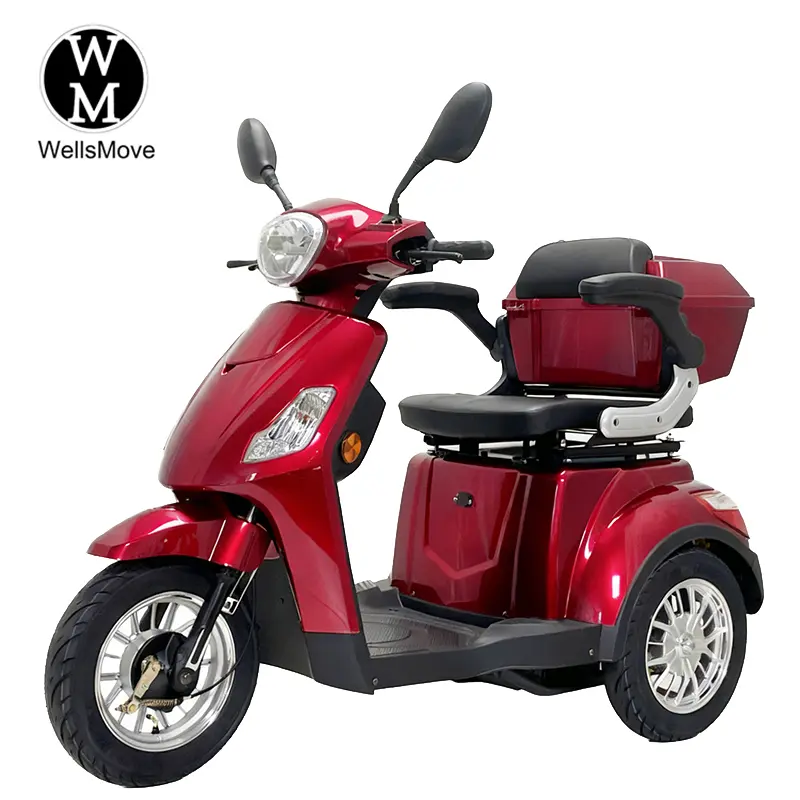
Solid Tyres vs Pneumatic Tyres
Solid tyres: puncture-proof and zero maintenance
- Constructed from a single dense rubber or polyurethane block with no air chamber.
- Impervious to nails, glass and thorns, which eliminates roadside flats entirely.
- Requires no pressure checks, no pump, and no patch kit in the after-sales kit.
- Tends to be heavier at the contact patch and rolls with a harder, more transmitted feel.
Pneumatic tyres: cushioning versus upkeep
- Filled with air, they absorb micro-imperfections in the surface before they reach the wheel hub.
- Deliver measurably better shock isolation on uneven ground and long rides.
- Must be kept at the recommended pressure, or rolling resistance and wear increase sharply.
- Carry a real puncture risk outdoors, and a flat means the user is stranded until repaired.
The core trade-off is simple to state but easy to forget during procurement: solid tyres win on uptime and service cost, while pneumatic tyres win on comfort and grip. For an indoor-only fleet sold to care homes, solids are often the safer commercial choice. For outdoor-oriented retail where the user values a smooth glide, pneumatics earn their keep despite the maintenance burden.
Foam-Filled Tyres as the Middle-Ground Solution
Between the two extremes sits the foam-filled or flat-free construction, sometimes called foam-filled tyres. A micro-cellular polyurethane foam is injected into the tyre cavity, replacing air with a closed-cell structure that cannot leak. The result is a puncture-proof tyre that still compresses slightly under load, recovering some of the cushioning lost by a fully solid block.
Distributors should position foam-filled units as the balanced option for mixed indoor-outdoor users who want freedom from flats but cannot tolerate a bone-rattling ride. The compromise has limits: foam-filled tyres are typically heavier than pneumatics, marginally stiffer than air, and more expensive to manufacture. They are not a universal upgrade, but they resolve the single most common objections dealers hear about solid tyres, namely that they feel hard.
Tyre Material and Tread Pattern
Rubber hardness and durometer
Tyre compound is graded by durometer. A softer compound grips better and damps small vibration, but wears faster and marks floors more easily. A harder compound lasts longer and resists marking, at the cost of a harsher feel. Distributors should request the durometer range from the factory rather than accepting a generic description.
Wet grip and tread design
Indoor and pavement tyres often use a near-slick or fine-grid pattern. Outdoor and all-terrain models need deeper, more open lugs to shed water and bite into loose ground. A tread that is too aggressive for indoor use increases rolling noise and floor marking, so the right pattern is environment-specific.
Indoor floor marking
Care homes, hospitals and retail spaces care about scuff marks on vinyl and timber. Non-marking compounds and rounded tread edges prevent the dark streaks that solids can leave. This is a quiet but decisive factor for B2B buyers in institutional channels, and it should appear explicitly in the RFQ.
Wheel Diameter: Small vs Large
Kerb climbing and obstacle clearance
Larger diameter wheels ride over thresholds, roots and small stones with less effort and less jolt. They effectively increase ground clearance and reduce the angle at which the wheel meets an obstacle. wheel diameter is therefore one of the strongest levers a distributor has for rough-surface comfort, especially on the front wheels that lead the encounter.
Range, weight and rolling efficiency
Bigger wheels typically roll more efficiently at speed and smooth out vibration, but they add unsprung mass, can raise the floor height, and may reduce interior space for battery or folding hinges. Smaller wheels lower the step-through height and improve portability, yet they transmit more high-frequency buzz and stall more easily on a curb. The selection is a balance between comfort, range and package size.
Suspension Types and Their Cost
No suspension
Many light travel and folding scooters rely entirely on tyre compliance. This keeps cost and weight lowest, but it pushes every shock into the frame and seat. Acceptable only for smooth indoor flooring.
Spring shock absorbers
Coil or leaf springs at the front and sometimes rear add a predictable, inexpensive cushion. They are robust and cheap to replace, though they offer little tuning and can feel bouncy if undamped.
Swingarm suspension
A swingarm isolates each wheel on a pivoting arm, allowing longer suspension travel and better articulation over uneven ground. This is the workhorse of mid and heavy-duty outdoor models and raises both comfort and cost moderately.
Adjustable dampers
Hydraulic or elastomer dampers, often user-adjustable for preload or rebound, give the smoothest, most controlled ride and protect the frame from resonance. They are the most expensive option and the most demanding to service, suited to premium and bariatric segments where ride quality justifies the price.
The Vibration Transfer Path: Why You Must View It as a System
Vibration does not stop at the tyre. It travels a chain: tyre deforms and filters the surface, the wheel hub carries the residual energy, the frame structure bends and rings, and finally the seat platform passes what remains into the user. Each stage either attenuates or amplifies the signal. A soft pneumatic tyre paired with a rigid welded frame and a hard seat can still feel harsh, because the frame and seat add no isolation. Conversely, a modest tyre improvement combined with a swingarm and a damped seat post can transform the experience.
This is why distributors must evaluate the whole path, not isolated parts. Specifying vibration attenuation as a system metric, ideally with a simple accelerometer test on a standard test track, prevents the classic mistake of blaming the tyre for a frame resonance problem. It also informs warranty triage: a buzz that appears only above a certain speed is usually frame or hub, while a constant low rumble is usually tyre or suspension.
Tip: Ask the factory for a ride-comfort test on a tiled-and-threshold track at the rated load, not just a flat-floor roll, because most comfort complaints surface at doorways and paving seams rather than on open floor.
Configuration Recommendations by Use Scenario
Indoor flat floors
- Solid or foam-filled non-marking tyres, small to mid wheels, minimal or no suspension.
- Prioritise low step-through height, quiet rolling and zero flat risk.
Community paths and pavements
- Pneumatic or foam-filled tyres with light tread, mid wheels, front spring or swingarm suspension.
- Balance comfort with manageable maintenance for semi-independent users.
Rural roads and driveways
- Pneumatic tyres with deeper tread, larger wheels, full swingarm suspension front and rear.
- See our all-terrain sourcing guide for chassis and clearance details beyond tyres.
Scenic stone paths and cobbles
- Largest practical wheels, foam-filled or pneumatic, with damped swingarms and a compliant seat.
- Prioritise impact isolation, because stone surfaces generate sharp, high-energy jolts.
Maintenance Cost and Spare Parts Supply
After-sales economics differ sharply by construction. Solid tyres rarely need service but, when worn, are usually replaced as a wheel assembly, so stocking complete hub units is cheaper than tyre-only swaps. Pneumatic tyres need tubes or sealant, a pump, and patch skills at the dealer level, plus a steady supply of the exact size. Foam-filled tyres sit in between: no puncture service, but full replacement when worn.
- Clarify the tyre replacement interval at rated load and the expected tread life in kilometres.
- Confirm shock absorbers are serviceable individually or only as a complete strut.
- Negotiate a spare-parts ratio per container, including hubs, springs and damper cartridges.
- Request exploded diagrams and part numbers so local technicians can order without guesswork.
Weight, Disassembly and Transport Impact
Tyre and suspension choices ripple into logistics. Solid and foam-filled tyres add unsprung weight at each corner, while swingarms and dampers add structural mass. Heavier wheels make a folding scooter harder to lift into a car boot and can push a travel model above airline-friendly limits. Distributors should weigh the complete folded package, not just the chassis, because the tyres and suspension often decide whether a carer can load it unaided. Where portability is the selling point, favour smaller pneumatic or foam-filled wheels with minimal suspension to keep the lift weight down without sacrificing too much comfort.
Common Complaints: Buzz, Rattle and Back Pain, and How to Separate Them from Stability Issues
Dealers report a recurring cluster of comfort complaints: a constant buzzing through the seat, rattles from the front end, and back or hip discomfort after longer use. These are suspension and tyre symptoms. They must be distinguished from stability problems, which our anti-tip and braking guide covers separately. A stability fault shows up as tipping tendency, veering, or loss of grip on slopes. A comfort fault shows up as fatigue and pain without loss of directional control.
- Buzz at low speed on smooth floor usually means hard solid tyres or a rigid frame, not instability.
- Rattle over bumps points to loose suspension hardware or worn damper mounts, a service item.
- Back pain after ten minutes suggests inadequate attenuation in tyre, suspension or seat path.
- Veering or leaning under load is a stability or alignment issue, addressed elsewhere, not here.
Training front-line staff to classify the complaint correctly protects margins: most comfort cases are solved by tyre or suspension specification changes at the next order, not by replacing the whole machine.
Distributor RFQ Parameter Checklist
Tyre specifications to confirm
- Tyre type: solid, pneumatic, or foam-filled, and the exact reason for the choice.
- Tyre size, durometer, tread pattern, and whether it is non-marking for indoor use.
- Puncture policy: supplied as tyre-only or complete wheel assembly for simplest service.
- Rated tread life in kilometres at the maximum user weight.
Suspension specifications to confirm
- Suspension type per wheel: none, spring, swingarm, or damped, with travel in millimetres.
- Adjustability: fixed or user-tunable preload and rebound for different user weights.
- Service parts: individual cartridges versus complete struts, and lead time for supply.
- Comfort test data: vibration level on a standard track at rated load, if available.
Cross-system items
- Complete folded weight including tyres and suspension for transport claims.
- Spare-parts ratio per container and part-number documentation for local repair.
- Compatibility notes linking tyre and suspension choice to the intended use scenario.
Related Pages
- Mobility Scooter Wholesale: Complete Buyer’s Guide 2026
- CE Certification for Mobility Scooters: Complete Guide
- How to Get the Best Price on Mobility Scooters
- Mobility Scooter Factory Audit Guide
Post time: Oct-21-2026