


Mobility Scooter Rental Fleets: Specs and Cost Planning
Rental fleets place a fundamentally different load on a mobility scooter than a single private owner ever will, and the procurement logic should reflect that from the first specification line. Whether you operate a holiday park loop, a shopping-mall courtesy service, an airport terminal shuttle, a care-home group, or a coastal tourism business, the unit that leaves your storeroom in the morning may serve a dozen different riders before it returns. This guide is written for fleet buyers who need a durable, serviceable, and accountably costed machine rather than a showroom feature list. The standards environment for these products moves constantly, so treat every compliance statement here as subject to the latest standard text and official notices.
Why Rental Duty Cycles Are Harsher Than Private Use
A privately owned scooter is ridden by one person who knows its habits, its range, and its limits. A rental unit is handed to a stranger every hour, and that single difference multiplies across every component you will eventually pay to replace. Under continuous multi-rider rotation, the same chassis absorbs a wide spread of body weights, riding styles, and levels of care, and no two days look alike. One rider parks it on a slope, the next bumps a kerb, the next leaves it in the rain, and the next returns it with the basket overloaded.
The loading is unknown and unmanaged because you cannot brief every customer the way an owner briefs themselves. Short charge windows mean the battery is rarely treated gently, and rough surfaces around car parks, festival fields, and harbour fronts accelerate wear on tyres, suspension, and frame joints. On top of physical wear you carry theft and damage exposure that a private owner simply does not face, which is why fleet specification and fleet control have to be designed in from the factory, not added later as an afterthought.
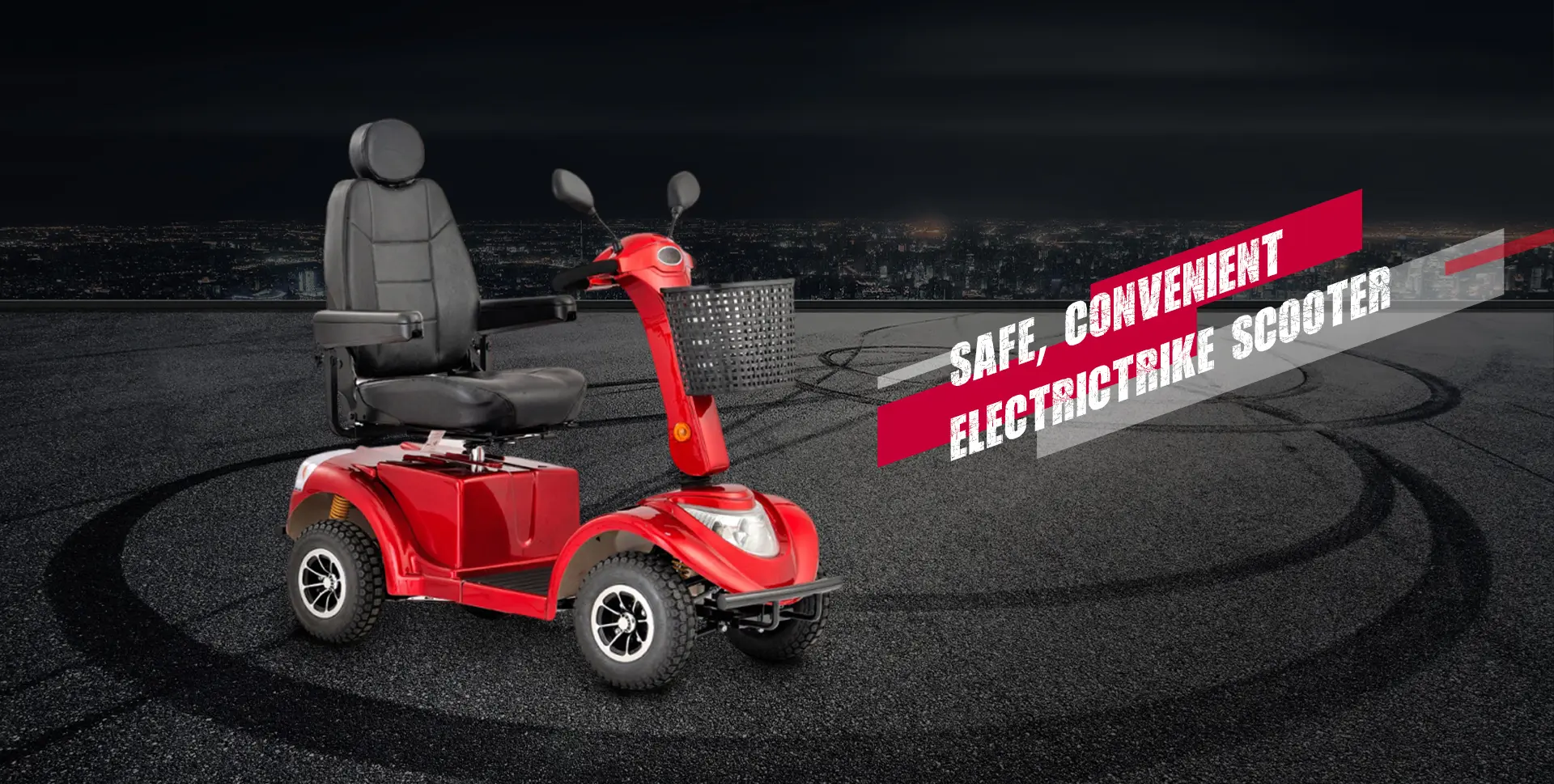
The Spec Set That Matters for Fleets
When you buy for a fleet, the feature list that sells a private unit is the wrong list to read. What protects your margin is the boring, structural spec. Start with weight capacity and insist on real headroom above your heaviest expected rider, because rental loading is unpredictable and a chassis run at its limit fails early. Ground clearance and kerb-climb ability decide whether a unit survives a real environment or gets stranded on the first raised threshold it meets.
Turning radius matters in malls, airports, and care homes where corridors and lifts are tight, and it should be specified against your actual floor plan rather than a brochure number. Tyre choice splits cleanly between hard paving and loose ground: solid or pneumatic tyres suit smooth indoor and terminal floors, while a more aggressive tread and suspension travel suit gravel paths, campgrounds, and outdoor tourism routes. Seat durability beats cosmetic features every time, because the seat is the part riders touch, abuse, and judge first, so specify high-density foam, reinforced hinges, and covers that survive daily wiping rather than trim that looks good in a photograph.
Battery Strategy for Daily-Rotation Rental
The battery is the single largest cost and reliability lever in a rental scooter, and the lead-acid versus lithium decision should be made on rotation maths, not sticker price. Lead-acid packs are cheaper to buy but heavier, slower to charge, and sensitive to deep discharge, which is exactly the pattern a busy rental day creates. Lithium cells cost more up front yet tolerate partial charging, weigh less, and deliver more usable cycles, which often suits a shift-based operation better than the lower purchase price suggests.
Depth of discharge is the number that quietly decides pack life: packs drained hard every day retire sooner than packs topped up between rentals. You then choose between fixed packs and swap-out battery packs, and for high-turnover sites the swap model can keep units earning while a spare pack charges elsewhere. Charge time per shift dictates how many packs or bays you need, and the charging infrastructure you install must be planned before delivery, with enough protected bays, labelled circuits, and cable management to keep the floor safe and the queue moving. Battery transport and handling fall under rules such as UN38.3 for logistics and storage, and these requirements are subject to the latest standard text and official notices.
Duty Cycle and Motor Thermal Limits
Motor thermal limits are easy to ignore on a spec sheet and expensive to discover in the field. A park loop with continuous hill work asks the motor and controller to shed heat for hours, while a flat mall floor is a far gentler duty profile. If your route includes sustained gradients, specify a motor with adequate continuous rating, appropriate gearing, and thermal headroom rather than the lightest or cheapest option, because an overheated scooter is a scooter your customer cannot finish the ride on.
Controllers and connectors age faster under heat, so the duty cycle you actually run should drive the spec, not the peak speed number. Build a simple rule of thumb with your supplier: match the rated continuous load to your worst real loop, then add margin, and confirm the cooling path and cable sizes are sized for that loop rather than for a flat-showroom demonstration. Markets also differ, and compliance such as CE or UKCA marking, plus an FDA establishment listing where the US channel is relevant, should be confirmed for your destination, subject to the latest standard text and official notices.
Anti-Theft and Asset Control
Rental assets walk, and a fleet without control loses units faster than it loses tyres. The baseline is a keyed ignition, but for shared or unattended depots a coded or app-managed start reduces the chance that any borrowed key keeps working. Telematics and GPS tracking turn a missing scooter from a write-off into a recovery, and they also tell you which units are actually being used, which supports smarter fleet sizing.
An immobiliser stops a unit being ridden once it leaves its zone, and durable ID tagging, whether etched frames or bonded labels, makes returned units easy to match to their paperwork. Insurers increasingly expect a documented control regime before they will cover a fleet, so keep a written policy that lists ignition type, tracking, immobilisation, and tagging, and update it whenever the standard or your insurer’s requirements change, subject to the latest standard text and official notices.
Damage Control and Hygiene Between Rentals
Between every rental your unit should be returned to a clean, safe, presentable state, and the design of the scooter decides how cheap that routine is. Washable and quick-dry seating lets you turn a soiled unit around in minutes instead of taking it out of service, and removable baskets, guards, and shrouds mean a damaged part can be swapped rather than the whole machine parked. Bumpers and corner protection are not cosmetic on a rental: they are the difference between a scuff and a cracked panel after a trolley collision.
The between-rental maintenance routine should be short, written, and checked: wipe and sanitise contact surfaces, verify tyre pressure and tread, confirm brake response, check the battery indicator against a known charge, and log any damage before the next rider signs out. A two-minute check sheet per return catches the small faults that otherwise become roadside failures, and it gives you a defensible record if a customer disputes a charge or an insurer asks what was done.
Building a Total Cost of Ownership Model
Purchase price is the smallest number in a fleet budget, and the buyers who stay profitable are the ones who model the rest before they commit. Build your ownership cost as a live formula with inputs you fill from your own operation, rather than trusting any fixed figure quoted back at you. The shape of the model is:
Total Cost of Ownership equals Purchase Price, plus Battery Replacement Cost spread across the expected pack life, plus Tyre and Brake Wear costs per unit per year, plus Labour for Inspection and Charging across your team, plus Downtime Loss during repairs, minus any residual value at decommission. Each input is a variable you set from your site: rider volume, shift length, surface type, and local labour rate all move the answer, so the value of the model is the discipline of filling it, not a single printed result. Re-run it whenever you change battery chemistry, extend the season, or add a site, because the cheapest unit to buy is rarely the cheapest unit to own across three seasons of rental use.
Fleet Sizing and Unit Rotation
Sizing a fleet is a balance between lost revenue from turning customers away and wasted capital from units that sit idle. Start from your utilisation rate, which is the share of available hours a unit is actually rented, and then model peak-season demand separately because an average hides the days you are short. A common planning approach is a spare ratio: keep enough reserve units that a flat battery, a failed tyre, or a deep-clean does not mean a lost booking.
The case for a buffer unit for every peak block is strongest where demand spikes are sharp and predictable, such as a holiday weekend or a cruise-ship arrival window. Rather than sizing to the calm average, size to the peak you can count on, then hold one or more buffer units so a single breakdown never cascades into a row of unhappy customers at the desk. Rotate units so no single machine takes every hard shift, and your whole fleet ages evenly instead of one hero scooter wearing out while the rest look new.
Rental-Fleet Readiness Checklist
- Confirm rated weight capacity with headroom above your heaviest expected rider, not just the brochure maximum.
- Verify kerb-climb and ground clearance against your real routes, including thresholds, ramps, and outdoor surfaces.
- Choose tyre type for your dominant surface and keep spares sized to your wear rate.
- Specify seat and cover materials that survive daily wiping and quick sanitising between rentals.
- Decide battery chemistry and swap versus fixed packs, then install enough charging bays before delivery.
- Set motor and controller rating from your worst continuous hill loop, not from flat-floor testing.
- Fit keyed or coded ignition, immobiliser, GPS or telematics, and durable ID tagging as standard.
- Write a two-minute between-rental check sheet and keep a signed log for every unit.
- Build a total cost of ownership model with your own inputs and re-run it when any variable changes.
- Calculate spare ratio and hold buffer units sized to your documented peak demand.
Frequently Asked Questions
Should a rental fleet choose lead-acid or lithium batteries?
The answer depends on your rotation pattern rather than the purchase price alone. Lead-acid is cheaper to buy but slower to charge and less tolerant of deep discharge, while lithium costs more yet handles partial charging and more cycles, which often suits shift-based rental better. Model both inside your own total cost of ownership formula before deciding.
How many spare scooters should a rental operation keep?
Sizing follows your utilisation rate and your peak-season demand rather than a fixed rule. A practical method is to hold a buffer unit for each peak block of demand so a flat battery or a repair does not become a lost booking, and you should re-calculate this spare ratio whenever the season or the site changes.
What compliance marks matter for rental mobility scooters?
For European and UK channels you will typically reference CE and UKCA where applicable, and for the US an FDA establishment listing may be relevant for the device channel. Battery logistics fall under transport rules such as UN38.3, and all of these points are subject to the latest standard text and official notices, so confirm against current requirements before shipment.
How do we reduce theft and loss across a rental fleet?
Combine a coded or keyed ignition with an immobiliser and GPS or telematics so a missing unit can be recovered and a borrowed key stops working. Add durable ID tagging and a written control policy your insurer accepts, and review that policy whenever standards or cover terms change.
What should a between-rental inspection cover?
Keep it short and standard: sanitise contact surfaces, check tyre pressure and tread, confirm brake response, verify the battery against a known charge, and log any damage before the next rider signs out. A consistent two-minute check catches small faults before they become roadside failures.
Tip: install the charging bays and labelling before the first shipment arrives, because a rental fleet that opens without a planned charge floor loses its first weekend to dead batteries and cable chaos.
Related Pages
Mobility Scooter Wholesale: Complete Buyer’s Guide 2026
CE Certification for Mobility Scooters: Complete Guide
How to Get the Best Price on Mobility Scooters
Mobility Scooter Factory Audit Guide
Post time: Oct-26-2026