


Mobility Scooter Documentation and Multi-Language Manuals Guide
This guide is written for rehabilitation equipment distributors, senior care retail chains, rental and fleet operators, and government or institutional tender buyers who purchase mobility scooters in volume. Its purpose is practical rather than promotional. Across multilingual markets, the single factor that most often stalls a product launch is not the scooter itself but documentation completeness. Missing, inconsistent, or mistranslated paperwork directly blocks marketplace listing, customs clearance, and tender acceptance. The product can be perfect and still sit in a warehouse because a manual, a declaration, or a label is wrong. This article explains how to build, control, and verify the full documentation set so your sourcing team avoids those avoidable delays.
Why Documentation Matters More in the Mobility Scooter Category
Mobility scooters are not generic consumer electronics. They are assistive devices used by older adults and people with reduced mobility, often outdoors and on public pathways. That user profile creates obligations that lighter product categories do not face.
First, the end user is frequently frail, and a misuse or a failure can cause a fall, a collision, or a serious injury. Safety liability therefore rests heavily on the manufacturer, the importer, and the local distributor. When an incident occurs, the first thing an investigator or an insurer asks for is the manual, the warning labels, and the technical file. If those do not match the unit in the field, the responsible party is exposed.
Second, accident traceability depends on consistent records. The serial number on the nameplate must correspond to a bill of materials, a production batch, a test report, and a manual version. Without that chain, a distributor cannot prove which specification a specific unit was built to, and recall or warranty disputes become unmanageable.
Third, reimbursement and subsidy programs in several markets require documentary proof before a device can be funded. In the United States, mobility devices supplied through the DME channel typically rely on supplier enrollment and documentation aligned with payer and CMS expectations, and the paperwork a dealer must hold is defined by those payer rules rather than by a single certificate. In parts of the EU, national health or municipal aid schemes may require a declaration of conformity, a technical file reference, or a specific labeling format before a user can claim support, subject to the latest official notices. The practical point for a buyer is simple: the credential your customer needs is a document, and you must be able to supply it.
Fourth, online and institutional channels run compliance reviews before a product goes live. Marketplaces, hospital procurement offices, and tender committees request the CE or UKCA technical file, the declaration of conformity, the test reports, and the manual in the local language. A missing file means a rejected listing, not a negotiated exception.
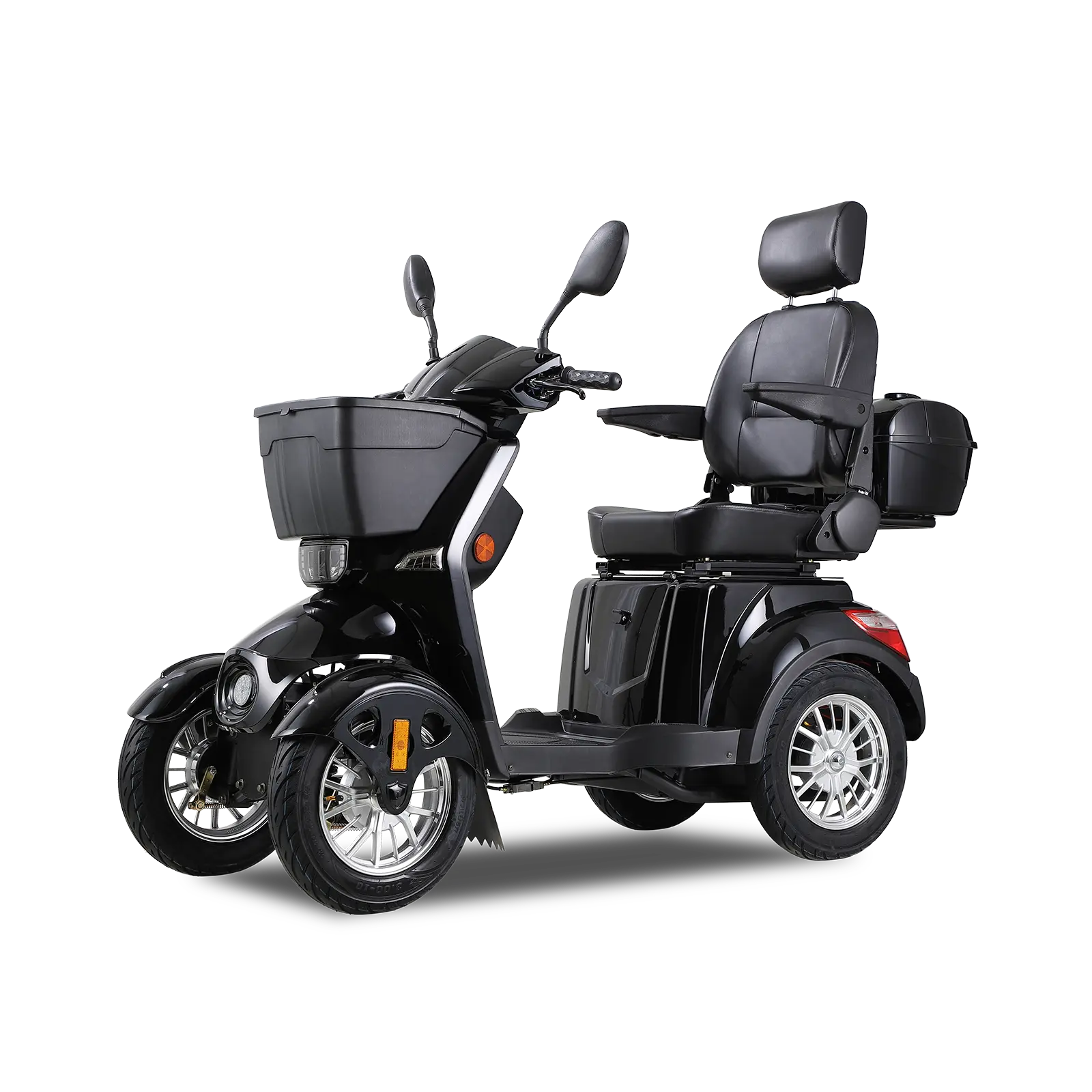
The Three-Layer Documentation Package
A complete mobility scooter file should be organized as three layers, each serving a different reader: the engineer, the regulator, and the end user. Treating them as one messy bundle is the most common cause of audit failure.
Product-Level Documents
- Technical specification sheet covering speed class, range, climb angle, ground clearance, turning radius, and weight capacity.
- Electrical schematic and wiring diagram for the controller, charger, and battery interface.
- Key-component BOM listing the motor, controller, battery cells, charger, and frame grade with supplier identifiers.
- Battery specification together with the UN38.3 transport test report for lithium cells or packs.
- Charger certification relevant to the destination market, confirmed against the latest applicable standard text and official notices.
Compliance-Level Documents
- CE and UKCA technical files with the Declaration of Conformity (DoC) signed by the manufacturer or authorized representative.
- EMC and LVD test reports, and where a medical-device regulatory route applies, the corresponding conformity pathway documents, stated per the actual scope of the product.
- ROHS and REACH declarations covering restricted substances and chemical reporting.
- WEEE registration and battery recycling registration for the markets where the product is placed on the market.
User-Level Documents
- Multi-language user manual matching the languages of every sales country.
- Quick-start card with the minimum steps to assemble, charge, and ride safely.
- Safety and contraindication notice stating who should not use the device and under what conditions.
- Maintenance and service interval table for tyres, brakes, batteries, and fasteners.
- Troubleshooting table mapping symptoms to actions and to escalation contacts.
- Warranty card and after-sales contact information with a reachable local or regional channel.
Required Chapters in the User Manual
The manual is the document an end user and a service technician will actually open, so its structure must be predictable. A procurement team should reject any manual that omits the chapters below. The list is a table of contents, not a translation of each section.
- Safety warnings and contraindications, placed before any operating instruction.
- Intended user profile and maximum user weight with a clear limit statement.
- Assembly and folding steps with diagrams and torque or locking checks.
- Charging method, permitted chargers, and prohibited charging behaviors.
- Daily pre-ride inspection checklist.
- Maximum ramp gradient and obstacle height the scooter may attempt.
- Transport and storage conditions including temperature, humidity, and disconnection rules.
- Usage boundary between flat indoor paths and uneven outdoor terrain.
- Maintenance intervals and list of replaceable parts with reference codes.
- Accident and fault handling procedure, including when to stop using the device.
- End-of-life disposal and recycling guidance per local requirements.
Quality Control for Multi-Language Translation
Translating a manual is not the same as translating a brochure. A mistranslated warning can create legal exposure, so the process needs discipline rather than speed.
Start with a controlled terminology glossary. Every model has fixed terms such as “freewheel lever”, “controller”, “maximum gradient”, and “contraindication”. The glossary locks the approved translation of each term so the German, French, and Spanish manuals say the same thing in engineering meaning, not just in dictionary words.
Apply back-translation as a spot check. A second independent translator renders the target-language text back into the source language, and the buyer compares it with the original. Where the meaning drifts, the segment is corrected at the source and re-issued. This is a sampling method, not a full re-translation, but it catches the dangerous errors.
Regulatory sentences must never be rewritten by a translator to “sound natural”. Statements that mirror a standard, a DoC, or a labeling rule must be confirmed by the supplier’s technical department before release. The translator may ask for clarification; they may not alter the legal meaning. This rule is the one most often violated by low-cost vendors, which is why it deserves explicit contract language.
Finally, manage language versions against sales countries with a strict one-to-one map. A French manual belongs to France and Belgium only if those are the approved markets; a unit shipped to Germany must carry the German file at the approved revision. Track each language as a separate versioned artifact with its own issue date and checksum.
Labels and Markings
The physical product and its packaging carry information that customs officers, market surveillance, and service staff read before they ever open the manual.
The product nameplate should show the model, serial number, date of manufacture, rated parameters such as voltage and current, and the manufacturer or authorized representative details. The plate must remain legible for the expected service life, so material and adhesive choice matter, subject to the latest standard text and official notices.
The shipping carton needs outward markings that support handling and compliance checks: model, quantity, gross weight, battery type and watt-hour value, and any transport hazard marking required for the battery chemistry. Warning labels on the unit must sit where the user will see them before risky actions, such as near the charger port and the freewheel lever, and they must survive cleaning, sunlight, and handling per the applicable durability expectation.
For pictograms, express compliance by referencing the relevant standard’s minimum pictogram size and contrast rather than inventing a number. Where a rule specifies a symbol dimension relative to the label, cite that rule; otherwise state the size as a design choice confirmed by the supplier’s technical department.
Change Management for Document Versions
A scooter is never frozen. A motor swap, a firmware update, or a label change can alter the compliant configuration, and the files must move with it.
Every revision should trigger an engineering change notice that lists which documents must be updated: specification, schematic, BOM, test report reference, manual chapter, and label artwork. The notice is the audit trail that proves the change was controlled.
Old-version documents must be withdrawn and flagged so a warehouse cannot bind a 2024 manual to a 2026 unit. Coordinate the cutoff with inventory: decide the serial number or date after which the new file is mandatory, and quarantine stock that cannot be matched.
One practical trap is the deadline for filing or registering the latest version with the relevant authority or scheme. Mark the latest permissible submission date in the project plan and treat it as a hard gate, subject to the latest official notices for the destination market.
Above all, keep serial-to-version traceability. Each serial number range should map to exactly one set of document revisions, so any unit returned from the field can be matched to the manual and labels it was built under.
Documentation Checklist to Request from Your Supplier
Send this list with every quotation and treat missing items as a reason to delay the purchase order, not as a post-shipment fix.
- Technical specification sheet in the supplier’s master language and your required languages.
- Electrical schematic with component references.
- Key-component BOM with supplier names and part numbers.
- Battery specification sheet and UN38.3 test report.
- Charger certificate relevant to the destination market.
- CE technical file and Declaration of Conformity.
- UKCA technical file and Declaration of Conformity where the UK market applies.
- EMC and LVD test reports, or the applicable medical-device pathway documents per actual scope.
- ROHS and REACH declarations.
- WEEE and battery recycling registration proof.
- Multi-language user manual at the stated revision.
- Quick-start card and safety contraindication notice.
- Maintenance schedule and troubleshooting table.
- Warranty card with after-sales contact and authorized representative details.
Common Sourcing Mistakes
- Assuming a single CE mark covers every market, language, and battery configuration without checking the actual scope.
- Accepting machine-translated or freelancer-rewritten manuals that change the meaning of safety warnings.
- Having no version control, so a revised model ships with an old manual and mismatched labels.
- Forgetting UN38.3 and battery transport documents, which block both freight and customs release.
- Omitting authorized representative details, leaving the importer unable to prove a responsible party in the destination region.
- Ignoring the language-to-country map, so a market receives the wrong manual revision during a surveillance check.
Supplier Audit Questions
- Who owns and updates the terminology glossary, and in which languages is it maintained?
- How is back-translation performed, and what sample rate is applied to safety chapters?
- Who must approve any change to a regulatory sentence before it is published in a manual?
- What naming rule identifies a document version, and where is the master stored?
- How are engineering change notices tracked, and who signs the release?
- How long are technical files retained, and can they be produced during a market surveillance request?
- Who is the EU and UK authorized representative, and is that information on the nameplate?
- After a product change, how many working days pass before every affected document is updated?
- Are manuals country-specific, and can you supply the exact revision per destination?
- Which languages are available today, and what is the lead time for a new language?
Can I list a mobility scooter before all compliance files are ready?
In most institutional and online channels, no. The listing or tender review asks for the technical file, the declaration of conformity, the test reports, and the local-language manual as a package. A missing piece normally results in rejection rather than a grace period, so it is cheaper to secure the files during supplier qualification than to fix a blocked launch later.
How many languages should the manual cover for the EU market?
The manual should cover every official language of each member state where the scooter is sold, mapped one-to-one to the sales country. Do not assume one “European English” file satisfies all markets; national market surveillance can require the local language, subject to the latest official notices for the specific state.
Who owns the responsibility for regulatory wording in translated manuals?
The supplier’s technical department owns the source meaning and must confirm any regulatory wording before release. The translator renders approved text but may not rewrite legal or standard-mirroring statements. The importer should keep written confirmation that this review occurred for each language version.
What happens to documentation when a model is revised?
A revision should open an engineering change notice that forces updates to the specification, BOM, test references, manual, and labels, with old versions withdrawn and inventory quarantined at a defined serial or date cutoff. The goal is that no unit in the field can be mismatched to its paperwork.
This article is provided for general procurement and compliance reference only. Regulatory requirements vary by destination and change over time. Always confirm the latest applicable standards and official notices with the supplier’s technical department and your local notified body or competent authority before import, listing, or tender submission.
Related Pages
- Mobility Scooter Wholesale: Complete Buyer’s Guide 2026
- CE Certification for Mobility Scooters: Complete Guide
- How to Get the Best Price on Mobility Scooters
- Mobility Scooter Factory Audit Guide
Tip: never let a freelance translator rewrite a warning statement to sound natural in another language, because the regulatory meaning must stay identical to the source approved by the supplier’s engineering team.
Post time: Oct-23-2026