

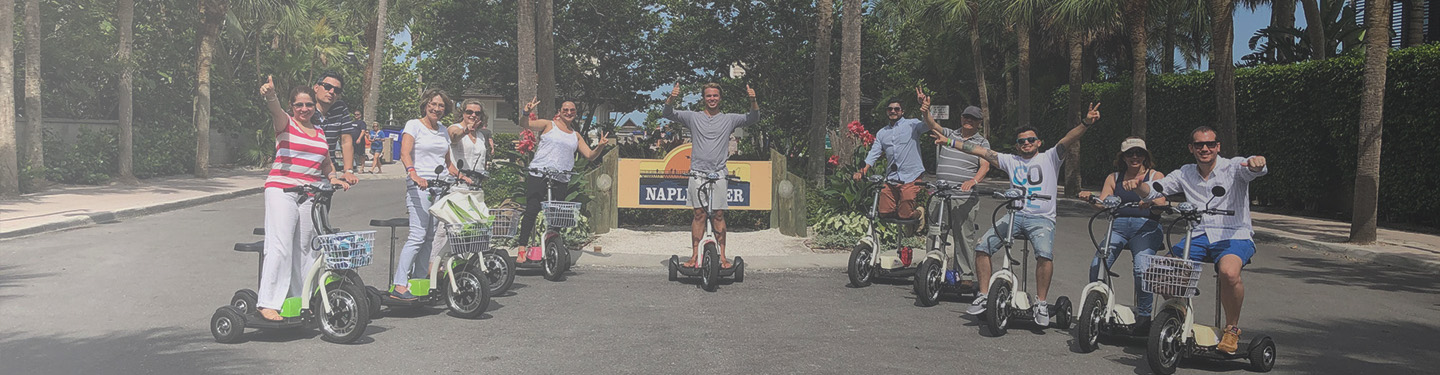
Mistakes to Avoid When Buying Mobility Scooters in Bulk
Introduction
Bulk procurement of mobility scooters is a core business move for global distributors, retail operators, healthcare institutions, tourism rental companies and property patrol teams. A well-planned bulk order can streamline inventory management, stabilize profit margins and satisfy end users including the elderly and people with limited mobility. However, numerous bulk buyers repeatedly make avoidable mistakes during the purchasing process. Most of these errors stem from overemphasizing low upfront prices or rushing through procurement procedures, which eventually result in customs detention, mass product failures, high return rates, damaged brand credibility and unnecessary financial losses.
Mobility scooters belong to specialized personal mobility equipment, with strict requirements for safety, compliance, performance and after-sales service. To help global buyers conduct efficient, low-risk and cost-effective bulk purchasing, this article sorts out the most common mistakes in bulk procurement and shares targeted solutions and practical suggestions, covering every link from supplier verification, product selection to logistics and after-sales cooperation.
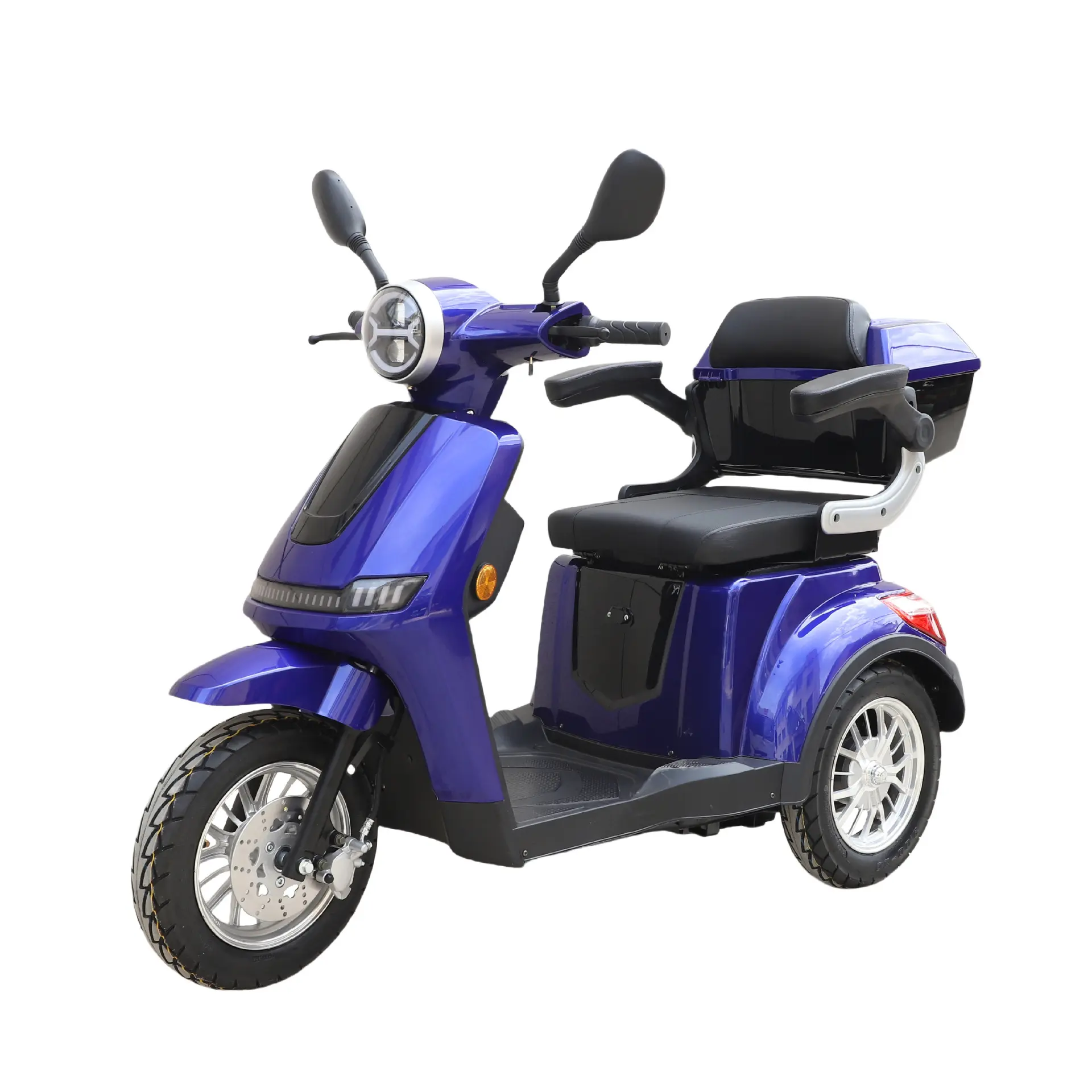
1. Ignoring Market Compliance and Safety Certifications
For bulk buyers of mobility scooters, neglecting regional safety and compliance certifications is the most dangerous mistake, which may directly lead to the entire batch of goods being detained by customs, recalled by regulatory authorities or banned from market sales. Mobility scooters are defined as medical auxiliary equipment or special electric vehicles in most regions around the world, and each market has its own mandatory access standards.
Many novice bulk buyers only focus on product appearance and quoted prices, and take the supplier’s verbal commitment of “full compliance” as the standard, without requesting complete and valid certification documents for verification. Different regions have distinct core certification requirements: products sold in European countries must pass CE certification covering electrical safety and mechanical performance; the North American market requires FDA registration and relevant electrical safety certifications for medical mobility aids; regions in Oceania and Southeast Asia also have local electric vehicle access rules.
In addition to market access certifications, ISO quality system certification and product safety test reports are also important references to measure the production standardization of manufacturers. Products without complete certifications not only face huge customs risks, but also make buyers bear legal liabilities once safety accidents occur during use.
Practical advice: Before confirming the bulk order, ask the supplier to provide scanned copies and original verification channels of all certifications corresponding to the target sales market, and verify the authenticity of the documents through official platforms. Do not accept products with expired certifications or only printed certification logos on product brochures. For large-batch orders, you can also entrust a third-party testing agency to conduct random inspection of product compliance.
2. Prioritizing Low Prices Over Product Quality and Durability
Low wholesale prices are always the most attractive factor for bulk buyers, but choosing products purely based on low prices will bring higher long-term operating costs. Many low-priced bulk mobility scooters cut costs by using inferior raw materials and rough production processes, which are concentrated on frame materials, welding technology, motors and tires.
Qualified mobility scooters mostly adopt high-strength steel or aviation aluminum frames, with firm and smooth welding joints, which can adapt to frequent use in complex road conditions. Low-cost products often use thin and thin metal materials, which are prone to frame deformation and welding detachment after a short period of use. In terms of core components, low-power inferior motors will cause insufficient power, slow climbing speed and frequent failures; inferior tires have poor anti-slip and wear resistance, and are easy to crack during outdoor use.
For rental businesses and medical institutions with high product usage frequency, inferior products will lead to a sharp increase in maintenance costs, a surge in customer complaints and return rates, and continuously damage the market reputation that buyers have accumulated for a long time. In the long run, the loss caused by quality problems is far more than the savings from low purchase prices.
Practical advice: Establish a comprehensive product evaluation system combining price and quality. Compare the frame material, motor parameters, battery configuration and accessory quality of multiple suppliers horizontally. Focus on the actual service life and failure rate of products used by peer buyers. When negotiating prices, take standard high-quality models as the benchmark, and avoid choosing ultra-low-priced products with obviously simplified configurations.
3. Disregarding Product Parameters and Target User Matching
Mobility scooters are diversified in design, and different models correspond to different usage groups and application scenarios. Another common mistake of bulk buyers is to order products without combining the local user groups and usage environments, resulting in unsalable inventory or poor user experience.
First of all, it is the load-bearing capacity. Every mobility scooter has a clear standard load range. If you ignore this parameter and purchase models with small load-bearing for areas where users are generally heavy, it will easily cause vehicle tilt, component damage and potential safety hazards during use. Secondly, the power and climbing performance of the motor are crucial. For hilly areas or families with entrance steps, scooters with low-power motors will struggle to climb slopes, while flat urban roads can choose models with moderate power to control costs.
In addition, parameters such as driving speed, body size and foldability also need to be matched with the scenario. Tourist attractions and large-scale scenic spots usually need portable foldable models to facilitate centralized storage and vehicle scheduling; elderly care communities and medical institutions pay more attention to driving stability and riding comfort; warehouse handling and security patrol scenarios require heavy-duty tricycle models with strong load-bearing and durability. Some buyers also ignore the local road speed limit rules, and purchase high-speed models that do not meet regional regulations, resulting in products unable to be put on the market normally.
Practical advice: Sort out local user portraits and usage scenarios before purchasing. Clarify the required load-bearing range, motor power, climbing angle, driving speed and portability requirements. Communicate with suppliers in detail about the parameter standards, and let manufacturers recommend targeted models. For mixed scenarios, reasonably allocate the proportion of different models to avoid a single product configuration.
4. Overlooking Battery Performance and Actual Endurance
Battery is the core component that determines the user experience of mobility scooters, and it is also the part with the highest failure rate. Many buyers only look at the nominal voltage and capacity marked in the product introduction, but ignore the actual battery quality, cycle life and real driving range, leaving hidden dangers for after-sales problems.
Most mainstream mobility scooters are equipped with 48V batteries with different capacities such as 12Ah and 20Ah. The nominal range marked by many inferior batteries is far from the actual use effect. After being fully charged, the actual driving distance is significantly shortened, and the battery attenuation speed is fast. Especially for bulk goods stored in the factory warehouse for a long time, even if the products are unopened, the battery will self-discharge naturally, and the performance will decline when they reach the hands of end users.
In addition, different types of batteries have differences in service life and maintenance difficulty. Inferior batteries have a short cycle life, frequent charging failures and even potential safety hazards such as leakage. For rental businesses with frequent charging and use, poor battery quality will greatly increase the frequency of battery replacement and maintenance costs.
Practical advice: Clearly confirm the battery brand, type, cycle life and actual endurance data with the supplier, and require a detailed battery quality guarantee clause. Before bulk shipment, test the endurance of the sample under different road conditions. For products that need to be stored for a long time, negotiate with the supplier on battery pre-charging and anti-attenuation treatment schemes.
5. Skipping Sample Testing and Small-Batch Trial Orders
In order to pursue delivery speed or pursue lower unit prices through large orders, some buyers directly place large-batch orders without testing samples, which is an extremely risky operation. Product pictures, parameter lists and supplier descriptions cannot fully reflect the actual performance, workmanship and details of the product.
After receiving the large-batch goods, buyers may find many hidden problems: unreasonable seat design leading to poor comfort, inflexible control handles, loud running noise, unstable braking system and inconsistent product workmanship of different batches. Once the whole batch of products has defects, the return and replacement cycle is long, the logistics cost is high, and the sales and operation plans will be seriously delayed.
Even if the samples look perfect, the stability of the production line cannot be ignored. The product quality of small-batch samples is often strictly controlled, while mass production may have problems such as simplified processes and uneven workmanship.
Practical advice: Develop the procurement process of “sample confirmation – small-batch trial order – large-batch formal order”. After receiving the samples, conduct a comprehensive test including driving experience, braking test, endurance test and detail inspection. After the sample is confirmed to be qualified, place a small-batch trial order to inspect the batch production quality, packaging and delivery timeliness. Only when the trial order runs smoothly can we carry out large-batch procurement.
6. Failing to Clarify After-Sales Service and Spare Parts Supply
Mobility scooters are mechanical and electrical integrated products that require long-term maintenance and replacement of vulnerable parts. Many bulk buyers only focus on product transactions and ignore the construction of after-sales service systems and spare parts supply channels. After the products are sold, they are faced with the dilemma of no accessories to replace and no professional maintenance support.
Common vulnerable parts of mobility scooters include batteries, tires, brakes, switches and controllers. If the supplier cannot provide long-term stable spare parts supply, once the product fails, end users cannot get timely maintenance, which will directly trigger a large number of returns and bad reviews. In addition, the warranty period and warranty scope are also easy to cause disputes. Some suppliers verbally promise a long warranty period, but set various restrictions in the formal contract, refusing to provide after-sales services for man-made damage or normal loss parts.
For cross-border bulk buyers, the timeliness of transnational after-sales response is also very important. Slow communication and cumbersome return procedures will increase the operating pressure of buyers.
Practical advice: Sign a detailed after-sales service agreement with the supplier before purchasing, clarify the warranty period, warranty scope, liability division for product failures, and the response speed of after-sales consultation. Negotiate the supply price, delivery cycle and minimum order quantity of common spare parts, and properly stock up on vulnerable parts while purchasing bulk scooters. For long-term cooperative suppliers, establish a stable spare parts distribution mechanism.
7. Underestimating Logistics Costs, Delivery Cycles and Landed Costs
Many novice bulk buyers only calculate the ex-factory price of products, ignoring a series of additional costs in the transportation link, resulting in the actual landed cost far exceeding the budget. At the same time, unreasonable estimation of the production cycle and logistics time will lead to out-of-stock of inventory and affect normal sales.
The composition of the landed cost of bulk mobility scooters is complex, including packaging fees, export documentation fees, ocean or air freight, customs duties, handling fees and destination local distribution fees. Different packaging methods such as cartons and wooden frames will also change the cost and damage rate of goods. In addition, in the peak production season of electric vehicles, the factory’s production cycle will be extended, and international shipping is prone to container tension and route delays. If the buyer does not reserve a sufficient buffer period, it will fail to deliver goods to the market on schedule.
Some suppliers will quote low ex-factory prices, but add hidden fees such as operation fees and packaging fees in the later stage. Buyers who do not confirm the cost details in advance will face budget overruns.
Practical advice: Require the supplier to provide a full breakdown of all costs from ex-factory to destination warehouse, and calculate the total landed cost comprehensively. According to the sales plan, negotiate the production cycle with the supplier and reserve 1 to 2 weeks of buffer time for logistics delays. Choose reasonable packaging solutions according to the transportation distance and transportation method to reduce the damage rate of goods. For long-term bulk orders, sign a fixed-term logistics cooperation agreement to stabilize freight costs.
Conclusion
Bulk purchasing of mobility scooters is a systematic work that runs through compliance verification, product selection, sample testing, logistics arrangement and after-sales cooperation. The pursuit of low prices and blind rush for orders are the root causes of most procurement failures. For global bulk buyers, the core of high-quality procurement is to balance cost, quality, compliance and service.
Before each bulk order, please check all links one by one: confirm that the product certifications meet the market access standards, select products with reliable quality matching user scenarios, complete sample testing and small-batch trial evaluation, clarify after-sales and spare parts supply terms, and fully calculate the landed cost and delivery cycle. Avoiding the above seven common mistakes can effectively reduce procurement risks, maintain stable operation of the business, and win long-term trust from end users and the market.
In the increasingly competitive global mobility equipment market, standardized and rational bulk procurement will become a strong competitive advantage for every buyer.
Post time: Jun-15-2026