


How to Evaluate Mobility Scooter Factory Quality
Introduction
For distributors, healthcare facility buyers, tourism rental operators and retail wholesalers, selecting a qualified mobility scooter factory is the foundation of stable business operation. Low-quality manufacturing will lead to frequent product failures, customer complaints, customs clearance obstacles and long-term profit losses. Mobility scooters serve seniors, people with disabilities and daily commuting users, so safety, durability and performance stability are non-negotiable core requirements.
Evaluating a mobility scooter factory’s quality is not only about checking product parameters on brochures, but also covering certification compliance, production craftsmanship, quality control systems, component selection, technical capability and after-sales support. This guide shares practical and actionable evaluation dimensions, helping global buyers quickly screen reliable manufacturers and avoid procurement risks.
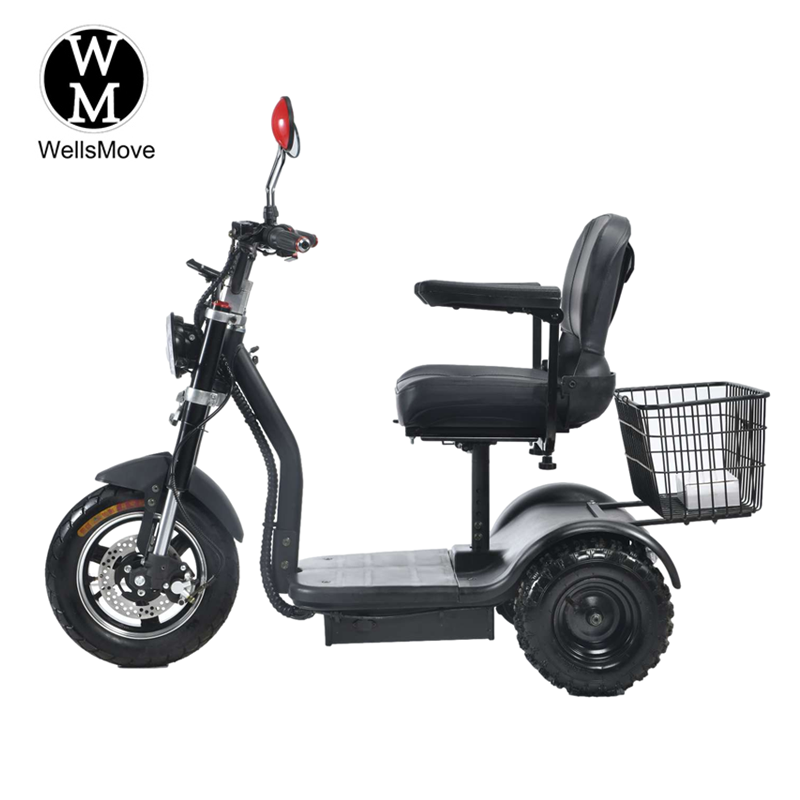
1. Verify Global Compliance and Authoritative Certifications
Certifications are the most intuitive threshold to measure factory quality, representing that products meet international safety, environmental and manufacturing standards. Uncertified factories often cut corners on materials and processes, failing to enter mainstream markets.
First, check universal quality management certifications such as ISO 9001, which proves the factory has standardized production, inspection and management processes rather than scattered manual workshop production.
Second, focus on regional market mandatory certifications. CE certification is essential for European market access, covering electrical safety, mechanical stability and electromagnetic compatibility. For the North American market, FDA registration and UL certification for batteries and electronic components are basic requirements to avoid market sales bans and safety liability risks.
Professional factories will provide complete certification documents, test reports and batch qualification certificates. Factories that cannot offer official certified files or only provide fake logo labels should be eliminated directly.
2. Assess Raw Material and Core Component Quality
The service life and safety of mobility scooters depend fundamentally on raw materials and core parts, and high-quality factories never compromise on material selection.
Frame Material
The frame is the main load-bearing structure. Reliable factories adopt high-strength steel or aviation-grade aluminum alloy materials, with uniform and full welding joints, no missing welding, virtual welding or welding cracks. Qualified frames pass salt spray corrosion resistance test and pressure bearing test, and will not deform or rust after long-term use in outdoor humid environment. Inferior factories use thin recycled materials, which are prone to fracture and hidden safety hazards.
Power System
Motors, batteries and controllers determine power performance, climbing ability and cruising range. Standard factory configurations include 500W to 600W high-efficiency silent motors, with stable output and low heat generation. Batteries are matched with standard 48V 12A/20A specifications, with overcharge, over-discharge and short-circuit protection functions. The controller has precise speed regulation and braking response, with neat internal wiring and professional protective casing.
Auxiliary Parts
High-quality scooters adopt wear-resistant non-slip tires, UV-resistant and anti-aging plastic shells, and high-resilience breathable seats. The overall assembly has no loose parts or abnormal noise, and the surface paint is smooth and uniform without bubbles or peeling.
3. Inspect Production Process and Technical Strength
Years of industry accumulation and professional technical team are important symbols of high-quality mobility scooter factories. Factories with more than 20 years of manufacturing experience have mature accumulation in steel and aluminum metal structure processing and electronic system research and development.
Professional factories have independent component processing workshops, assembly lines and professional R&D teams, capable of optimizing product climbing angle, speed limit and environmental adaptability according to market demand. They can support customized design for different scenarios such as daily travel, security patrol, warehouse handling and tourism rental.
In terms of staff configuration, formal factories pay attention to skilled worker training and regular technical iteration. All production links are operated by trained professional technicians, realizing standardized production from raw material cutting, welding, assembly to finished product debugging, rather than random assembly by temporary workers.
4. Review Complete Quality Control System
A sound quality control system runs through the whole production process, which is the key to stable product batch quality. Excellent mobility scooter factories implement three-level inspection standards.
Incoming material inspection: Strictly test the size, material performance and qualification of all raw materials and parts to prevent inferior accessories from entering the production line.
In-process inspection: Set up inspection nodes in welding, wiring, assembly and other links to find and repair process problems in real time, reducing defective product rate.
Finished product inspection: Each completed scooter passes full functional tests including speed, braking, climbing, waterproof and low-temperature adaptation. Products can only be delivered after passing aging test and simulation scene use test.
In addition, high-quality factories will retain test data of each batch of products, facilitate product traceability and problem investigation, and provide reliable quality guarantee for bulk orders.
5. Evaluate Production Capacity and Order Stability
For bulk buyers, factory production capacity and delivery stability are closely related to inventory replenishment and market supply rhythm. High-quality factories have stable daily output and perfect supply chain supporting system, which can meet the demand of large batch orders and small batch customized orders at the same time.
It is necessary to confirm the factory’s monthly production capacity, raw material inventory cycle and delivery cycle. Reliable manufacturers can formulate reasonable production schedules according to order quantity, ensure on-time delivery, and will not delay delivery due to insufficient capacity or raw material shortage. At the same time, they have stable cooperative upstream component suppliers, avoiding quality fluctuations caused by frequent replacement of parts suppliers.
6. Check After-sales Service and Warranty Policy
Perfect after-sales support is an important part of factory quality evaluation, especially for mobility scooters with electrical and mechanical integrated structure.
Formal high-quality factories provide clear warranty clauses, covering frame, motor, battery and controller with different warranty periods. They provide complete product manuals, maintenance guides and fault troubleshooting instructions, with professional technical teams to support remote guidance and accessory replacement services.
In addition, qualified manufacturers will provide complete product packaging and export supporting documents, adapting to sea and air freight transportation standards, to avoid product damage during long-distance transportation. Factories with vague warranty regulations and no professional after-sales team will bring great after-sales maintenance pressure to buyers.
Conclusion
Evaluating the quality of a mobility scooter factory requires comprehensive investigation from certification compliance, raw material components, production technology, quality control system, production capacity and after-sales service. For global buyers, focusing on these core dimensions can efficiently distinguish high-quality manufacturers from low-cost and low-quality workshops.
Choosing a factory with standardized management, strict quality control and strong technical strength can not only reduce the risk of returns and customs clearance delays, but also help stabilize market reputation and long-term profit growth. Inspecting factory strength on site, requesting sample testing and verifying real customer feedback are also effective ways to further confirm comprehensive quality.
Post time: Jun-01-2026