

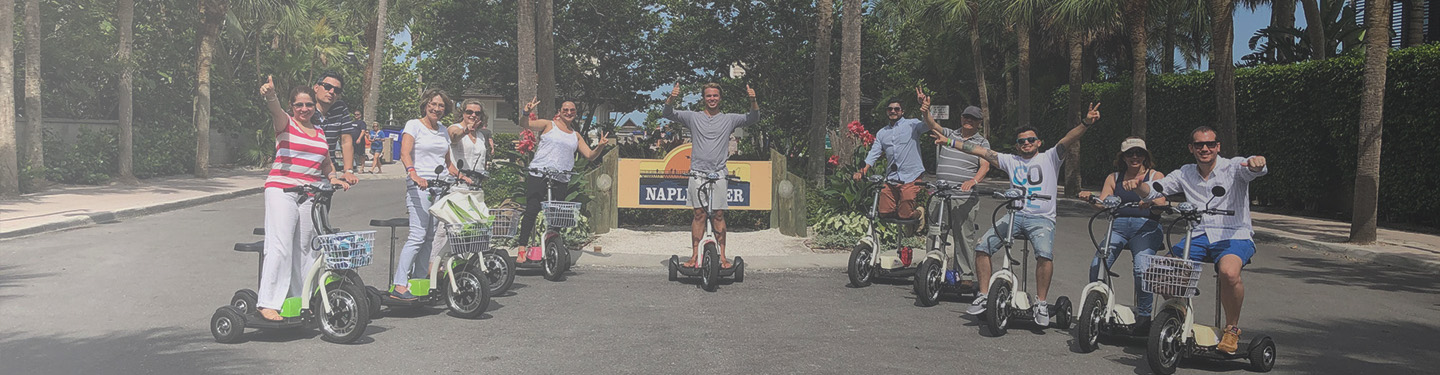
How to Compare Mobility Scooter Suppliers: A Complete Sourcing Guide for Wholesale Buyers
Intro
1. Verify Global Regulatory Compliance & Valid Certifications (Non-Negotiable Comparison Benchmark)
Core Certification Checklist for Side-by-Side Comparison
- European Market (EU/UK)
Mandatory: CE Medical Device marking, LVD, EMC, EN 17128 mobility scooter safety standard, RoHS environmental compliance. Reputable suppliers provide original test reports issued by third-party labs like TÜV or SGS, not generic digital copies.
- North America (USA/Canada)
Mandatory: UL 2272 lithium battery safety certification, FCC electromagnetic compliance, FDA registration for medical-class scooters, and local transport weight/speed limits documentation.
- Global Battery Safety (All Regions)
UN38.3 lithium battery shipping certification and MSDS material safety data sheets are required for sea and air freight shipments. Suppliers without these documents risk full container seizure at customs.
Comparison Red Flags to Flag Immediately
- Suppliers who only share low-resolution certificate screenshots instead of verifiable original lab reports
- Certifications issued under a different company name (indicates outsourced production without quality oversight)
- Missing updated test reports for new model launches (regulatory standards refresh every 2–3 years)
2. Compare Manufacturing Expertise, Capacity & In-House Technical Strength
Frame & Structural Engineering Capability
- Top-tier suppliers maintain in-house welding workshops, load-bearing stress testing stations, and full waterproofing aging test lines for every finished unit.
- Mid-tier vendors outsource frame production to third-party metal workshops, leading to inconsistent weight distribution and long-term structural wear.
Electronic & Powertrain R&D
- In-house R&D teams focused exclusively on mobility vehicle electronics
- Self-developed battery management systems (BMS) with overheat, overcharge, and short-circuit protection
- Real-world performance testing data (30-degree climbing capacity, low-temperature battery retention, continuous running cycle tests)
Production Capacity & Lead Time Stability
- Request past 12-month delivery records to measure on-time shipment rates
- Confirm maximum scalable production capacity for bulk fleet orders (resort, hospital, municipal patrol contracts)
- Compare standard lead times for stock ODM models vs custom OEM branded builds
3. Side-by-Side Product Line & Customization Flexibility
Product Range Comparison Metrics
- Lightweight portable mobility scooters (airline-compliant foldable designs)
- Standard single-rider three-wheel electric trikes
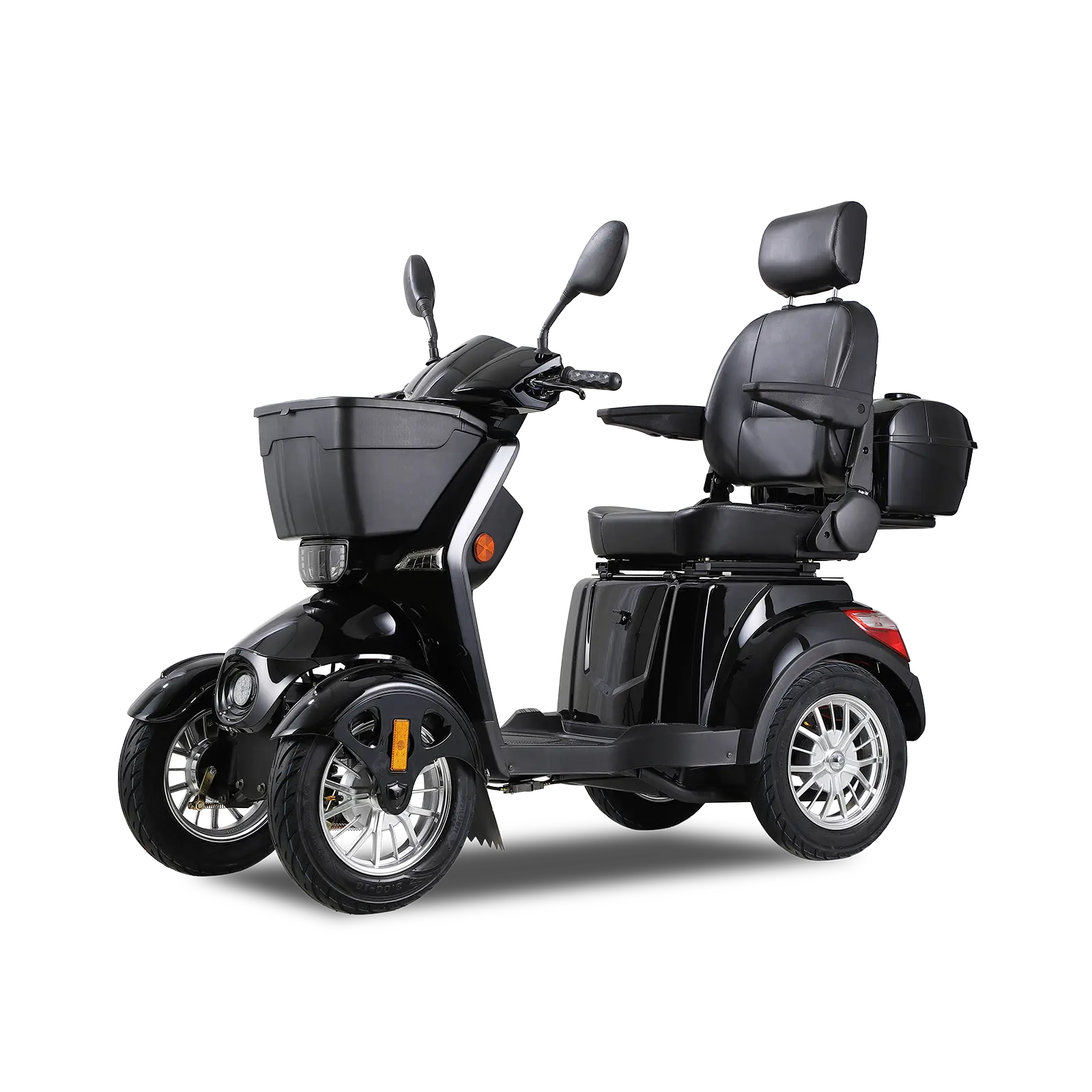
- Four-wheel heavy-duty outdoor scooters with suspension
- Dual-passenger leisure & rental scooters
- Security patrol and warehouse utility mobility vehicles
OEM & ODM Customization Terms Comparison
- Branding: Private logo embossing, custom body paint color matching, printed packaging design
- Hardware modifications: Adjustable seat frames, upgraded suspension, extended battery range, front/rear storage baskets
- Manuals & labeling: Multilingual user guides, region-specific safety warning decals
- Prototyping turnaround time for new custom designs
4. Full Cost Breakdown: Pricing, MOQs & Hidden Expenses
Core Cost Factors to Compare
- Ex-factory unit pricing by order volume tier
Request tiered pricing for small trial orders, mid-volume retail stock, and large fleet bulk shipments. Most manufacturers offer 8–15% volume discounts for orders exceeding 500 units.
- Minimum Order Quantity (MOQ) flexibility
- Factories: Higher base MOQs (50–100 units per model) but lower per-unit cost for large orders
- Trading suppliers: Low MOQs (5–20 units) but higher markup per scooter
For new market testing, prioritize vendors with flexible trial MOQ policies and sample order discounts.
- Hidden fees to cross-reference
Custom mold development charges, branded packaging fees, third-party inspection service costs, ocean freight consolidation surcharges, and spare parts shipping rates.
- Payment terms security
Compare deposit ratios (standard 30% pre-production balance), final payment timing, and Trade Assurance coverage limits to mitigate capital risk.
Quick Cost Comparison Tip
5. After-Sales Support, Spare Parts & Warranty Frameworks
Standard Comparison Criteria for After-Sales
- Warranty coverage terms
Compare length of warranty for core components: frame, motor, lithium battery, controller, and plastic body parts. Premium suppliers offer 2–3 year warranties on critical electronics, while budget vendors limit coverage to 6–12 months.
- Global spare parts supply chain
Ask each supplier for spare parts lead times, minimum spare parts order limits, and ability to ship small replacement batches separately from full scooter orders. Avoid suppliers that only fulfill spare parts alongside large bulk shipments.
- Technical support channels
Multilingual engineering support availability, digital repair manuals, troubleshooting video resources, and dedicated account managers for bulk buyers.
- Defect resolution protocols
Compare policies for production defect compensation, replacement unit terms, and batch rework timelines if quality inconsistencies arrive at your warehouse.
6. Supplier Track Record & Global Client Case Studies
- Export market footprint: Confirm active sales to your primary regions (EU, North America, Australia, Southeast Asia) with client references you can contact independently
- Client vertical diversity: Existing partnerships with medical supply chains, national retail brands, resort rental operators, and municipal mobility service providers
- Historical dispute resolution records: Request past quality issue case studies and how the supplier resolved customer losses
- Third-party factory audit reports: SGS, BV, or TÜV facility inspection documentation validating consistent quality control processes
7. Red Flags to Eliminate Suppliers From Your Shortlist
- Refuses to share full original certification documents or blocks third-party factory audits
- Offers pricing drastically below the industry average without transparent component downgrades
- Cannot provide consistent spare parts shipping timelines or imposes excessive minimums for replacement parts
- Fails to provide verifiable client references operating in your target sales region
- Inconsistent communication, delayed technical data responses, or vague production capacity claims
- Unwilling to adjust MOQs for small market trial orders with long-term volume commitments
Final Supplier Comparison Workflow for Buyers
- Draft standardized product specifications aligned with your target market regulatory rules
- Distribute identical request for quotation (RFQ) documents to all shortlisted suppliers
- Score each vendor across the six core comparison categories outlined above (compliance, manufacturing capacity, product range, total landed cost, after-sales, client track record) using a weighted scoring system
- Request pre-production sample units from the top 2–3 highest-scoring suppliers for real-world performance testing
- Conduct virtual or on-site factory audits to validate stated production, quality control, and spare parts infrastructure
- Negotiate tiered pricing, warranty, and spare parts terms with the leading candidate before finalizing contracts
Conclusion
Post time: Jul-03-2026