

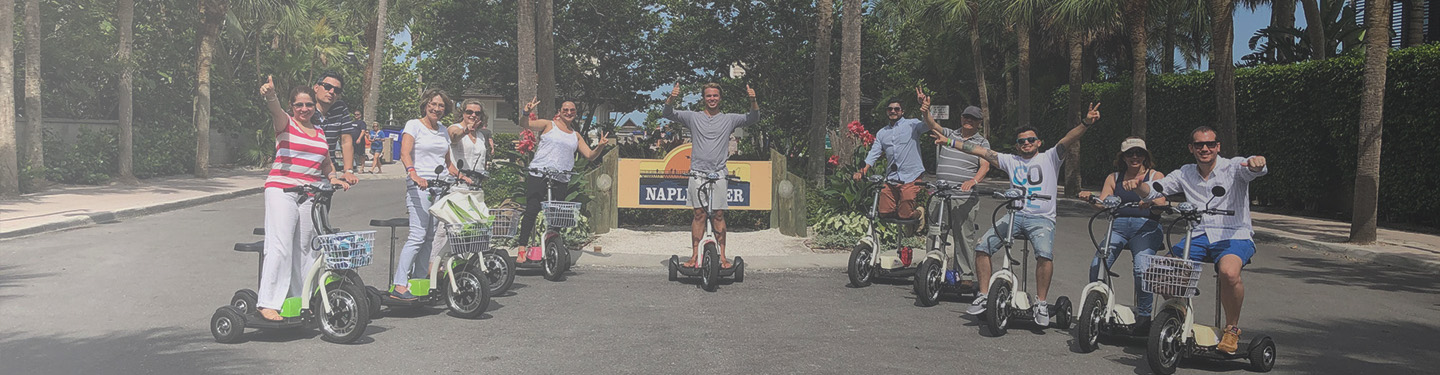
How to Choose the Right Mobility Scooter Model for Your Business
Mobility scooters have become essential equipment across global business sectors, including healthcare institutions, rental fleets, retail distribution, tourism services, and property security patrols. For business buyers, picking the ideal scooter model is not just about basic functionality—it directly impacts operational costs, user satisfaction, after-sales workload, and long-term profit margins.
With countless models varying in power, structure, portability, and performance flooding the market, many business buyers struggle to filter suitable options efficiently. This guide breaks down core selection logic, key model categories, critical performance parameters, and practical matching tips to help you make a targeted, cost-effective decision for your business needs.
Table of Contents
- Understand Core Business Scenarios for Mobility Scooters
- Main Mobility Scooter Model Categories & Business Suitability
- Key Performance Specifications to Evaluate Before Purchasing
- Safety & Certification Standards for Commercial Use
- Durability & Maintenance Factors for Long-Term Business Operation
- Bulk Purchase & Cost Matching Tips for Business Buyers
- Common Mistakes to Avoid When Selecting Scooter Models
- Final Checklist to Confirm the Right Mobility Scooter
Understand Core Business Scenarios for Mobility Scooters
The first step to choosing the right model is clarifying your core business application scenario, as each scenario demands distinct design and performance features. Matching models to scenarios eliminates unnecessary cost waste and improves user experience.
- Elderly & Disabled Daily Use Retail: Prioritize ease of operation, stable low speed, comfortable seating, and simple control panels. Users are mostly seniors or people with limited mobility, so complex functions are unnecessary.
- Healthcare & Nursing Institutions: Require high safety, anti-tilt design, quiet operation, and easy maneuvering in narrow indoor corridors. Foldable and lightweight designs are preferred for storage and patient transfer.
- Tourism Rental Business: Focus on long battery life, durable frames, easy maintenance, and moderate climbing ability. Models need to adapt to park paths, scenic trails, and slightly uneven road surfaces.
- Security Patrol & Warehouse Logistics: Need high power, strong load capacity, fast stable speed, and rugged metal frames. Heavy-duty models suit long-hour outdoor patrols and indoor warehouse mobility.
- Residential & Community Services: Require compact body size, flexible steering, low noise, and decent battery life for daily community patrol and resident temporary use.
Defining your primary scenario first narrows down model types and avoids selecting overqualified or underperforming products.
Main Mobility Scooter Model Categories & Business Suitability
Mobility scooters are divided into three mainstream series, each tailored to specific business demands. Understanding their features helps you quickly lock in the right product line.
| Scooter Model Type | Core Features | Ideal Business Use | Ease of Maintenance | Cost Level |
|---|---|---|---|---|
| Portable Lite Mobility | Lightweight, foldable, compact body, easy to carry and store, low power | Healthcare centers, retail sales, family-oriented distribution | Very Easy | Budget-Friendly |
| Standard Personal Mobility | Balanced power and speed, comfortable seating, 3-wheel stable structure, 30-degree climbing ability | Elderly daily use, community services, small-scale tourism rental | Moderate | Mid-Range |
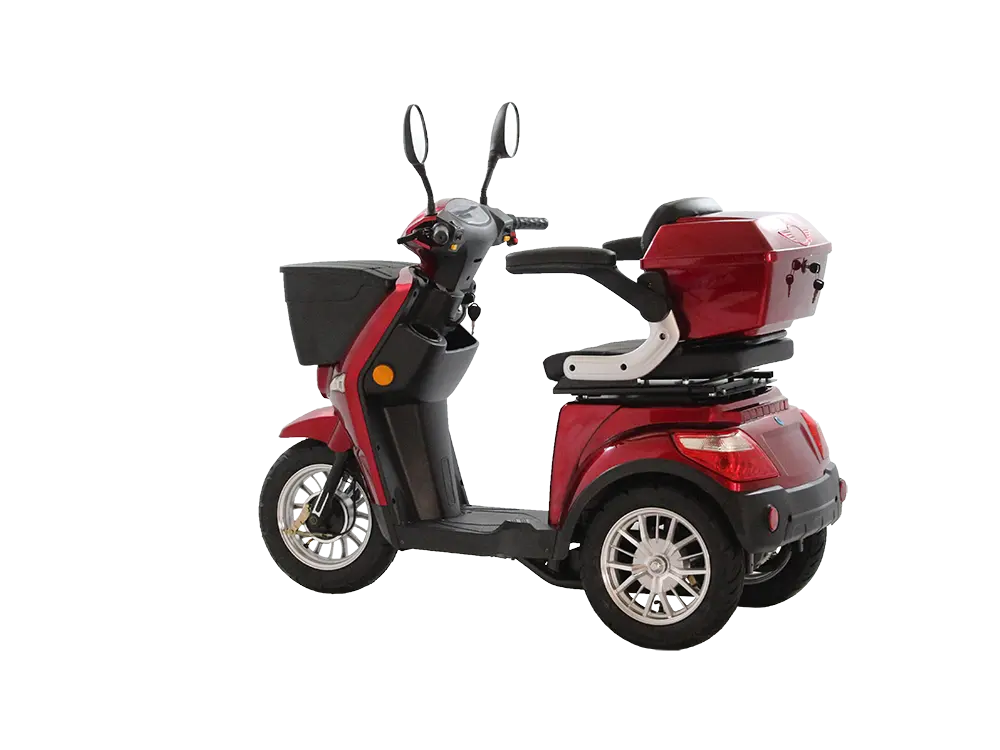
| Heavy Duty Trike Scooter | 500W-600W high-power motor, reinforced steel-aluminum frame, strong load capacity, durable structure | Security patrols, warehouse logistics, large scenic spot rentals | Moderate | Premium |
Portable lite models excel in space-saving and portability, perfect for businesses needing frequent storage or indoor use. Standard personal models strike a balance between performance and price, fitting most conventional retail and service scenarios. Heavy-duty trike models are built for high-frequency, high-load commercial use, with robust structure adapting to complex road conditions and long-term operation.
Key Performance Specifications to Evaluate Before Purchasing
After confirming the model category, evaluating core technical specifications ensures the product matches operational demands. These parameters determine daily usability and service life.
Motor Power
Motor power directly affects climbing ability and load capacity. 500W motors meet daily flat road and gentle slope needs for elderly and regular users; 600W high-power motors support 30-degree climbing, ideal for scenic areas, hilly communities, and outdoor patrols. Business buyers should avoid underpowered models that struggle with slopes or overconsume battery.
Battery Configuration
48V 12A batteries offer basic daily range, suitable for short-distance indoor and neighborhood use. 48V 20A high-capacity batteries extend driving range significantly, perfect for tourism rentals and all-day patrol work. For bulk business orders, detachable battery designs are recommended for easy replacement and charging management.
Maximum Speed
Most commercial mobility scooters have a top speed of 35km/h, adjustable with speed limit settings. For elderly and healthcare scenarios, select models with adjustable low-speed modes to ensure safety. For patrol and logistics use, stable moderate speed balances efficiency and control.
Frame Material
Steel and aluminum alloy are the mainstream frame materials. Steel frames provide higher rigidity and impact resistance, ideal for heavy-duty commercial use. Aluminum alloy frames are lighter, rust-proof, and easy to handle, fitting portable and lightweight models for retail and healthcare. A high-quality frame determines long-term durability and reduces maintenance costs.
Safety & Certification Standards for Commercial Use
For business buyers selling or renting mobility scooters to end users, safety and international certifications are non-negotiable. Compliance not only avoids market access risks but also builds customer trust.
Prioritize products with mainstream global certifications such as CE and ISO quality system certification. These certifications prove the scooter meets international safety, electrical, and structural standards, suitable for sales and operation in most regions worldwide.
Key safety design features to check include anti-tilt rear wheels, dual brake systems, non-slip pedals, simple foolproof control panels, and optional night lighting. For elderly and disabled users, simplified operation and emergency stop functions are essential to reduce usage risks and business liability.
Durability & Maintenance Factors for Long-Term Business Operation
Business operations require scooters to withstand high-frequency use, so durability and maintenance convenience directly affect long-term operating costs.
Opt for manufacturers with professional metal structure and electronic system R&D capabilities. Mature production teams with years of experience ensure precise craftsmanship and stable product consistency, lowering failure rates for bulk orders.
Choose models with universal spare parts and simple disassembly structures. Easy access to replacement parts reduces downtime for rental fleets and patrol teams. Additionally, confirm the supplier’s warranty policy for frames, motors, and batteries—longer warranty periods cut after-sales maintenance expenses significantly.
Staff craftsmanship and standardized production processes also matter. Products made by skilled, well-trained workers deliver more stable quality, reducing batch defects common in low-cost mass-produced goods.
Bulk Purchase & Cost Matching Tips for Business Buyers
Distributors, rental operators, and healthcare institution buyers usually purchase in bulk, requiring balanced unit price, MOQ, and overall cost performance.
First, clarify your order scale and match the MOQ with reliable manufacturers. Regular suppliers support flexible MOQ for mixed model orders, allowing businesses to test market response with small batches before large-scale procurement.
Second, distinguish configuration differences to avoid overpaying for redundant functions. For example, retail models for the elderly do not need high-power motors or large-capacity batteries; allocate budget to safety and comfort instead. Heavy-duty patrol models should prioritize frame strength and motor performance over decorative features.
Third, negotiate long-term cooperation terms with manufacturers. Stable partnership brings favorable bulk pricing, priority delivery, and dedicated after-sales support, improving profit margins and supply chain stability for your business.
Common Mistakes to Avoid When Selecting Scooter Models
Many business buyers make avoidable errors when choosing mobility scooter models, leading to inventory backlog or high maintenance costs.
- Only focusing on low unit price while ignoring frame quality and core component stability, resulting in high failure rates and poor user feedback.
- Selecting a single model for all scenarios, failing to match portable, standard, and heavy-duty models to different customer groups.
- Overlooking certification compliance, leading to barriers in regional market sales and rental operations.
- Ignoring battery and motor warranty terms, facing costly after-sales repairs for bulk fleets later.
- Neglecting maneuverability for indoor scenarios, choosing oversized models that cannot adapt to narrow corridors or small living spaces.
Avoiding these mistakes helps business buyers select targeted models, control costs, and enhance market competitiveness.
Final Checklist to Confirm the Right Mobility Scooter
Before finalizing your purchase, use this simple checklist to verify all key factors align with your business needs:
- Confirm the model matches your core business scenario (retail, healthcare, rental, patrol).
- Check motor power, battery capacity, and speed fit local usage environment.
- Verify international safety certifications and essential safety design features.
- Evaluate frame material durability and daily maintenance convenience.
- Confirm MOQ, bulk unit price, and long-term supply cooperation terms.
- Inspect seating comfort, body size, and operability for end users.
- Confirm warranty coverage for core components like frame, motor, and battery.
Conclusion
Choosing the right mobility scooter model for your business is a systematic process that combines scenario positioning, performance parameter evaluation, safety compliance, and long-term operational cost control. It is not about picking the most high-end or cheapest model, but finding the most matched one for your target market and user groups.
By clarifying business scenarios first, distinguishing model categories, focusing on core performance and safety certifications, and paying attention to durability and bulk purchase terms, business buyers can efficiently screen high-cost-performance mobility scooters. This approach not only improves user satisfaction and reduces after-sales pressure but also lays a solid foundation for stable profit growth and long-term business expansion in the global mobility equipment market.
Blog Tags:Mobility Scooter Selection, Business Scooter Buying Guide, Elderly Scooter Wholesale, Heavy Duty Trike Scooter, Portable Mobility Scooter
Post time: May-22-2026