

How to Calculate Landed Cost for Mobility Scooters: A Complete Step-by-Step Guide
When sourcing mobility scooters for retail, rental fleets, healthcare facilities or commercial distribution, focusing only on the wholesale unit price will lead to inaccurate budgeting, thin profit margins and unexpected financial losses. Landed cost represents the full total expense of getting mobility scooters from the supplier’s facility to your warehouse or final delivery location, covering every fee, tax and logistics charge along the supply chain. For mobility scooter buyers, distributors and fleet operators, mastering landed cost calculation is the foundation of smart purchasing, competitive pricing and stable long-term operations. This comprehensive guide breaks down every component, shares practical calculation methods, highlights scooter-specific cost variables and offers actionable tips to streamline your costing process.
What Is Landed Cost for Mobility Scooters?
Landed cost refers to the complete cumulative cost of a shipment of mobility scooters, starting from the base product price and including all associated expenses incurred during production handover, international transit, customs clearance, local handling and final inland delivery. Unlike basic wholesale pricing or freight-only estimates, landed cost paints a realistic picture of how much each mobility scooter truly costs your business before you resell or deploy the units.
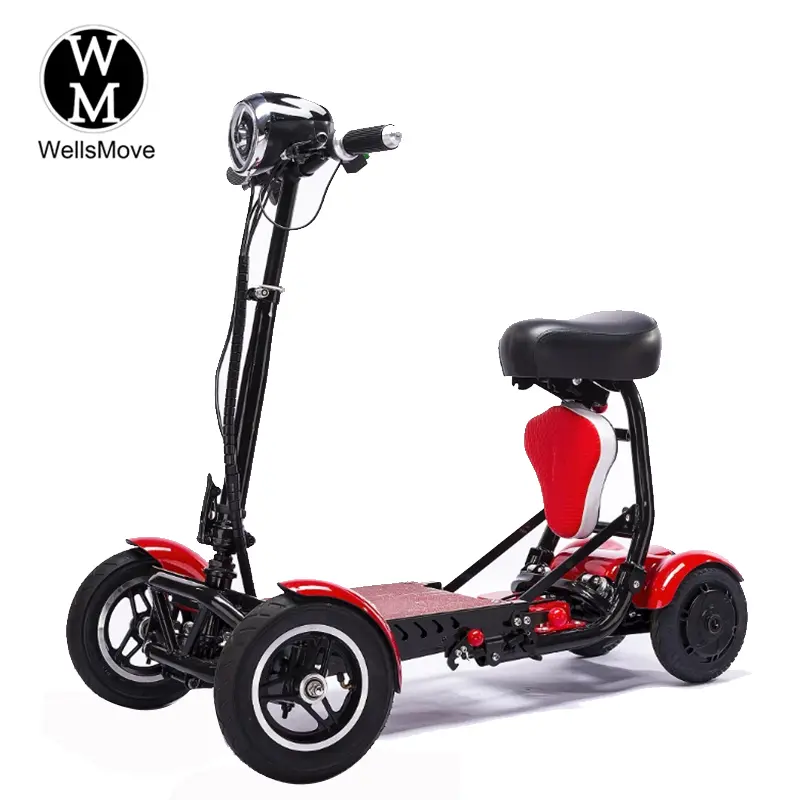
Mobility scooters cover multiple categories including portable lightweight models, standard daily-use trike scooters, heavy-duty high-load versions and climbing-capacity vehicles. Each type has distinct size, weight, packaging and compliance requirements, which directly impact logistics and customs fees. This makes scooter-specific landed cost calculation far more detailed than general consumer goods costing. Calculating accurate landed cost allows you to compare suppliers fairly, set profitable retail or rental rates, create reliable annual budgets and avoid hidden supply chain expenses that often catch bulk buyers off guard.
Core Components of Mobility Scooter Landed Cost
Every expense category that contributes to landed cost falls into six key groups. Below is a detailed breakdown tailored exclusively to mobility scooter imports and bulk purchases, with real-world cost variables common in the industry.
1. Base Product Cost
This is the starting point of all calculations, referring to the total invoice value paid directly to your mobility scooter supplier. It includes the standard unit price, as well as any supplier-side add-ons required for your order.
Key factors affecting mobility scooter base cost:
- Model specifications: Motor power (500W, 600W or higher), battery configuration (48V 12Ah, 48V 20Ah and other variants), climbing ability and maximum speed all change unit pricing. Heavy-duty scooters with enhanced frames and larger batteries carry a higher base cost than lightweight portable models.
- Build materials: Steel frame scooters are more budget-friendly, while corrosion-resistant aluminum alloy frames add to the base price due to higher raw material costs.
- Order volume: Most mobility scooter suppliers offer tiered bulk discounts. Larger order quantities reduce per-unit base cost through economies of scale, which is a major advantage for large distributors and rental fleet operators.
- Customization and accessories: Custom branding, color modifications, upgraded seats, storage baskets or additional safety accessories increase the total product cost per unit.
- Compliance certifications: Units with CE, FCC and regional safety certifications have a slightly higher base price, but they eliminate import rejection risks in target markets.
Always confirm the trade term stated on the supplier invoice (EXW, FOB or CIF), as this defines which logistics costs you are responsible for covering next.
2. International Freight and Packaging Costs
Mobility scooters are bulky and relatively heavy, so shipping fees make up a large portion of total landed cost. This category covers transportation from the supplier’s warehouse to the destination country’s port or airport, plus packaging and palletization fees.
Common shipping options for mobility scooters
- Ocean freight: The most popular choice for bulk orders. Full container loads (FCL) and less than container loads (LCL) have different pricing structures. Ocean freight is cost-effective for large shipments but has longer transit times. Palletization and container loading fees are standard for scooter shipments to prevent damage during sea transit.
- Air freight: Used for small urgent orders or seasonal restocks. Air freight is much faster but significantly more expensive, calculated by total shipment weight and volume.
- Courier delivery: Reserved for sample units or small trial orders, not economical for bulk commercial shipments.
Additional fees in this category include export documentation fees, container inspection fees and oversize surcharges. Mobility scooters with extended wheelbases or heavy-duty frames may incur extra oversize shipping fees that standard compact models avoid.
3. Cargo Insurance
Transit insurance protects your investment against loss, damage or theft while mobility scooters are in transit. Since electric scooters contain batteries, electronic components and metal frames, damage during rough handling is a common risk.
Most suppliers or freight forwarders offer standard cargo insurance, usually calculated as a small percentage of the combined product cost and international freight. While this is a relatively low-cost component, skipping insurance can lead to massive losses if cargo is damaged or lost at sea or during transit. For high-value heavy-duty scooter fleets, extended coverage is highly recommended.
4. Customs Duties, Taxes and Regulatory Fees
This is one of the most variable components, determined entirely by your destination country’s trade rules and the correct HS code for mobility scooters. Incorrect HS code classification will lead to wrong duty calculations, delayed clearance or unexpected fines.
Key charges in this section
- Import duties: Calculated based on the customs value of the shipment and the official duty rate for electric mobility scooters. Duty rates vary widely across regions and are subject to periodic trade policy updates.
- Import taxes: Most countries apply VAT, GST or sales tax on imported goods, computed using the combined value of products, freight and duties.
- Administrative customs fees: Merchandise processing fees, harbor maintenance fees and single-entry or annual customs bonds are standard for commercial imports. Regular bulk importers often opt for annual customs bonds to reduce recurring costs.
- Special regulatory fees: Some regions impose additional fees for electric vehicles with lithium batteries, due to safety and environmental compliance rules.
Before placing a large order, always verify the latest duty rates and battery-related regulations for your target market to avoid budget surprises.
5. Local Port and Handling Fees
Once the shipment arrives at the destination port or airport, a new set of local charges applies before the goods leave the port facility. These fees are often overlooked by new buyers but add up quickly for bulk scooter shipments.
Typical expenses include terminal handling fees, cargo unloading fees, warehouse storage fees (for delayed clearance), physical inspection fees and quarantine checks for electric vehicles. If customs authorities select your shipment for random inspection, additional labor and storage fees will apply temporarily.
6. Inland Transportation and Additional Miscellaneous Fees
The final leg of the supply chain covers moving mobility scooters from the port to your private warehouse, retail store or rental depot. This category also includes all remaining small recurring costs.
- Inland freight: Trucking costs from the port to your designated delivery address. Fees depend on distance, total shipment weight and local transportation rates.
- Customs brokerage fees: If you hire a professional broker to handle clearance paperwork, their service fee is added here. Brokers are highly recommended for first-time importers or complex cross-border shipments.
- Quality inspection fees: Pre-shipment or post-arrival third-party inspections ensure scooter quality and reduce defective units, a common expense for large distribution orders.
- Currency exchange and transaction fees: Wire transfer charges and costs related to currency conversion can impact total expenditure, especially with fluctuating exchange rates.
- Contingency buffer: Experienced buyers set aside a small percentage of total cost (2% to 5%) to cover unforeseen fees like demurrage for delayed pickup or last-minute document revisions.
Standard Landed Cost Formula for Mobility Scooters
After understanding all components, you can apply a universal, easy-to-follow formula to calculate both total shipment landed cost and per-unit landed cost, which is the critical figure for pricing and profit analysis.
Basic Full Formula
Total Landed Cost = Total Product Cost + International Freight + Cargo Insurance + Customs Duties + Import Taxes + Port Handling Fees + Inland Freight + Brokerage & Miscellaneous Fees
Per-Unit Landed Cost (Most Important for Buyers)
Per-Unit Landed Cost = Total Landed Cost ÷ Total Number of Mobility Scooters in the Shipment
Simplified Practical Workflow
Follow these six step-by-step actions to calculate accurately for every mobility scooter order:
- Calculate the total product cost by multiplying the per-unit wholesale price by order quantity, plus any customization or certification fees.
- Collect formal quotes from 2 to 3 freight forwarders for international shipping, and confirm packaging and palletization fees.
- Determine the correct HS code for mobility scooters in your destination country, then look up the applicable duty rate and tax rules.
- Compute customs value, then calculate total duties and import taxes based on official regulations.
- Add all local port fees, inland delivery costs, insurance, brokerage and inspection charges.
- Sum all expenses to get total landed cost, then divide by unit quantity to get the final per-unit landed cost.
Practical Calculation Example for Bulk Mobility Scooters
To make the process easier to understand, here is a real-world example for a bulk order of standard 500W electric trike mobility scooters (48V 12Ah battery), which is one of the most popular models for elderly and daily mobility use.
Order Details
- Total units ordered: 100 pieces
- Supplier FOB unit price: $110 per scooter
- Total product cost: 100 × $110 = $11,000
- International ocean freight + palletization fees: $4,200
- Cargo insurance: $220
- Customs duty rate: 8% of customs value
- Combined import tax rate: 15%
- Port handling and unloading fees: $850
- Inland trucking to warehouse: $600
- Customs brokerage + inspection fees: $480
Step-by-Step Calculation
- Customs value (Product + Freight + Insurance) = $11,000 + $4,200 + $220 = $15,420
- Customs duty = $15,420 × 8% = $1,233.60
- Import tax = ($15,420 + $1,233.60) × 15% = $2,498.04
- Total landed cost = $11,000 + $4,200 + $220 + $1,233.60 + $2,498.04 + $850 + $600 + $480 = $20,981.64
- Per-unit landed cost = $20,981.64 ÷ 100 = **$209.82 per scooter**
In this example, the FOB wholesale price is only $110, but the true per-unit landed cost rises to nearly $210. This clearly shows why relying solely on supplier unit prices will distort your profit planning. For heavy-duty scooters or air freight shipments, the gap between wholesale price and landed cost will be even larger.
Key Mobility Scooter Variables That Impact Landed Cost
Mobility scooters are not uniform products, and small differences in model and order setup can create big shifts in total landed cost. Keep these scooter-specific variables top of mind during calculations:
1. Model Size, Weight and Packaging
Lightweight folding scooters have smaller packaging, lower weight and lower shipping fees. Heavy-duty tricycles and all-terrain models are bulkier and heavier, leading to higher freight, port handling and inland transport costs. Folding designs also save container space, allowing more units per shipment and reducing per-unit freight expenses.
2. Battery and Electrical Configuration
All mobility scooters use rechargeable batteries, which are classified as restricted goods for international shipping. Larger capacity batteries (20Ah and above) may require special shipping documentation, safety labels and additional compliance fees. Some carriers impose extra surcharges for lithium battery shipments, which must be included in freight cost estimates upfront.
3. Shipment Size and Shipping Mode
Small trial orders using LCL ocean freight or air freight have much higher per-unit shipping costs than large FCL container orders. If you regularly place large bulk orders, consolidating shipments into full containers is one of the most effective ways to cut per-unit landed cost over time.
4. Regional Compliance Rules
Different markets enforce unique rules for electric mobility devices. Some regions require mandatory product testing or additional import permits for mobility scooters, adding one-time or recurring fees. Products without required certifications will face clearance delays or rejection, resulting in extra storage and return shipping costs.
Top Tips to Optimize Landed Cost for Mobility Scooter Imports
Accurate calculation is essential, but proactive optimization will help you lower overall landed cost and boost profit margins without sacrificing product quality. Use these proven strategies for mobility scooter sourcing:
1. Consolidate Orders for Larger Shipments
Combine small orders into larger bulk shipments to qualify for FCL ocean freight and volume discounts from suppliers and freight forwarders. This cuts per-unit shipping, palletization and customs processing fees significantly. Long-term annual contracts with suppliers can also unlock additional wholesale discounts and waive setup fees.
2. Standardize Product Selection
Limit custom modifications unless they are required for your target market. Custom colors, exclusive accessories and special branding add labor and production costs, as well as longer lead times. Standard scooter models with mainstream certifications maintain lower and more predictable landed costs.
3. Partner with Specialized Freight Forwarders
Work with logistics providers that have rich experience shipping electric mobility scooters and battery-powered vehicles. They understand battery shipping rules, HS code classifications and port requirements, helping you avoid fines, delays and hidden fees caused by improper documentation.
4. Update Tariff and Policy Information Regularly
Trade tariffs, import tax rates and battery shipping regulations change periodically. Set a routine to review the latest rules for your destination country every quarter. Outdated tariff information is a leading cause of miscalculated duties and unexpected extra costs.
5. Build a Reasonable Contingency Fund
Always include a 2% to 5% contingency buffer in your total cost calculation. This reserve covers temporary storage fees, inspection charges or minor demurrage caused by unforeseen clearance delays, protecting your budget from sudden disruptions.
Final Thoughts
Calculating landed cost for mobility scooters is not just a basic accounting task, but a core business skill for every distributor, rental operator and healthcare procurement team in the mobility device industry. By breaking down every cost component, following the standard calculation formula and accounting for scooter-specific variables like battery rules, model size and compliance requirements, you can determine the true cost of each unit accurately.
When you fully understand landed cost, you can compare suppliers objectively, negotiate better shipping terms, set sustainable selling or rental prices and mitigate supply chain risks. Whether you are sourcing lightweight portable scooters for retail or heavy-duty trike models for facility patrol and elderly community use, applying this step-by-step guide will keep your budgeting precise, your margins healthy and your import operations running smoothly.
Post time: Jun-08-2026