

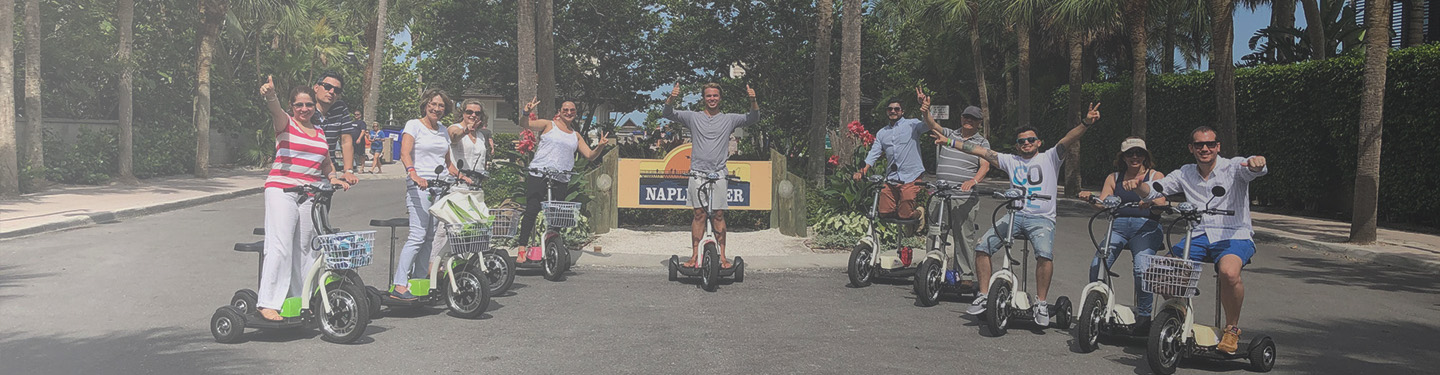
Small-Batch Import of Electric Tricycles for Seniors
The global aging population continues to accelerate. The UN’s “World Population Prospects 2025″ report shows that the proportion of people aged 65 and over has exceeded a critical threshold. “Safe, convenient, and low-cost” electric tricycles for seniors have become a core solution for short-distance travel among the global elderly population, making this category a hot sector in cross-border trade. For international wholesale buyers, importing electric tricycles for seniors in small batches allows for flexible testing of local markets, reduces inventory risk, and quickly responds to end-consumer demand, making it a preferred way to enter the silver economy. This article will outline the key information across the entire chain of small-batch imports of electric tricycles for seniors from four dimensions: market logic, core product selection, compliance points, and practical procedures, helping global buyers to enter the market efficiently.
The Core Value of Small-Batch Imports: A Flexible Layout Logic Adapted to the Silver Market
Compared to the asset-heavy model of large-batch imports, small-batch imports of electric tricycles for seniors are more in line with the current consumption characteristics of the global silver market. On the one hand, the demand for mobility scooters varies significantly among the elderly in different regions: Europe and America prioritize safety certifications and user-friendly design, while emerging markets in Southeast Asia and Africa focus more on cost-effectiveness and durability. Small-batch imports allow for “regionally customized product selection,” avoiding inventory backlogs due to product mismatches. On the other hand, global green travel policies continue to be implemented, and regulations and standards for low-speed electric mobility scooters in various countries are constantly being optimized. Small-batch imports effectively reduce trade risks caused by policy changes, allowing buyers to quickly adjust their procurement strategies based on local market feedback.
Simultaneously, the consumption demands of the silver economy are characterized by “fragmentation and high frequency.” Offline supermarkets, elderly care institutions, and community convenience stores have flexible replenishment needs for mobility scooters. Small-batch imports enable precise supply and improve capital turnover. For new entrants to the market, small-batch imports are the best way to test the waters at low cost, allowing them to assess local market acceptance, pricing ranges, and channel preferences with small orders, laying a data foundation for subsequent large-scale purchases.
Core Product Selection Strategy: Focus on Safety, Performance, and Adaptability to Identify Core Market Needs
The key to small-batch imports lies in “precise product selection.” The core consumer group for electric tricycles for the elderly is the silver-haired population and those with mobility impairments. Safety and practicality are the primary selection criteria. Simultaneously, product performance must be matched to the geographical environment and usage scenarios of the target market. The following three key product selection dimensions require special attention:
Core Performance Parameters: Power and range must be suitable for short-distance travel. A mainstream 500W motor is sufficient for daily flat terrain, while a 600W high-power motor is more suitable for areas requiring climbing (such as hilly or mountainous cities). For battery selection, a 48V 12A battery is the basic configuration, providing sufficient range for daily grocery shopping and community activities. If the target market requires higher range, a 48V 20A high-capacity battery can be selected. The maximum speed is recommended to be kept below 35km/h, which complies with speed limits for low-speed mobility vehicles in most parts of the world while ensuring the safety of the elderly.
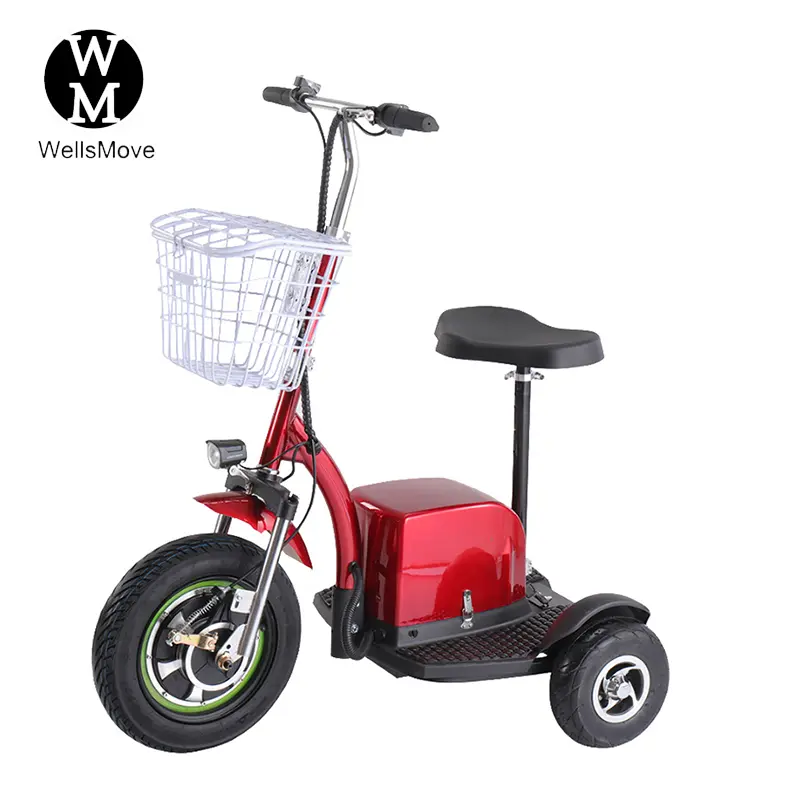
Safety Design Details: The vehicle must have a robust three-wheel structure. Anti-slip tires and a rollover-resistant chassis are basic configurations. Priority should be given to products equipped with safety features such as power brakes, a reversing camera, and turn signals. Considering the operating habits of elderly users, the product should use a simple control panel, avoiding complex button designs. The body material should balance lightweight and sturdiness; a steel-aluminum composite structure ensures impact resistance while facilitating loading, unloading, and transport.
Localization Adaptability: Product selection should be adjusted according to the characteristics of the target market. For high-end markets such as the EU and the US, products with local authoritative certifications and battery lifecycle management should be selected. For markets in Southeast Asia and Africa, priority should be given to cost-effective models with durable bodies, easily replaceable parts, and compatibility with low-voltage charging environments. For rainy areas, the waterproof rating of the product should be considered to ensure good waterproof performance of the motor and battery.
In addition, when selecting products, it is important to focus on the brand’s R&D and manufacturing capabilities. Prioritize brands that have deep expertise in the electric mobility scooter sector and possess core technologies in steel-aluminum metal structures and electronic systems. These brands offer more stable product quality control and can provide standardized after-sales parts support, reducing after-sales costs associated with small-batch imports.
Core Compliance: Thoroughly Understand National Market Access Standards and Circumvent Trade Barriers
As an electric and medical device product, electric tricycles for the elderly are subject to strict market access standards in various countries worldwide. Compliance is a prerequisite for small-batch imports. Failure to meet certification requirements can result in customs delays or even fines and product recalls. The following are the core compliance requirements of major global markets, which buyers should thoroughly understand in advance:
EU Market: Electric tricycles for the elderly are classified as Class I medical devices and require CE certification (MDR 2017/745). The core testing standard is EN 12184. Furthermore, signing with an EU Authorized Representative (EU Representative), obtaining an SRN number from the EUAMED database, and submitting a UDI barcode declaration are all required. After May 28, 2026, products without a completed UDI declaration will be unable to clear customs. In addition, the EU has stringent requirements for batteries, requiring them to pass safety tests such as needle penetration and compression, with an energy density of no less than 70Wh/kg. Some countries also require manufacturers to provide battery recycling solutions.
US Market: Classified as a Class II medical device, it requires FDA 510(k) certification, completion of a full suite of ISO 7176 tests, electromagnetic compatibility tests, and biocompatibility tests. The certification period is approximately 4-6 months. Furthermore, regulations vary significantly across US states. California requires V2G grid peak-shaving equipment, Texas has a speed limit of 32 km/h and allows unlicensed driving, while New York prohibits driving on main roads. Buyers need to adjust product configurations according to the regulations of their target state.
Australian Market: New South Wales and other regions have implemented mandatory safety standards for electric micro-transportation devices. Products must comply with AS 15194 or EN 15194 standards, and batteries must be certified by EN 50604-1 or UL 2271. After February 1, 2026, products that have not completed testing and certification will be prohibited from sale, with violations facing fines of up to AUD 825,000. Emerging markets in Southeast Asia and Africa: Entry barriers are relatively low. For example, in Mali, only a BESC/ECTN electronic cargo tracking number, battery safety certification (CE/CB report is sufficient), and vehicle compliance testing are required, with customs clearance completed in 4-6 weeks. Thailand and Malaysia offer subsidies for localized production, allowing for SKD (Skip Kill) imports of small batches, enjoying a 50% tariff reduction.
For small-batch imports, buyers should request complete certification documents and test reports from suppliers, prioritizing brands already certified in major global markets to avoid increased time and financial costs associated with self-certification. Simultaneously, attention should be paid to the tariff policies of the target market. For instance, the US will impose a 100% tariff on Chinese electric mobility scooters starting in 2025; this can be circumvented through Mexico using the USMCA (United States-Mexico-Canada Agreement). African countries like Mali offer low tariffs of 15%-20% on Chinese electric tricycles with no local component requirements, making them preferred markets for low-cost entry.
Practical Process: Key Points for Small-Batch Import Implementation
While the import process for small-batch electric tricycles for the elderly is simpler than for large-batch imports, meticulous attention to detail is still crucial. From supplier selection to customs clearance and delivery, each step directly impacts trade efficiency. The following is a standardized practical process and key points:
Supplier Selection: Prioritize brand suppliers with cross-border trade experience and the ability to provide small-batch customized services. Verify their production qualifications, product certifications, and after-sales service systems. Request sample testing to confirm product quality and specifications match requirements. Simultaneously, clarify payment methods, delivery cycles, and return/exchange policies. For small-batch imports, FOB or CIF trade terms are recommended to reduce logistics and transportation risks.
Order Confirmation and Document Preparation: Confirm order details with the supplier, including product model, configuration, quantity, and packaging requirements. Prepare a complete set of customs clearance documents, including commercial invoices, packing lists, bills of lading, product certification reports, and certificates of origin. Some markets also require battery safety declarations and product conformity declarations. Ensure document consistency to avoid customs clearance delays due to information discrepancies.
Logistics and Transportation: For small-batch imports, international express, LCL sea freight, or air freight can be chosen, depending on the target market and delivery cycle. Air freight is suitable for the European and American markets where speed is crucial, while LCL sea freight is preferable for the Southeast Asian and African markets where cost is paramount. During transportation, product protection is essential. Batteries are considered dangerous goods and must comply with UN38.3 air transport standards or maritime dangerous goods transport requirements to avoid safety issues during transit.
Customs Clearance and Delivery: Contact customs clearance agents in the target market in advance, informing them of the product type and certification information, and assist in completing customs declarations. After customs clearance, promptly arrange local delivery to send products to designated warehouses or end-user channels. For small-batch imports, it is recommended to choose logistics providers that offer door-to-door service to improve transportation efficiency.
After-Sales Service and Market Feedback: After small-batch imports, promptly collect feedback from the end-user market, including product usage experience, malfunctions, and consumer demand. Simultaneously, establish an efficient after-sales communication mechanism with suppliers to ensure timely supply of spare parts and rapid troubleshooting. Based on market feedback, adjust the next product selection and procurement strategy to achieve refined operations.
Post time: Mar-11-2026