

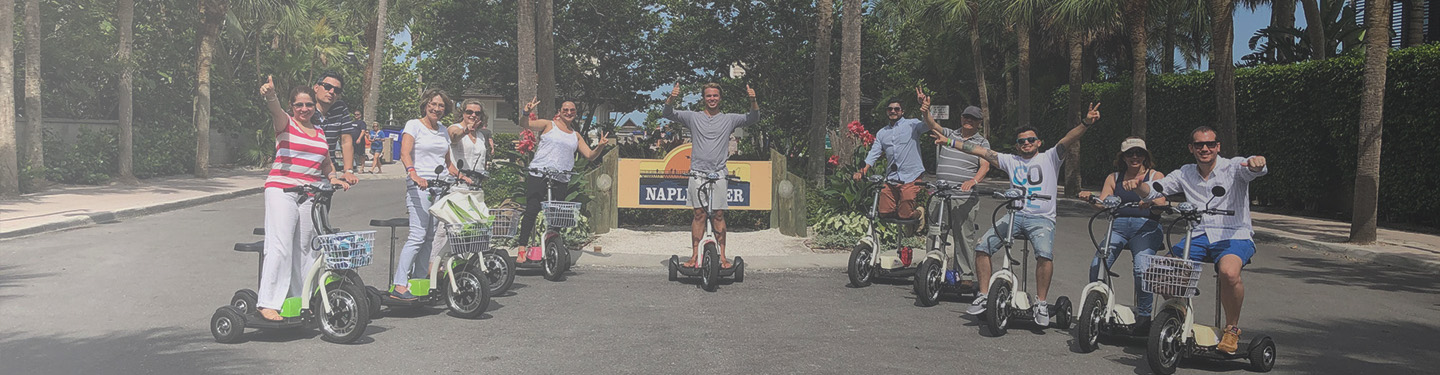
Important Considerations for Bulk Procurement of Electric Tricycles by German Distributors
As a local wholesale distributor in Germany, bulk procurement of electric tricycles for the elderly, disabled, tourist rentals, and commuting in industrial parks is not simply about price comparison, but rather about four key dimensions: compliance, stable quality, long-term after-sales service, and controllable costs. This article, written entirely from the perspective of the German market and local distributors, outlines the key considerations for bulk procurement to help you reduce risks and improve turnover and repurchase rates.
I. Compliance: The “Hard Threshold” for Road Access and Customs Clearance in Germany
Germany enforces strict regulations on electric mobility scooters and light electric vehicles. Uncertified vehicles cannot clear customs, cannot be legally sold, or be driven on the road. Each item must be verified before bulk procurement.
1. EU and German Core Certifications
CE Certification: Required for the entire vehicle, covering mechanical safety, electromagnetic compatibility, and the low voltage directive. It is the foundation for EU market access.
EN 12183: A specific European standard for electric mobility scooters, mandating tests on structural strength, braking, electrical safety, and user protection.
E-Mark/ABE Permit: According to the German KBA (Knowledge, Engineering, and Manufacturing Authority), some three-wheeled vehicles require an ABE general operating permit for legal road use and registration.
Battery Compliance: Complies with UN38.3, MSDS, RoHS, and REACH, meeting EU new battery regulations and transport safety requirements.
Nameplate and Markings: Must clearly indicate the manufacturer, vehicle model, maximum speed, power output, and approval number; information must match the actual vehicle.
2. Key Parameters of German Local Regulations
Applicable Scenarios: Primarily sidewalks/industrial parks/low-speed roads; most cities restrict operation in motor vehicle lanes.
Speed and Power: Elderly/disabled mobility scooters typically have a maximum speed ≤6–12 km/h; motor power is matched to low-speed safety standards.
Safety Features: Front and rear brakes, lights, reflectors, horn, rollover protection structure, electromagnetic compatibility stability.
Usage Qualifications: Some models require simplified registration; users do not need a driver’s license, but must comply with the regulations of the usage location.
Procurement Reminder: For bulk orders, always require suppliers to provide a complete certification document package, which can be verified by a German third-party organization to avoid customs detention and after-sales penalties.
II. Vehicle Model and Configuration: Key Selection Points to Meet German Market Needs
German users value safety, comfort, durability, and ease of maintenance. For wholesale procurement, avoid “domestic models directly exported” and prioritize European customized versions.
1. Matching Target Scenarios
Elderly Daily Travel: Low chassis, wide seats, large handrails, easy to get on and off, stable at low speeds, moderate range.
Disability Assistance: Compatible with assistive devices, simple operation, sensitive brakes, easy steering.
Scenic Area/Resort Rental: Durable, waterproof, theft-proof, fast charging/battery swapping friendly, low failure rate.
Park/Security/Warehouse: Reliable load capacity, stable climbing, long range, good passability.
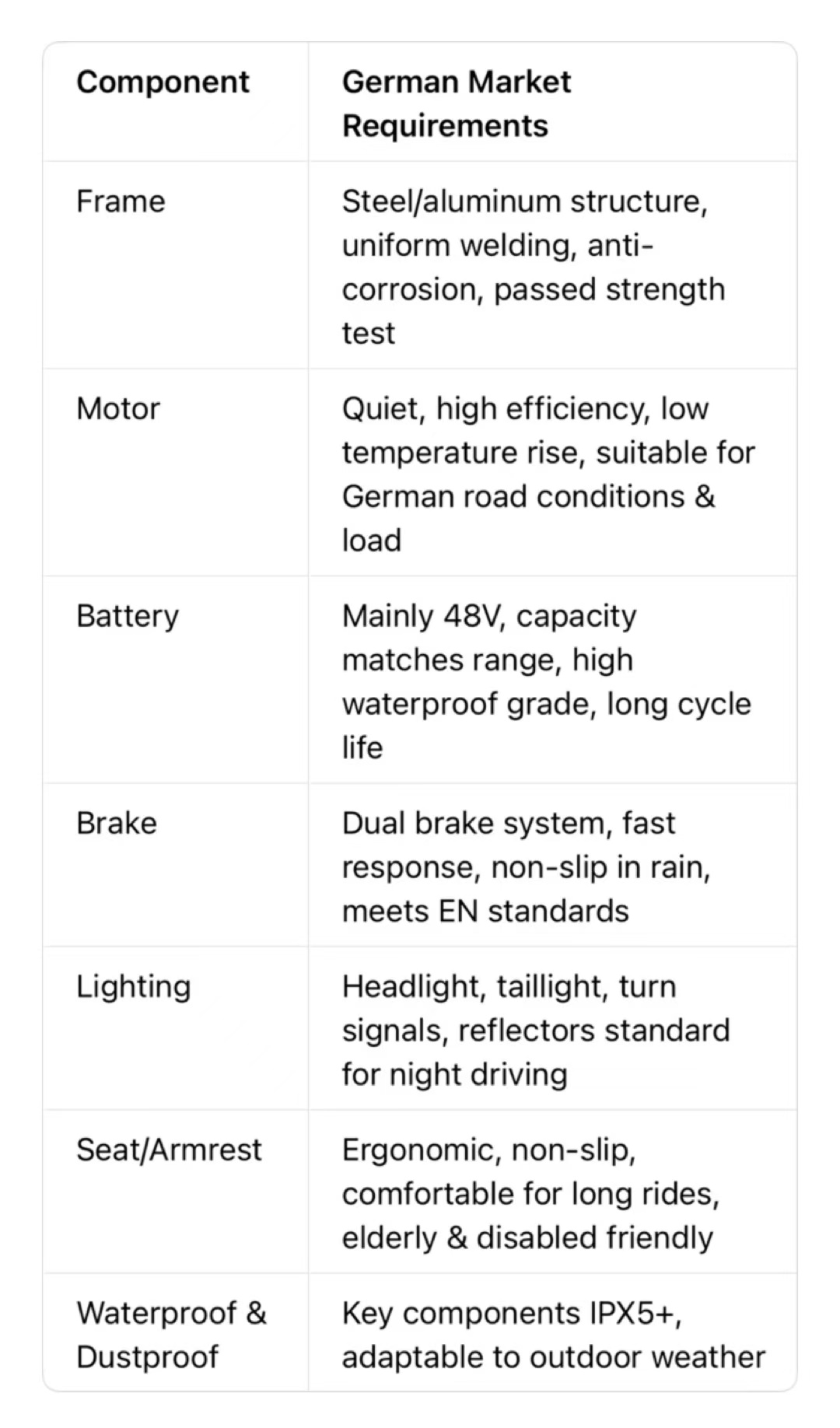
2. Core Configuration Procurement Standards
3. Avoid Common Pitfalls
Do not purchase models with excessive speed/power; German enforcement is strict, and returns and claims are likely.
Do not use cheap batteries or inferior BMS; Germany has strict accountability for safety incidents.
Do not purchase vehicles without tamper-proof design to avoid risks caused by unauthorized modifications.
III. Quality and Factory Audits: Quality Control for Bulk Procurement
German channels have extremely high requirements for stability and consistency. Small-batch trial orders → factory audits → bulk sampling inspections are the standard process.
1. Factory and Brand Strength
Years of experience exporting to Europe, familiar with EN 12183, ABE, E-Mark, and other processes.
Possessing a complete production line; the frame, electronic control, and final assembly are controllable, and the quality inspection process is standardized.
Providing long-term spare parts supply; the German market relies on stable spare parts for after-sales service.
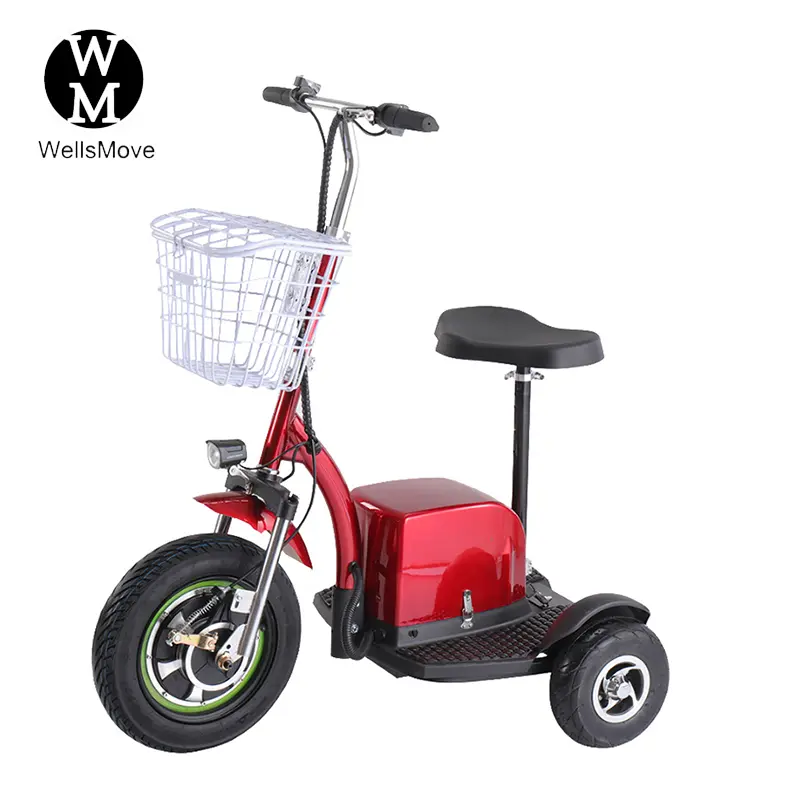
Wellsmove, as a professional brand specializing in electric mobility scooters, has focused on personal mobility devices since 2010, deeply cultivating metal structures and electronic control systems, and has long supplied markets in Europe and the Middle East, meeting German compliance and quality requirements.
2. Key Points for Bulk Goods Acceptance
Vehicle Appearance: Uniform paint finish, no deformation, consistent gaps, and firm welding.
Functional Testing: Full inspection of start-up, acceleration, braking, steering, lights, and horn.
Range and Load Capacity: Actual testing according to nominal parameters to meet the daily use needs of German users.
Waterproofing and Environmental Testing: Simulated rainy and humid environments to ensure no short circuits or malfunctions.
Consistency: Parameters, parts, and markings are consistent for the same batch of vehicles; no mixing or mismatching.
IV. Logistics, Customs Clearance, and Taxes: Key Points for Importing to Germany
Electric tricycles are electric vehicles, making logistics and customs clearance complex and directly impacting cost and timeliness.
1. Logistics and Transportation
Prioritize Hamburg sea freight (for large quantities) or Frankfurt air freight (for urgent orders).
Batteries must be compliantly packaged, providing UN38.3 and a transport certificate, complying with dangerous goods transport regulations.
Full Container Load (FCL) / Less than Container Load (LCL) Options: Full container load is recommended for bulk purchases to reduce damage rates and unit logistics costs.
2. Required Documents for Customs Clearance
Commercial invoice, packing list, bill of lading
CE/EN 12183/ABE and other certifications and test reports
Battery UN38.3, MSDS, RoHS report
EORI number, VAT number (required for German importers)
3. Taxes and Costs
Customs Duty: Based on EU TARIC codes, most commuter vehicle models enjoy Most Favored Nation (MFN) rates, making costs controllable.
Import VAT: Standard rate of 19%, calculated based on CIF price.
Compliance Declaration: German customs has a high inspection rate; underreporting and concealment are strictly prohibited to avoid fines and seizures.
V. After-Sales Service and Cooperation Terms: Long-term guarantee from German dealer
German customers have high requirements for after-sales response speed, parts availability, and repair solutions. Wholesale contracts must clearly specify the following terms:
Warranty Period: Clear warranty for the entire vehicle and core components (motor, controller, battery).
Parts Support: Year-round supply of wear parts, providing a parts list and ordering cycle.
Technical Support: German instruction manuals, repair manuals, troubleshooting guidance.
Bulk After-Sales Service: Bulk order problem handling solutions, return and exchange policies, defect recall mechanism.
Order Flexibility: Minimum order quantity, delivery time, color/configuration customization, packaging solutions.
VI. Summary: Core List for Bulk Procurement by German Distributors
Complete Certifications: CE, EN 12183, ABE/KBA related licenses, battery compliance.
Vehicle Compatibility: Low-speed safety, comfort and durability, suitable for German usage scenarios.
Stable Quality: Factory audits + trial orders + bulk order spot checks to ensure consistency.
Worry-Free Customs Clearance: Complete documentation, compliant logistics, accurate tax declarations.
Reliable After-Sales Service: Long-term spare parts supply, clear warranty, German technical support.
Post time: Mar-18-2026