FDA Requirements for Mobility Scooters in the USA: A Complete Sourcing Guide for Wholesale Buyers
Table of Contents
- Introduction: Why FDA Compliance Makes or Breaks U.S. Mobility Scooter Imports
- How the FDA Classifies Electric Mobility Scooters as Class II Medical Devices
- Mandatory FDA Compliance Pillars for U.S. Market Access
3.1 510(k) Premarket Notification: The Core Clearance Process
3.2 FDA Establishment Registration & Device Listing Rules
3.3 QSR 21 CFR Part 820: Manufacturing Quality System Standards
3.4 FDA Labeling & Instruction Manual Mandates (21 CFR Part 801)
3.5 Mandatory Post-Market Safety Reporting (21 CFR Part 803)
- Critical Third-Party Testing Standards Required for FDA Submissions
- U.S. Agent Obligations for Overseas Mobility Scooter Manufacturers
- Common Compliance Mistakes Wholesale Buyers Must Avoid
- Compliance Verification Checklist for Sourcing Mobility Scooters in Bulk
- FAQs About FDA Mobility Scooter Rules for Global Distributors
- Final Takeaways for Streamlined U.S. Market Entry
Introduction: Why FDA Compliance Makes or Breaks U.S. Mobility Scooter Imports
The U.S. durable medical equipment (DME) market for senior and disabled mobility scooters continues its steady year-over-year growth, driven by aging domestic populations and rising demand for portable, safe at-home and outdoor mobility aids. For wholesale distributors, medical supply chains, resort rental fleets, and retail DME operators, importing uncertified mobility scooters carries severe financial and operational risks.
U.S. Customs can seize entire shipments lacking valid FDA clearance. Non-compliant inventory faces permanent detention, costly destruction fees, or forced return to overseas factories. Beyond logistics losses, distributors selling unapproved devices open themselves to product liability lawsuits, regulatory fines reaching tens of thousands of dollars, and permanent bans from selling medical mobility equipment nationwide.
Unlike many regional vehicle regulations, the U.S. Food and Drug Administration treats all motorized
three-wheeled and four-wheeled mobility scooters as regulated medical devices, not consumer recreational vehicles. This guide breaks down every non-negotiable FDA rule from a wholesale buyer’s perspective, with actionable verification steps to vet suppliers before placing bulk orders. Whether you source portable lightweight scooters, heavy-duty trike models, or high-climbing senior mobility vehicles, this framework eliminates compliance blind spots and speeds up market launch timelines.
How the FDA Classifies Electric Mobility Scooters as Class II Medical Devices
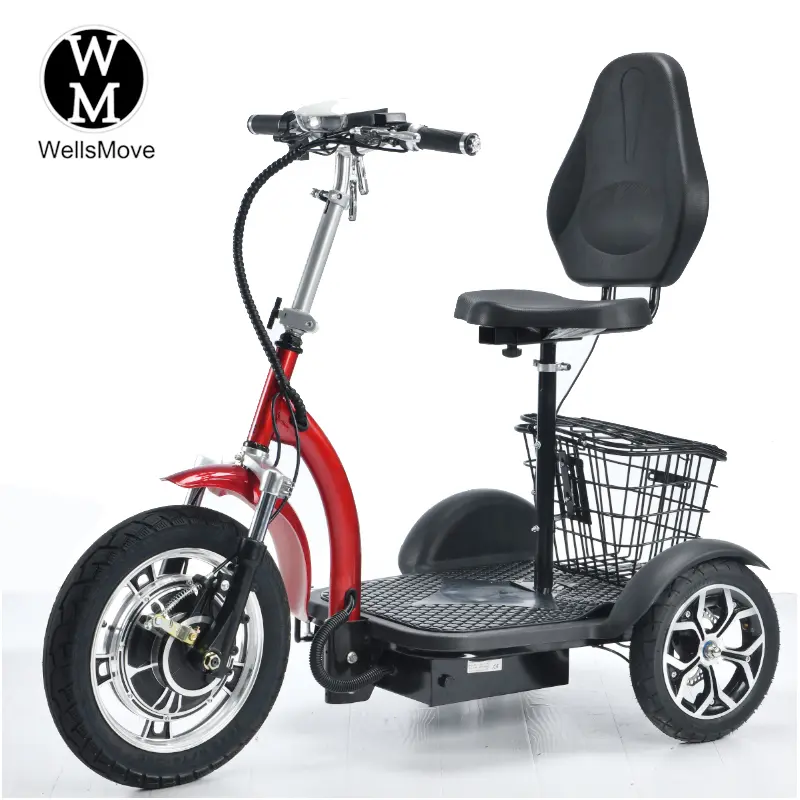
The Center for Devices and Radiological Health (CDRH), the FDA division overseeing mobility aids, categorizes powered mobility scooters under regulation number 21 CFR 890.3800 with product code INI, formally designated as Class II medical devicesFDA Access….
Device risk classification is determined by potential harm to end users:
- Class I: Low-risk aids (manual walkers, canes) with only general FDA controls
- Class II: Moderate-risk powered mobility equipment (electric scooters, power wheelchairs) requiring special premarket clearance
- Class III: High-risk implantable devices requiring full Premarket Approval (PMA)
Mobility scooters earn Class II status due to inherent safety hazards including electrical malfunctions, structural frame failure, loss of braking control, and battery thermal risk during operation by users with limited physical mobility. The FDA does not recognize CE marking, ISO certifications alone, or domestic manufacturing approvals from other countries as substitutes for U.S. regulatory clearance. Every model line sold within U.S. interstate commerce must complete independent FDA validation before import or retail distribution.
A core regulatory concept for Class II devices is substantial equivalence. Manufacturers must prove their scooter matches the safety, performance, and intended use profile of a predicate device—an older mobility scooter already legally cleared for U.S. sale before 1976 or via prior 510(k) filings. Full clinical trials are not required for mobility scooters, but comprehensive mechanical, electrical, and usability test data must back all equivalence claimsFDA Access….
Mandatory FDA Compliance Pillars for U.S. Market Access
No mobility scooter model can legally enter U.S. supply chains without satisfying five interconnected FDA regulatory requirements. Wholesale buyers should cross-reference all five pillars during supplier qualification audits.
3.1 510(k) Premarket Notification: The Core Clearance Process
The 510(k) premarket notification is the foundational clearance document every mobility scooter manufacturer must secure before shipping products to the U.S. The submission package demonstrates substantial equivalence to an approved predicate device and includes full technical dossiers, lab test reports, risk management files, and design control records.
Key details for bulk buyers to verify:
- Each distinct scooter model requires a separate 510(k) clearance; shared certification across motor wattage variants, battery sizes, or frame designs is invalid
- Standard review timelines range from 3–6 months, with combined testing and consulting costs averaging $12,000 to $25,000 per model
- The FDA publishes all cleared 510(k) records in a public database; buyers should cross-check model numbers directly against official FDA filings to spot fake clearance certificates
- Major design changes (modified motor output, revised braking systems, altered frame structure, new lithium battery architecture) trigger a new 510(k) submission, even for existing product linesFDA Access…
Suppliers that skip 510(k) clearance often market scooters as “recreational electric trikes” to evade medical device rules. This classification workaround fails U.S. customs inspection if marketing materials, user manuals, or product descriptions reference senior, disabled, or mobility-impaired end users.
3.2 FDA Establishment Registration & Device Listing Rules
All overseas manufacturing facilities producing FDA-regulated mobility scooters must complete annual establishment registration with the FDA, alongside individual device listing for every cleared scooter model.
Critical buyer verification points:
- Registration renews every calendar year; expired registrations invalidate all associated product listings
- Each registered facility receives a unique FDA establishment identifier; buyers should request this ID and validate it via FDA’s online database
- Listing records tie directly to active 510(k) clearance numbers. If a supplier’s listed device does not match your ordered model, the shipment will be flagged at customs
- U.S.-based importers and distributors also maintain registration obligations, with shared liability alongside overseas manufacturers for non-complianceFDA Access…
3.3 QSR 21 CFR Part 820: Manufacturing Quality System Standards
The FDA’s Quality System Regulation (QSR), aligned closely with ISO 13485 medical device manufacturing standards, governs every production stage for mobility scooters. Factories must maintain documented design controls, production process validation, component traceability, batch testing, and corrective action protocols for defective units.
For wholesale buyers, QSR compliance translates to tangible supply chain benefits:
- Consistent build quality across bulk orders, reducing post-delivery breakdowns and warranty claims
- Full component traceability for battery, motor, frame, and braking parts during FDA post-market audits or product recalls
- Formal design change approval workflows that prevent unreported model modifications voiding 510(k) clearance
- Complete device master records (DMR) and device history records (DHR) available for FDA inspection upon requestFDA Access…
Reputable suppliers will provide third-party QSR audit reports or ISO 13485 certification as proof of manufacturing system alignment with FDA rules. Avoid manufacturers unable to produce these documents, as they face FDA facility inspection and production shutdown risks.
3.4 FDA Labeling & Instruction Manual Mandates (21 CFR Part 801)
Misbranding is one of the most common FDA violations for imported mobility scooters. All physical product labels, packaging, and printed user guides must adhere to strict 21 CFR Part 801 labeling rules, with zero misleading claims or missing safety disclosures.
Mandatory labeling content for every unit:
- Unique device model number matching the approved 510(k) filing
- Full manufacturer legal name, registered facility address, and designated U.S. Agent contact information
- Clear intended use statement: “Motorized mobility scooter for individuals with limited ambulatory ability”
- Bold safety warnings covering battery fire risk, maximum weight capacity, slope climbing limits, and improper operation hazards
- Serial number tracking for post-market recall traceability
- Comprehensive English-only user manual with maintenance steps, emergency brake procedures, and adverse event reporting guidance
Labeling discrepancies—such as wattage ratings that differ from 510(k) technical data or missing U.S. Agent contact details—result in immediate customs detention of full container shipmentsFDA Access….
3.5 Mandatory Post-Market Safety Reporting (21 CFR Part 803)
Manufacturers and U.S. distributors share legal responsibility for Medical Device Reporting (MDR) under 21 CFR Part 803. Any adverse event linked to mobility scooter operation must be submitted to the FDA within regulated timelines:
- Deaths connected to device failure: Report within 5 calendar days
- Serious injuries or permanent impairment: Report within 30 days
- Recurring component failures creating safety risks: Mandatory quarterly trend analysis filings
Wholesale buyers should formalize adverse event data sharing clauses in supplier contracts. Suppliers without structured MDR tracking systems create regulatory exposure for distributors, as the FDA holds importers accountable for failing to escalate safety incidents discovered within their customer networksFDA Access….
Critical Third-Party Testing Standards Required for FDA Submissions
A valid 510(k) application cannot move forward without independent laboratory test reports aligned with globally recognized mobility device standards. These tests validate mechanical durability, electrical safety, and battery stability for FDA reviewers. All testing labs must maintain ISO 17025 accreditation to have results accepted by the CDRH.
Core test suites for mobility scooters:
- ISO 7176 Wheelchair Series
Static load, vibration, drop impact, slope stability, braking performance, and weight capacity endurance testing to prevent frame collapse or rollaway hazards
- IEC 60601 Medical Electrical Safety
Insulation resistance, ground fault protection, overcharge cutoff, and electromagnetic compatibility (EMC) testing to eliminate electrical shock and radio interference risks
- UN38.3 Lithium Battery Safety
Thermal cycling, crush, short circuit, and over-discharge testing for all onboard lithium battery packs, required for both FDA clearance and international ocean/air freight shipping
- Biocompatibility Testing
Material safety validation for seat foam, handle grips, and body contact plastics to rule out skin irritation risks for long-duration users
When vetting suppliers, request full test reports tied directly to your target scooter model, not generic lab certificates for unrelated product lines.
U.S. Agent Obligations for Overseas Mobility Scooter Manufacturers
Every foreign manufacturer without a physical U.S. business address must appoint a designated U.S. Agent before completing FDA establishment registration. The U.S. Agent acts as the official liaison between the factory, FDA inspectors, customs officials, and domestic distributors.
Non-negotiable U.S. Agent responsibilities:
- Receive and forward all FDA inspection notices, warning letters, and post-market safety requests to the overseas manufacturer
- Maintain physical records of device listings, test reports, labeling files, and adverse event documentation accessible to FDA auditors
- Accept legal service of regulatory notices on behalf of the foreign factory
- Coordinate product recall logistics if the FDA issues a market withdrawal order
Wholesale buyers should confirm the supplier’s U.S. Agent holds active, documented authorization from the manufacturer. Suppliers operating without a registered U.S. Agent cannot legally import mobility scooters into U.S. territory, and associated shipments will be denied entry at border control.
Common Compliance Mistakes Wholesale Buyers Must Avoid
Most costly supply chain disruptions stem from overlooked regulatory gaps that buyers fail to screen during supplier onboarding. Below are the highest-frequency FDA violations impacting mobility scooter bulk importers:
- Accepting blanket 510(k) clearance covering multiple unrelated scooter models
- Relying on expired FDA establishment registration or lapsed device listings
- Sourcing models with modified motor, battery, or frame designs without updated 510(k) filings
- Skipping U.S. Agent verification for overseas manufacturers
- Accepting untranslated, non-English user manuals that violate 21 CFR Part 801 labeling rules
- Confusing recreational electric trikes with medical mobility scooters to bypass FDA clearance
- Failing to audit supplier QSR/ISO 13485 manufacturing systems before placing large volume orders
- Neglecting contract clauses outlining liability for FDA detention, fines, or product recalls stemming from supplier non-compliance
Even minor oversights in these areas can lead to full container seizures, lost seasonal sales windows, and permanent damage to distributor relationships with DME retail and medical institutional clients.
Compliance Verification Checklist for Sourcing Mobility Scooters in Bulk
Use this standardized checklist to validate supplier FDA compliance before signing bulk purchase agreements:
✅ Valid 510(k) clearance number matching the exact scooter model, cross-referenced on FDA public database
✅ Active, unexpired FDA establishment registration and device listing documents
✅ Signed U.S. Agent authorization letter with full domestic contact information
✅ ISO 13485 or QSR 21 CFR Part 820 manufacturing audit reports
✅ Full ISO 7176, IEC 60601, and UN38.3 third-party lab test reports for the ordered model
✅ English product labels and user manuals fully compliant with 21 CFR Part 801 safety disclosure rules
✅ Documented adverse event (MDR) reporting workflow established by the manufacturer
✅ Written contract terms assigning supplier financial liability for FDA penalties, shipment detention, or mandatory product recalls
FAQs About FDA Mobility Scooter Rules for Global Distributors
Q1: Can I sell mobility scooters without FDA clearance if I market them as recreational vehicles?
A1: No. The FDA classification hinges on intended use, not marketing language. If product descriptions target seniors, users with walking impairments, or medical mobility needs, the unit qualifies as a Class II medical device regardless of “recreational” branding. Customs agents cross-review website listings, catalog copy, and sales collateral during import inspections.
Q2: Do lightweight foldable portable mobility scooters follow different FDA rules than heavy-duty trike models?
A2: No. All motorized mobility scooters designed for users with limited ambulation fall under 21 CFR 890.3800 Class II device rules, regardless of weight, motor wattage, foldable design, or climbing capacity. Each variant requires independent 510(k) clearance.
Q3: How long does FDA clearance remain valid for a mobility scooter model?
A3: 510(k) clearance remains active indefinitely unless the manufacturer implements significant design changes that alter safety or performance characteristics. Minor cosmetic adjustments (seat color, frame paint) do not require new filings, but motor, battery, brake, and structural upgrades mandate updated premarket notification submissions.
Q4: What penalties apply to distributors importing non-FDA-compliant mobility scooters?
A4: Penalties vary based on violation severity, including shipment seizure and destruction, civil fines up to $10,000 per non-compliant unit, temporary import bans, and civil lawsuits from end users injured by untested defective devices. In cases of intentional regulatory evasion, criminal charges may apply.
Q5: Can I use EU CE MDR certification as a substitute for FDA 510(k) clearance for U.S. sales?
A5: The FDA does not recognize EU medical device certifications or test reports as a replacement for U.S.-specific premarket notification. CE marking only satisfies European market rules and carries no weight during FDA or customs inspections.
Final Takeaways for Streamlined U.S. Market Entry
FDA compliance is not a one-time certification step but an ongoing supply chain process that spans manufacturing, labeling, import logistics, and post-market safety tracking. For wholesale mobility scooter buyers targeting the U.S. DME market, prioritizing fully vetted, FDA-aligned suppliers eliminates costly customs delays, legal risk, and brand reputation damage.
When evaluating manufacturing partners, prioritize factories with multi-year experience producing CDRH-cleared mobility scooters, complete in-house test laboratories, dedicated U.S. Agent support, and transparent QSR quality control documentation. Conduct full compliance audits before committing to large bulk orders, and integrate the FDA verification checklist into your standard supplier qualification workflow.
By aligning every stage of your sourcing strategy with the five core FDA compliance pillars outlined in this guide, you can reliably stock safe, market-ready mobility scooters for senior care facilities, medical retail chains, resort rental fleets, and independent DME operators across the United States.
Post time:
Jul-06-2026