


EU Implements New Safety Regulations for Electric Mobility Vehicles: Upgraded Rollover Protection and Braking Standards
With the accelerating global aging population, electric mobility vehicles have become a core tool for short-distance travel for the elderly and people with mobility impairments in Europe. As a key global consumer market for electric mobility vehicles, the EU continues to tighten its regulatory requirements for product safety. Recently, the EU introduced new safety regulations for electric mobility vehicles, focusing on a comprehensive upgrade of rollover protection and braking system standards. These regulations, combined with the latest requirements of CE certification (MDR 2017/745), further refine the compliance guidelines for the entire process of product design, production, and testing. This series of new regulations not only sets stringent safety requirements for electric mobility vehicles but also drives the entire industry towards greater professionalism and safety, setting new red lines for global electric mobility vehicle suppliers entering the EU market.
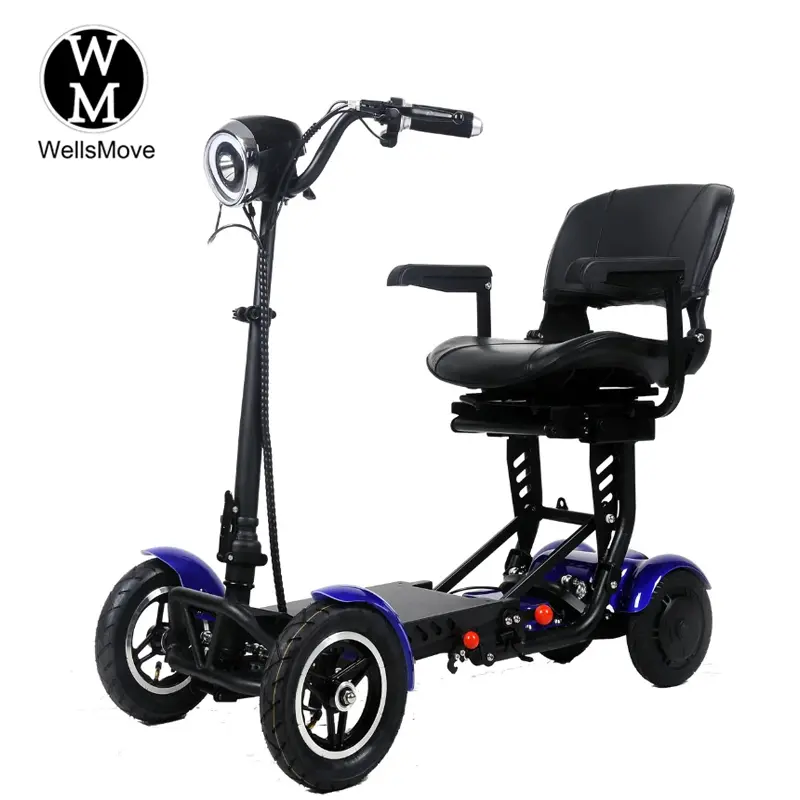
Core of the New Regulations: Anti-rollover and Braking Systems – Building a Double Line of Defense for Travel Safety
This upgrade to the EU’s safety regulations is not merely an adjustment to a single indicator, but rather an optimization of risk control based on the actual usage scenarios of electric mobility scooters. Targeting the operational characteristics of the elderly and users with mobility impairments, the regulations prioritize anti-rollover stability and braking reliability as core compliance assessment dimensions, imposing stringent requirements from design standards to testing procedures.
Regarding anti-rollover standards, the new regulations explicitly require electric mobility scooters to pass professional static tilt and dynamic cornering anti-tipping tests. These tests simulate vehicle conditions under common scenarios such as turning, driving on slopes, and bumpy roads. The scooter must remain stable when tilted to a specific angle, and the frame must possess sufficient lateral impact resistance to withstand potential lateral forces during driving. Furthermore, for the body structure of three-wheeled and four-wheeled electric mobility scooters, the new regulations refine the design specifications for wheelbase and center of gravity height, requiring the vehicle’s center of gravity to be controlled within a reasonable range to reduce the risk of rollover from the outset. Furthermore, the EU maintains its high requirements for vehicle body crush resistance, strictly controlling roof deformation to within 125 mm in rollover crash tests to ensure sufficient safety space for users during rollovers.
Regarding upgraded braking system standards, the new regulations significantly raise the requirements for braking performance, demanding not only high braking efficiency but also stability and timely response. The new regulations require electric mobility scooters to be equipped with anti-lock braking systems (ABS) to prevent wheel lock-up during emergency braking, which could lead to skidding and loss of control. They also rigorously test the fatigue strength and wear resistance of the braking system, requiring stable braking performance even after long-term use. In addition, the braking system must have a power-off linkage function to quickly cut off motor power during braking, further enhancing braking safety. All braking components must pass relevant EU mechanical safety tests and meet the basic health and safety requirements of the new Mechanical Engineering Regulation (EU) 2023/1230.
Beyond the core requirements for rollover prevention and braking systems, the new regulations also incorporate electromagnetic compatibility (EMC) testing into the braking system assessment. This requires that the vehicle’s braking system signal reception and execution remain unaffected even in environments with strong electromagnetic interference, completely preventing sudden malfunctions such as “phantom braking.” From hardware performance to the electronic control system, comprehensive braking safety is ensured.
Compliance Foundation: Integrating with the CE Certification System, Ensuring Product Safety Throughout the Process
The EU’s new safety regulations for electric mobility scooters are not independent but deeply integrated with the existing CE certification (MDR 2017/745) system. The new requirements for rollover prevention and braking systems are incorporated into the entire product certification and testing process, further strengthening the mandatory and professional nature of compliance.
In the EU market, electric mobility scooters are classified as Class I medical devices, requiring CE certification for sale. The requirements of these new safety regulations have become a core addition to the EN 12184 testing requirements for CE certification. Purchasers and suppliers must provide additional professional test reports on rollover stability and braking system performance during product certification, and all tests must be completed by EU-accredited third-party laboratories. Furthermore, starting May 28, 2026, the EU will mandate that all models of electric mobility scooters complete UDI (Unique Device Identification) declarations. Design parameters and testing data related to rollover prevention and braking systems must be included in the UDI database, enabling full lifecycle traceability of product safety information and ensuring that products circulating in the market comply with the latest safety standards.
In addition, the implementation of the new EU Machinery Regulation (EU) 2023/1230 provides a basic framework for the safety compliance of electric mobility scooters. This regulation includes electric mobility scooters in the category of emerging machinery subject to mandatory regulation, requiring comprehensive risk assessments during the design phase, covering all potential safety risks such as rollover prevention and brake failure, and developing corresponding protective measures. Simultaneously, the regulation strengthens the control over product manufacturing quality, requiring suppliers to establish a sound production quality assurance system to ensure that mass-produced products are consistent with certified samples, meeting the new safety regulations throughout the entire process from design to production.
Industry Impact: Safety Becomes a Core Competitive Advantage, Driving Industry Upgrading and Reshuffling
The implementation of the EU’s new safety regulations for electric mobility scooters will undoubtedly raise the entry barriers to the European market, profoundly impacting the global electric mobility scooter industry. For wholesale buyers in the EU market, product compliance will become the primary consideration in procurement decisions. Only products that pass the new regulations’ testing and possess complete CE certification documents can smoothly enter the EU market. This also requires buyers to pay more attention to the technological R&D capabilities and product testing qualifications of suppliers when selecting them.
For electric mobility scooter suppliers, the new regulations present both challenges and opportunities. On the one hand, the upgraded standards for rollover prevention and braking systems require suppliers to increase investment in vehicle body structure design and braking system R&D, such as optimizing the steel and aluminum metal structure of the frame, upgrading braking components, and introducing professional vehicle stability simulation testing. This places higher demands on the technical capabilities of SMEs, and some suppliers lacking R&D capabilities will be gradually eliminated. On the other hand, the new regulations also promote technological upgrading and standardization in the industry. Suppliers with core technological advantages will gain a greater competitive advantage in the EU market with products that comply with the new regulations.
Meanwhile, the new regulations further strengthen the “safety first” product philosophy for electric mobility scooters. As a global leader in electric mobility scooter safety standards, the implementation of the EU’s new regulations will have a demonstrative effect on the regulatory requirements of other countries and regions, promoting the global electric mobility scooter industry towards a safer and more standardized direction. For European end-users, stricter safety standards mean more reliable travel protection, further enhancing user confidence in electric mobility scooters and driving continued market demand growth.
Future Trends: Continuous Refinement of Safety Standards, Full-Chain Compliance Becomes Inevitable
From the EU’s regulatory trend for electric mobility scooters, the core safety requirements, such as rollover prevention and braking systems, are only the beginning of industry compliance upgrades. In the future, the EU will continue to refine safety standards around dimensions such as battery safety, electromagnetic compatibility, and ergonomics, while also incorporating environmental requirements, including battery carbon footprint and recycling into the product compliance assessment scope. For example, the EU’s Battery and Waste Battery Regulation has clearly required electric mobility scooter batteries to be labeled with carbon footprint information, and the proportion of recycled components in core raw materials needs to be gradually increased. This means that the compliance of electric mobility scooters will develop from a single safety dimension to a comprehensive approach encompassing safety, environmental protection, and sustainability.
Post time: Mar-16-2026