

Electric Tricycles vs. Electric Quadcycles: In-Depth Analysis of Global Market Demand Differences
In the global wave of green travel, electric scooters have become an important choice for short-distance travel for consumers in different regions. Electric tricycles and quadcycles, as two core categories, are not simply different in the number of wheels, but rather products precisely adapted to different market demands—from the safety and compliance requirements of developed markets to the practical and cost-effective demands of emerging markets, the two exhibit distinct regional differentiation characteristics on the global stage.
European and American Markets: Compliance First, Clear Segmentation of Scenarios
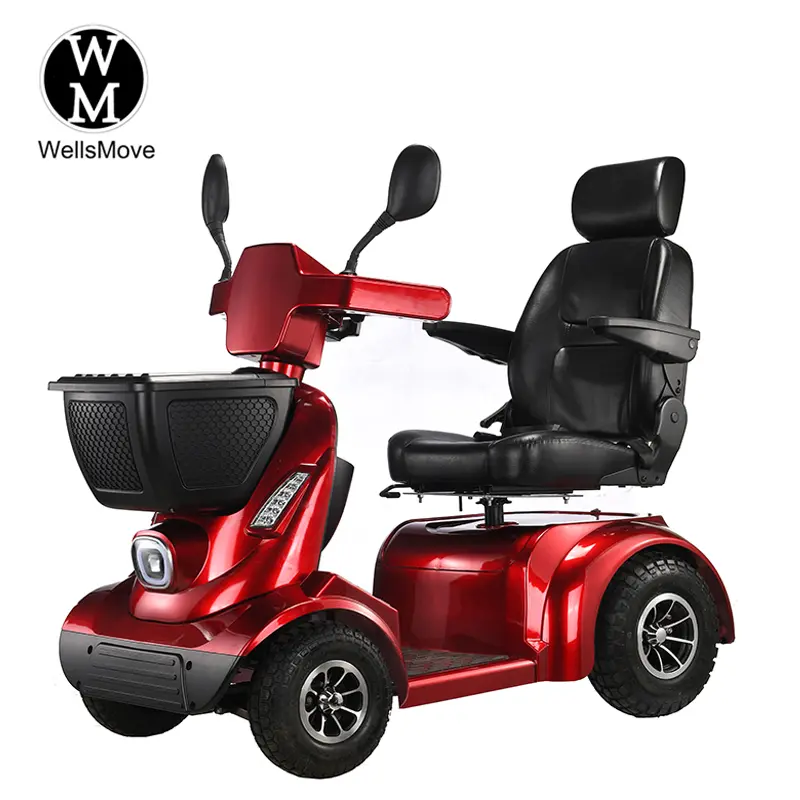
The European and American markets, with their stringent regulations and mature consumer concepts, have formed a demand pattern of “quadcycles as the mainstay, tricycles as a supplement.”
Quadcycles: Mainstream Choice, Focus on Safety and Quality
The EU classifies low-speed quadcycles as “light four-wheeled motor vehicles” (L6e/L7e), requiring them to pass dozens of tests, including CE certification, e-mark certification, and stringent requirements such as a roof deformation of no more than 125 mm during rollover and no risk of fire or explosion in battery needle penetration tests. These products are perfectly suited to the narrow city streets of Europe, being compact, flexible, and easy to park. They meet the needs of seniors for short trips to shop and socialize, and are also popular with younger generations due to their personalized customization options, such as those featuring anime-inspired designs.
While the US market suffers from fragmented regulations due to state autonomy, the federal government mandates that low-speed four-wheeled vehicles (LSVs) be equipped with 27 safety features, including ABS and three-point seatbelts. California also mandates the installation of vehicle-to-grid (V2G) devices for grid peak shaving. Here, LSVs have become a supplementary mode of transportation for suburban families, offering a comfortable ride and stable performance for tasks such as supermarket shopping and community commuting.
Tricycles: Niche Market Breakthrough, Focusing on Functional Scenarios
Electric tricycles are a niche but essential product category in the European and American markets, with their core advantages concentrated in specific scenarios. American farmers prefer them for transporting feed and farm tools; compared to traditional pickup trucks, their price of a few thousand dollars and low operating costs are highly attractive. In some European tourist areas and towns, tricycles are used as sightseeing tools, nimbly navigating cobblestone streets and narrow alleys.
However, tricycles face specific regulatory hurdles when entering the European and American markets. For example, the US CPSC requires them to be equipped with foot pedals, while the EU imposes strict restrictions on their electromagnetic compatibility to avoid safety hazards such as “phantom brakes.”
Southeast Asian Market: Practicality is King, Two-Wheeled Replacement Creates Diverse Demands
Southeast Asia, a core battleground for “oil-to-electric” conversions, boasts over 250 million motorcycles. The electric mobility vehicle market is showing a trend of “increased demand for tricycles and steady growth for four-wheeled vehicles,” with core demand revolving around “adaptability to complex environments and fulfillment of diverse uses.”
Tricycles: Covering All Scenarios, Becoming a Daily Necessities
Southeast Asia’s hot and humid climate and complex, hilly road conditions make tricycles, with their high chassis and anti-skid tires, more capable of navigating muddy roads by 60%, becoming a “versatile tool” in both urban and rural areas. In Thailand, food delivery riders; in Bangladesh, small vendors; and in Indonesia, rubber plantation workers all rely on electric four-wheelers as their primary mode of transportation. These vehicles can carry passengers and also load goods by folding down the rear seats, perfectly meeting the dual needs of “short-distance transport + daily commuting.”
Relaxed policies further fuel demand. Thailand allows three-wheeled vehicles to use motorcycle license plates, and Vietnam offers low tariffs on high-energy-density battery vehicles, making their cost-effectiveness even more prominent. The Wuling Air ev’s sales exceeding 8,600 units in Indonesia within 10 months of its launch confirms the region’s strong demand for practical electric mobility scooters.
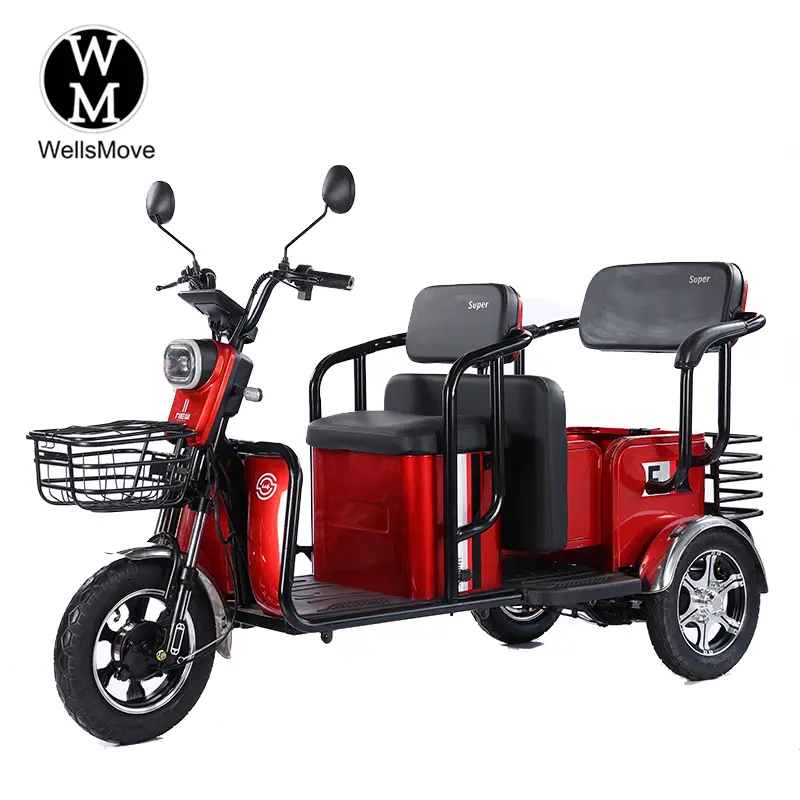
Four-wheeled mobility scooters: Urban upgrades, targeting quality travel
With the rapid urbanization in Southeast Asia, middle-class families in core cities like Bangkok and Ho Chi Minh City are increasingly favoring electric four-wheelers. These users prioritize range (120-300 kilometers is sufficient for commuting), comfort features (such as air conditioning and reversing cameras), and environmental friendliness, using them for daily commutes and family outings.
To better meet market demands, manufacturers have optimized their products: improving heat dissipation to cope with high temperatures, equipping them with batteries rated IP54 or higher for waterproofing during the rainy season, and some models even embedding RFID chips to meet Indonesia’s full lifecycle regulatory requirements. Localized production policies have also driven the growth of four-wheeled vehicles; companies like BYD have established factories in Thailand to localize motors and electronic controls, significantly reducing tariff costs.
Latin America/Africa Market: Cost-Driven, Basic Transportation Needs Dominate
The Latin American and African markets are still in the development stage of electric mobility vehicles. Economic levels and infrastructure conditions dictate a demand logic of “price sensitivity + durability priority,” with three-wheeled vehicles dominating, while four-wheeled vehicles are gradually penetrating core cities.
Three-Wheeled Vehicles: Cost-Effectiveness is Key, Supporting Basic Transportation
In African countries like Nigeria and Kenya, and Latin American markets like Brazil and Mexico, consumers primarily focus on product price and durability. Electric three-wheeled vehicles, due to their low price (mostly below $2000) and simple structure for easy maintenance, have become the preferred choice for rural transportation and short-distance urban transport. To address the issue of insufficient power infrastructure, manufacturers have launched models with solar panels to further enhance practicality.
Demand is particularly strong in commercial scenarios. Shared mobility operators are deploying tricycles in bulk as short-distance shuttle services, while individual merchants are using them for same-city delivery, increasing the average daily delivery volume per vehicle by 30% and demonstrating significant cost advantages.
Four-wheeled mobility vehicles: Niche growth, focusing on high-end essential needs
Electric four-wheeled vehicles are considered “high-end products” in this region, with demand concentrated in economically developed cities. Government agencies, tourist attractions, and high-income families are the main consumers, valuing their stability and safety—for example, reinforced bodywork to cope with poor road conditions and extended battery warranties of over 3 years to accommodate the limited number of repair shops.
Policy incentives in some countries have accelerated the penetration of four-wheeled vehicles. Malaysia exempts locally assembled vehicles from 100% sales tax until the end of 2025, encouraging companies to establish production facilities to meet the quality travel needs of core cities.
The core logic behind global demand differences: The market differentiation between electric tricycles and four-wheeled vehicles is essentially a precise match between “product characteristics” and “market conditions”: tricycles, with their core competitiveness of “flexibility + low cost + strong cargo capacity,” are suitable for markets with weak infrastructure, diverse uses, and price sensitivity; while four-wheeled vehicles, with their advantages of “stability + safety + comfort,” meet the market demands of strict regulations, strong purchasing power, and a focus on travel quality.
Post time: Jan-26-2026