

Demand for Electric Mobility Vehicles Surges in Europe: A Mobility Revolution Fueled by Aging Population, Policy, and Health Awareness
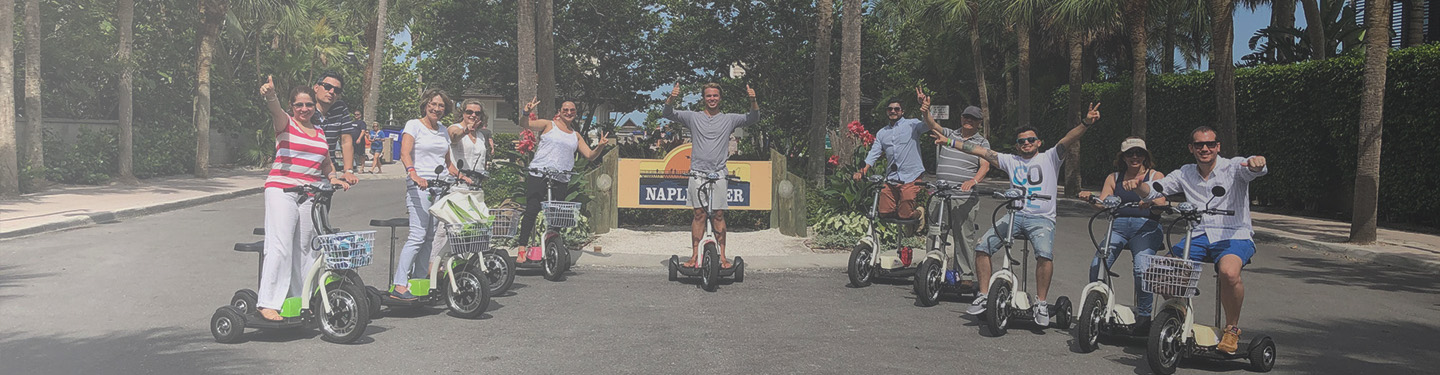
On a Munich street in the early morning, 72-year-old Hermann pushes a shopping cart to an electric mobility vehicle parked on a street corner, skillfully starting and turning, smoothly navigating through the crowds at the morning market; in London’s Canary Wharf during rush hour, Lia, a person with a physical disability, drives an electric mobility vehicle, merging into the city’s traffic flow with commuters—scenes like these are becoming increasingly common in European streets, communities, and commercial centers. This reflects a surge in demand for electric mobility vehicles in Europe: according to industry data, the European electric mobility vehicle market reached $262 million in 2024, accounting for 22.2% of the global market, and is projected to climb to $390 million by 2031, maintaining a compound annual growth rate (CAGR) of 6.5%. This surge in demand is not accidental, but an inevitable result of aging populations, policy incentives, and rising health awareness.
I. The Core Drivers of Surge Demand: A Triple Impact of Factors
The surge in demand for electric mobility scooters in Europe is essentially a result of the combined effects of population structure, policy guidance, and social demand. While market demand varies across countries, from Norway in Northern Europe to Italy in Southern Europe, the core driving logic remains highly consistent.
1. The Aging Population: The Essential Mobility Needs of the “Silver Hair Group”
Europe is one of the most severely aging regions globally—currently, the proportion of the population aged 65 and over in Europe exceeds 21%. Major economies such as Germany, Italy, and France have some of the largest elderly populations in the world: Germany has 18.89 million residents aged 65 and over, Italy has 14.33 million, and France is projected to exceed 18 million by 2040. As people age, their lower limb strength and mobility gradually decline, making traditional walking or cycling insufficient for daily travel needs. Electric mobility scooters precisely fill this gap.
In the UK, 300,000 to 350,000 electric mobility scooters were in use in 2017, and this number continues to grow at an annual rate of 8%. Data from nursing homes in Bavaria, Germany, shows that the purchase of new electric mobility scooters in 2024 will increase by 15% year-on-year. “Enabling the elderly to go to supermarkets and parks independently is key to maintaining their dignity,” a local nursing home director stated in an interview. This demand for “independent mobility” is driving the transformation of electric mobility scooters from “medical assistive devices” to “everyday mobility tools.”
2. Accessibility Needs of People with Disabilities: From “Adaptation” to “Integration”
Beyond the elderly, the mobility needs of millions of people with disabilities in Europe further expand the market potential for electric mobility scooters. According to Eurostat data, approximately 80 million people in Europe have varying degrees of mobility impairment, nearly half of whom rely on assistive devices for transportation. For them, electric mobility scooters are not just “transportation tools,” but also “bridges” to social integration—allowing people with disabilities to commute to get off work independently, participate in social activities, and even complete short trips without relying on others.
Paris’s “Accessible City Plan” explicitly incorporates electric mobility scooters into its public transportation system: dedicated parking areas are set up in subway stations, shopping malls reserve passageways, and some cities have even launched “mobility scooter sharing pilot programs” for temporary use by people with disabilities. With this policy support, the demand for electric mobility scooters in France increased by 23% year-on-year in 2024, with people with disabilities accounting for 41% of purchases.
3. Policy and Medical Support: From “Encouragement” to “Driven by Essential Needs” Governmental policies in European countries are the “key spark” igniting demand. Italy’s “Super Subsidy Scheme,” launched in October 2025, is the most representative example: targeting micro-enterprises purchasing electric mobility scooters, subsidies can cover up to 30% of the total purchase price, with a maximum subsidy of €20,000 per vehicle, and require the scrapping of high-polluting older vehicles—this policy directly boosted Italian electric mobility scooter sales by 131% year-on-year in November.
Spain’s “MOVES III” program and the UK’s “Zero Emission Vehicle (ZEV) Authorization” have had similar effects: the UK requires that 22% of new cars sold by automakers by 2024 be zero-emission models (including electric mobility scooters), with non-compliance facing a $18,800 fine per vehicle, forcing automakers to increase the supply and promotion of electric mobility scooters. Meanwhile, the increasing healthcare spending in Europe is also injecting momentum into the market—electric mobility scooters, as rehabilitation assistive devices, are included in the health insurance reimbursement scope of some countries; Germany, for example, stipulates that disabled people can receive 50% reimbursement for purchasing qualified electric mobility scooters.
II. User Pain Points Behind Demand: How to Adapt Products to the European Market?
European consumers’ demand for electric mobility scooters has long surpassed the basic level of “just needing to run,” focusing instead on three core pain points: safety, comfort, and adaptability to various scenarios. This explains why products tailored to the European market’s needs can quickly gain market share amidst surging demand.
1. Safety First: Design for Complex Road Conditions
European streets and alleys are mostly cobblestone or hilly terrain, placing higher demands on the stability and power of electric mobility scooters. Taking Germany as an example, hilly areas account for over 60% of the southern state of Baden-Württemberg, and the insufficient climbing ability of ordinary mobility scooters directly affects the user experience. Therefore, “30-degree climbing ability” and “500W high-torque motor” have become mainstream configurations in the market—these designs ensure smooth driving on slopes and bumpy roads, avoiding slippage or insufficient power.
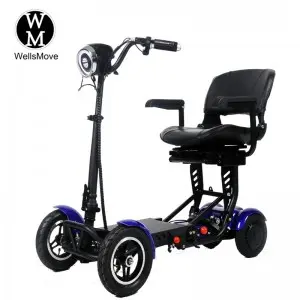
Meanwhile, older adults are more sensitive to safety, making “tricycle structures” more popular than traditional two-wheeled vehicles: the lower center of gravity of the three-wheeled design makes it less prone to tipping over when turning, and some models are also equipped with “automatic braking” and “anti-tipping devices” to further reduce the risk of accidents. Wellsmove’s electric tricycle, which meets the EU EN 12184 safety standard, sold out its first batch of 500 units ordered by German dealers within two weeks.
2. Comfort: Designed for Long-Term Use European users typically use electric mobility scooters for 1-2 hours at a time (such as shopping, medical visits, or community activities), making “comfort” a core competitive advantage. Wide, soft seats, back support pads, and shock-absorbing tires are now standard features, and some high-end models also include “seat adjustment” and “armrest heating” functions to suit the cold European winter climate.
French user Marie wrote in her purchase review, “My previous mobility scooter made my back ache after just half an hour, but this one’s seat feels like a sofa at home; I don’t feel tired even after shopping the whole supermarket.” This attention to detail is key to the product’s appeal to European consumers.
3. Scenario Adaptability: Diverse Needs from Personal to Commercial Use
Beyond personal use, the demand for electric mobility scooters in Europe is extending to commercial scenarios: rental services in tourist attractions, warehouse cargo handling, community security patrols… In Venice, Italy, after introducing electric mobility scooter rentals to the islands in 2024, tourist satisfaction increased by 30%, with visitors saying, “I no longer worry about walking being too tiring, and I can easily navigate narrow alleys.” A German logistics company’s purchase of electric mobility scooters increased warehouse staff’s handling efficiency by 25% while reducing the risk of workplace injuries from manual labor.
This diversified demand is driving the market to upgrade from “single model” to “niche categories”: personal models are lighter (weight controlled under 50kg for easy transport), while commercial models emphasize “load capacity” (maximum load up to 150kg) and “long range” (48V 20A battery supports 80km range).
III. Future Trends: How Will Demand Continue to Grow?
Market data and policy guidance indicate that the surge in demand for electric mobility scooters in Europe is not a short-term phenomenon, but a long-term trend that will continue for more than 10 years. Two major potential drivers are also driving this trend:
Firstly, technological upgrades will further lower the barrier to entry. Advances in battery technology (such as increased energy density in lithium batteries) have extended the range of mobility scooters from 50km to over 100km, and shortened charging time to within 2 hours; the addition of smart features (such as IoT connectivity, real-time location, and fault diagnosis) allows children to remotely monitor the elderly’s usage and facilitates quick troubleshooting by maintenance personnel.
Secondly, improved infrastructure will eliminate “usage concerns.” Currently, some parts of Europe face a shortage of charging stations, but the EU plans to achieve one charging point for every 50 kilometers of highway by 2030. Germany and the Netherlands, among others, have already begun installing dedicated charging stations in communities and supermarket parking lots. As this infrastructure develops, more potential users will be willing to try electric mobility scooters.
For market participants, seizing the opportunity presented by surging demand in Europe hinges on “tailoring to local needs”—not only meeting EU safety and environmental standards but also understanding the real pain points of the elderly and disabled, and solving their mobility problems with their products. As a European mobility industry analyst stated, “The growth of the European electric mobility scooter market is essentially a release of ‘human-centered’ demand. Whoever can truly meet users’ desires for ‘autonomy, safety, and comfort’ will gain a competitive edge in this wave.”
Post time: Dec-22-2025