

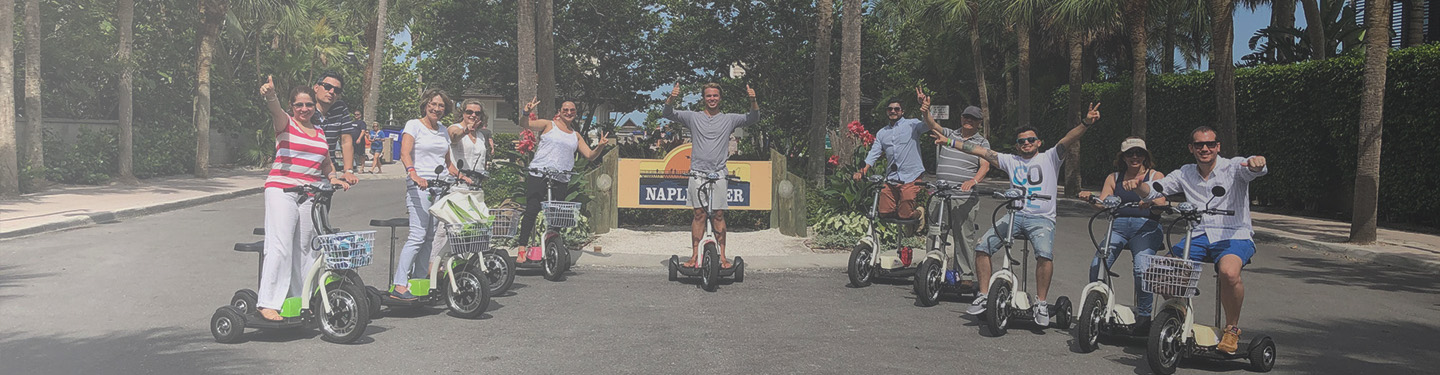
Current Status of the Electric Mobility Scooter Industry Supply Chain: Yongkang Industrial Belt Advantages and Wellsmove Supply Chain Stability
Driven by both accelerated global aging and the intensive implementation of green travel policies, electric mobility scooters have evolved from a niche market to a necessity covering diverse scenarios such as personal commuting, elderly travel, and logistics delivery. Industry data shows that the global electric mobility scooter market is projected to exceed $30 billion by 2025, and the stability and efficiency of the supply chain are becoming core competitive advantages for companies seeking to capture the global market. Against this backdrop, the Yongkang industrial belt in China, with its advantages in full-chain collaboration, has become a key pillar in the global electric mobility scooter supply chain; while Wellsmove, a brand deeply rooted in this field, leverages industry empowerment and its own technological accumulation to build a highly resilient supply chain system adapted to the global market.
I. Global Electric Mobility Vehicle Supply Chain: Three Challenges Amidst Opportunities
The explosive growth in global demand for electric mobility vehicles has not completely resolved the underlying contradictions in the supply chain; on the contrary, it has exacerbated core bottlenecks:
Imbalance between supply and demand for core components:While standardized components such as batteries and motors have achieved “Chinese production capacity + global allocation” (e.g., CATL’s global supply cycle for lithium iron phosphate batteries has been shortened to 10-14 days), innovative components such as intelligent driving controllers and high-energy-density batteries, due to rapid technological iteration and long production ramp-up cycles, often have delivery cycles exceeding 30 days, making it difficult to match the market’s demand for rapid response (data from the China Association of Automobile Manufacturers in 2025).
Significant differences in regional supply chain resilience:There is a significant disparity in supply chain efficiency between industrial clusters and dispersed regions. The industrial belt represented by Yongkang in China boasts a local component sourcing rate exceeding 70%, and its vehicle manufacturers’ inventory turnover days are 5 days lower than the global average. However, some Southeast Asian and African regions, due to insufficient supporting components, experience battery procurement cycles 10 days longer than those in eastern China, and also bear a 3% transportation loss, making emergency supply risks more pronounced (e.g., the 2024 Henan rainstorm caused a 21-day battery supply disruption for some companies).
The challenge of balancing globalization and localization: The EU includes low-speed electric vehicles in its “micromobility” category and subsidizes them with €500, while the US passed the “Micro Electric Vehicle Safety Act” requiring electronic stability systems. These policies promote localized production, but overseas factories face challenges such as supply chain adaptation difficulties and long repair parts supply cycles (e.g., the repair parts cycle for UPS customized models in the US reaches 3 months), testing companies’ global supply chain deployment capabilities.
II. Yongkang Industrial Belt: The “Collaborative Engine” of the Global Electric Mobility Vehicle Supply Chain
As the “Hardware Capital of China,” the Yongkang Industrial Belt is not simply a “parts production base,” but rather provides comprehensive solutions for global electric mobility vehicle companies through full-chain collaboration, offering cost reduction, efficiency improvement, and stable supply: Comprehensive Parts Support, Reducing Procurement Costs: Leveraging over 30 years of hardware manufacturing experience, Yongkang has established a localized supply network covering more than 40 categories, including plastic parts, hardware parts, and electronic components. Taking Wolai Technology, a smart body fat scale company, as an example, its sensor procurement cost in Yongkang is 0.25 yuan lower than in Zhongshan, Guangdong. Based on an annual production capacity of 6 million units, this alone translates to an annual cost reduction of 1.5 million yuan. Furthermore, the local sourcing rate for core components such as frames, wheels, and controllers required by electric mobility vehicle companies exceeds 85%, resulting in overall procurement costs 10%-15% lower than those outside the industrial belt.
Logistics and space empowerment enhance delivery efficiency: Yongkang has expanded its modern hardware industry service complex from 49,000 square meters to 954,000 square meters through the “transformation of inefficient industrial land,” attracting 12 projects with investments exceeding 100 million yuan and forming an integrated cluster of “R&D-production-warehousing.” Simultaneously, relying on the “Yongkang East-Ningbo-Zhoushan Port” sea-rail intermodal freight train, it achieves “factory-to-port” delivery of electric mobility scooters and components, improving transportation efficiency by 10% and reducing logistics costs by 15%-20%, perfectly meeting the global customers’ sea freight delivery needs.
Policy and service support accelerates supply chain implementation: Yongkang has launched a “Gold Medal Shopkeeper” full-process service, reducing the cycle from project negotiation to production to as short as 5 months (e.g., Wolai Technology started negotiations in January 2025 and officially started construction in May). At the same time, it is building a high-level talent science and technology innovation park and a new energy industrial park to promote the application of new technologies such as sodium-ion batteries and lightweight materials in the electric mobility scooter field, injecting long-term technological vitality into the supply chain.
III. Wellsmove: Building a Globally Adaptable Supply Chain Stability by Leveraging Industrial Advantages
Since its establishment in 2003, Wellsmove started by manufacturing metal vehicle frames and focused on the electric mobility scooter sector in 2010. Today, it has become a global brand covering scenarios such as elderly travel, mobility scooters for the disabled, and rental services in scenic areas. The stability of its supply chain is essentially the result of a combination of “its own technological accumulation + the empowerment of Yongkang’s industries”: **Self-reliance and controllability of core technologies solidify the supply foundation:** Wellsmove has been deeply involved in steel and aluminum metal structures and electronic systems for over 20 years. These two areas are precisely where the Yongkang industrial belt excels. Leveraging high-quality local hardware, Wellsmove can quickly customize frames to meet the needs of different markets (such as compact models for narrow laneways in Europe and rugged models for outdoor scenarios in the United States). Furthermore, its independently developed 500W/600W motors and 48V 12A/20A battery packs not only have a stable delivery cycle of 7-10 days but also pass rigorous quality tests (such as 30-degree incline and 70% range retention at -10℃), meeting the high standards of the European and American markets.
Leveraging Yongkang collaboration enhances global response speed: For Wellsmove, the Yongkang industrial belt is not only a “cost haven” but also a “capacity flexibility pool.” In 2025, Wellsmove customized 500 electric mobility scooters for its German distributor. From order confirmation to production completion, it took only 45 days. Core components such as motors and controllers from local suppliers arrived within 3 days, and the frame processing cycle was reduced to 10 days. Combined with Yongkang’s efficient logistics network, this resulted in a rapid delivery of “45 days of production + 7 days of sea freight,” far faster than the industry average of 60 days.
Dual control of compliance and quality, adapting to the global market: Facing the market characteristics of “safety first” in Europe and “compliance paramount” in the United States, Wellsmove’s supply chain system incorporates full-process quality control. Relying on testing institutions in the Yongkang industrial belt, each batch of components must pass dual testing for 3C and CE certifications. Simultaneously, addressing the demand of European and American consumers for “range stability,” its battery packs use low-temperature protection technology produced in Yongkang, controlling the winter range loss rate to within 30%, significantly better than the industry average of 50%. This “compliance-first” supply chain design has enabled Wellsmove to quickly establish itself in core markets such as Germany and the United States.
IV. Future Trends: Supply Chain “Collaboration + Innovation” Drives Industry Upgrading
The competition in the global electric mobility scooter supply chain has evolved from a “single cost war” to a “battle of ecosystem resilience.” For Wellsmove and the Yongkang industrial cluster, the future breakthrough direction is clearly visible:
Deepening Digital Collaboration: Yongkang is promoting the construction of an “intelligent supply chain platform,” using big data to achieve early warning of component inventory and dynamic replenishment. In the future, the lead time for Wellsmove’s core components is expected to be shortened from 7 days to 5 days. Simultaneously, leveraging vehicle-to-everything (V2X) technology to collect global user travel data will feed back into supply chain optimization (e.g., pre-stocking high-range batteries to meet the needs of European tourist attractions).
Technological Breakthroughs: The Yongkang industrial cluster has initiated mass production R&D for sodium-ion batteries and integrated die-cast aluminum alloy frames. Wellsmove plans to launch a new electric scooter equipped with sodium-ion batteries in 2026, reducing winter range loss to below 20%. Simultaneously, it is exploring a “battery bank” model, lowering the barrier to entry for overseas users through vehicle-battery separation, further expanding its global market reach.
Balanced Global Layout: Against the backdrop of overseas policies promoting localized production, Wellsmove is using Yongkang as its “supply chain hub,” establishing CKD (Completely Knocked Down) factories in Turkey and Austria. Leveraging Yongkang’s component export advantages, it achieves “core components produced in Yongkang + local assembly overseas,” avoiding tariff risks and shortening local delivery cycles, creating a global supply chain network with “72-hour emergency response.”
Conclusion: Ultimately, competition in the global electric scooter market is a competition of supply chains. The Yongkang industrial belt, with its “full-chain collaboration and high-efficiency empowerment,” has become a “key” for global enterprises to break through supply chain bottlenecks. Wellsmove’s experience demonstrates that only by deeply integrating its technological advantages with the collaborative capabilities of the industrial belt can a supply chain system that is “cost-controllable, delivery-stable, and quality-reliable” be built. In the future, with the digital upgrade of the Yongkang industrial belt and Wellsmove’s global expansion, the two will jointly drive the global electric mobility scooter supply chain to upgrade from “Made in China” to “Intelligent Manufacturing in China + Global Adaptation,” providing more users with safe, convenient, and green travel solutions.
Post time: Dec-19-2025